
A2
|
Brake fluid
General information
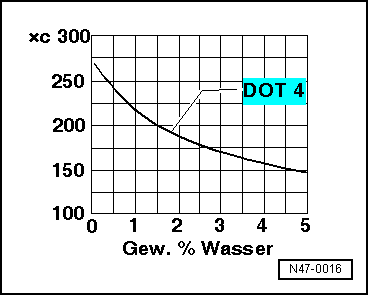
Brake fluid is hygroscopic, i.e. it absorbs water and moisture from the surrounding atmosphere. |
 |
|
|
→ As the water content increases, the boiling point falls, i.e., in the event of the brake fluid overheating, vapour bubbles are formed which may lead to brake failure. Brake fluid becomes discoloured (darkens) over time. Dark-coloured brake fluid does not necessarily indicate poor quality. Discoloration is due to chemical reactions, and may occur after a short time (a few weeks) particularly in the case of vehicles with ABS. Important
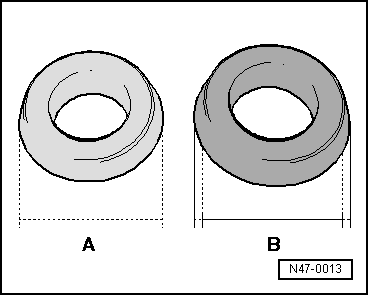
Mineral oil, petrol and cleaning agents cause damage to rubber components of the brake system (sleeves, sealing rings). Even tiny amounts contacting a sealing ring or a sleeve will affect these components and may adversely affect the functioning of the brake. The consequences of a contaminated brake system only become apparent after months, but can cause considerable costs, particularly for vehicles with ABS. |
 |
|
|
→ A = sleeve - original size B = sleeve - swollen due to contact with mineral oil Conclusions from the above points: Always keep brake fluid containers well sealed. This is the only way to rule out the penetration of oil, dirt, cleaning agents and atmospheric humidity. Keep brake fluid containers well away from oils, fluids (incl. hydraulic fluid) and cleaning agents to exclude the possibility of these becoming mixed or even the brake system being filled with the wrong fluid. |