
Malibu V6-191 3.1L VIN M SFI (1997)
^
Any looseness in control arm bushings, tie rod assemblies or steering gear mounting which permits a front wheel to pull forward and toe-in under
torque more than the opposite side. A loose suspension component may also result in an opposite lead on deceleration.
^
High front trim height which would increase drive axle angle.
^
Binding or tight drive axle joint. A tight joint or high front trim height may also exhibit a wobble condition between 24 and 48 km/h (15 and 30
mph).
^
Incorrect, worn, or loose engine mounts causing adverse drive axle angles.
^
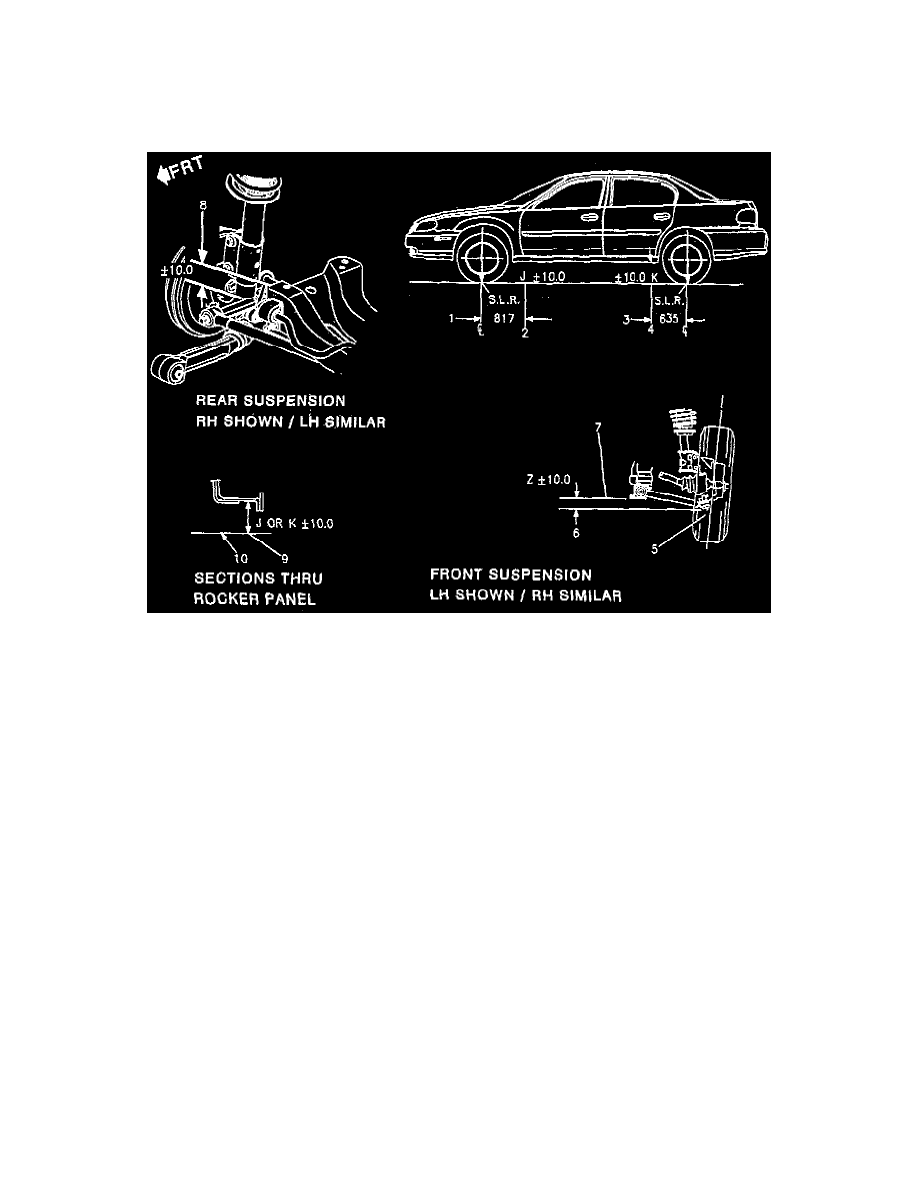
Unequal Engine/Transmission height from the left side to the right side of vehicle. If difference from side to side is more than 6 mm (17/64 inch),
change trim heights by installing a stronger spring in the side which is lower, or a weaker spring in the side which is shorter than the specified "Z"
heights. Replace only, do not shim engine mounts as this may cause other symptoms.
^
On occasion, side-to-side trim height differences may be the result of a faulty stabilizer shaft. To check this disconnect the stabilizer links,
re-measure trim heights. If the side-to-side difference is corrected, replace the stabilizer shaft. If there is no change in trim height do not change the
stabilizer shaft. A trim height difference of more than 6 mm (17/64 inch), indicates a possible bent, stabilizer shaft, attaching links, or a bent
suspension component that may need replacement.
The following conditions affect vehicle handling and/or a constant right or left lead separate from torque steer causes. The existence of one or more of
These conditions may compound a torque steer complaint.
^
Incorrect front-wheel alignment or a rear-wheel alignment condition which would cause the vehicle to not track straight. A difference in the front
wheel to rear wheel measurement compared side to side may indicate a "dog track" condition or one front wheel ahead of the other due to a
misalignment or other condition. A substantial caster difference is an indication of misalignment or other condition. Front-wheel caster should be
equal or within specifications and camber may be biased slightly to offset a lead condition.
^
Suspension support misalignment.
^
Front suspension damage, such as a bent strut.