
Drive Belt: Description and Operation (page 2 of 3)
- Make
- Dodge
- Model
- Challenger
- Engine
- V6-3.5L
- Year
- 2009
- Section
- Drive Belt
Drive Belt: Testing and Inspection
ACCESSORY DRIVE BELT
VISUAL DIAGNOSIS
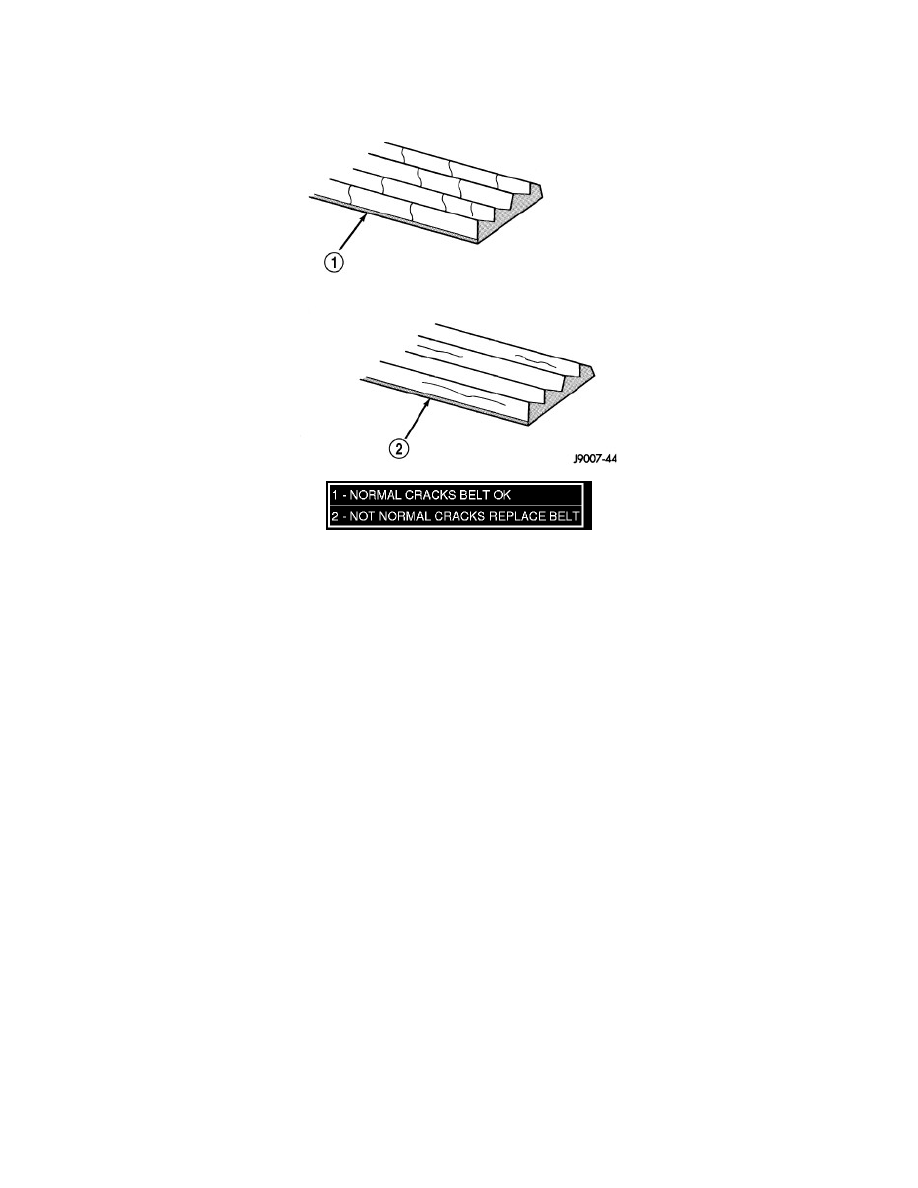
When diagnosing serpentine accessory drive belts, small cracks (1) that run across the ribbed surface of the belt from rib to rib , are considered normal.
These are not a reason to replace the belt. However, cracks (2) running along a rib (not across) are not normal. Any belt with cracks running along a rib
must be replaced. Also replace the belt if it has excessive wear, frayed cords, severe glazing or chunking.
Any belt with bumps, surface coming apart, or any other uneven indications along the flat surface of the belt must be remove and inspected and replaced
if necessary.
Refer to ACCESSORY DRIVE BELT DIAGNOSIS CHART for further belt diagnosis.
NOISE DIAGNOSIS
Noises generated by the accessory drive belt are most noticeable at idle. Before replacing a belt to resolve a noise condition, inspect all of the accessory
drive pulleys for alignment, glazing, or excessive end play.
ACCESSORY DRIVE BELT DIAGNOSIS CHART
Pinch or Ctrl + scroll to zoom. Double-tap to reset.
Parts & tools for this job For 2009 Dodge Challenger 3.5L
- PARTOil filterSearch: Dodge Challenger 2009 3.5L oil filter
- TOOLOil filter wrenchSearch: oil filter wrench
- FLUIDEngine oilSearch: Dodge Challenger engine oil
Links open Amazon search results in a new tab. As an Amazon Associate I earn from qualifying purchases.