
Viper GTS V10-488 8.0L (1998)
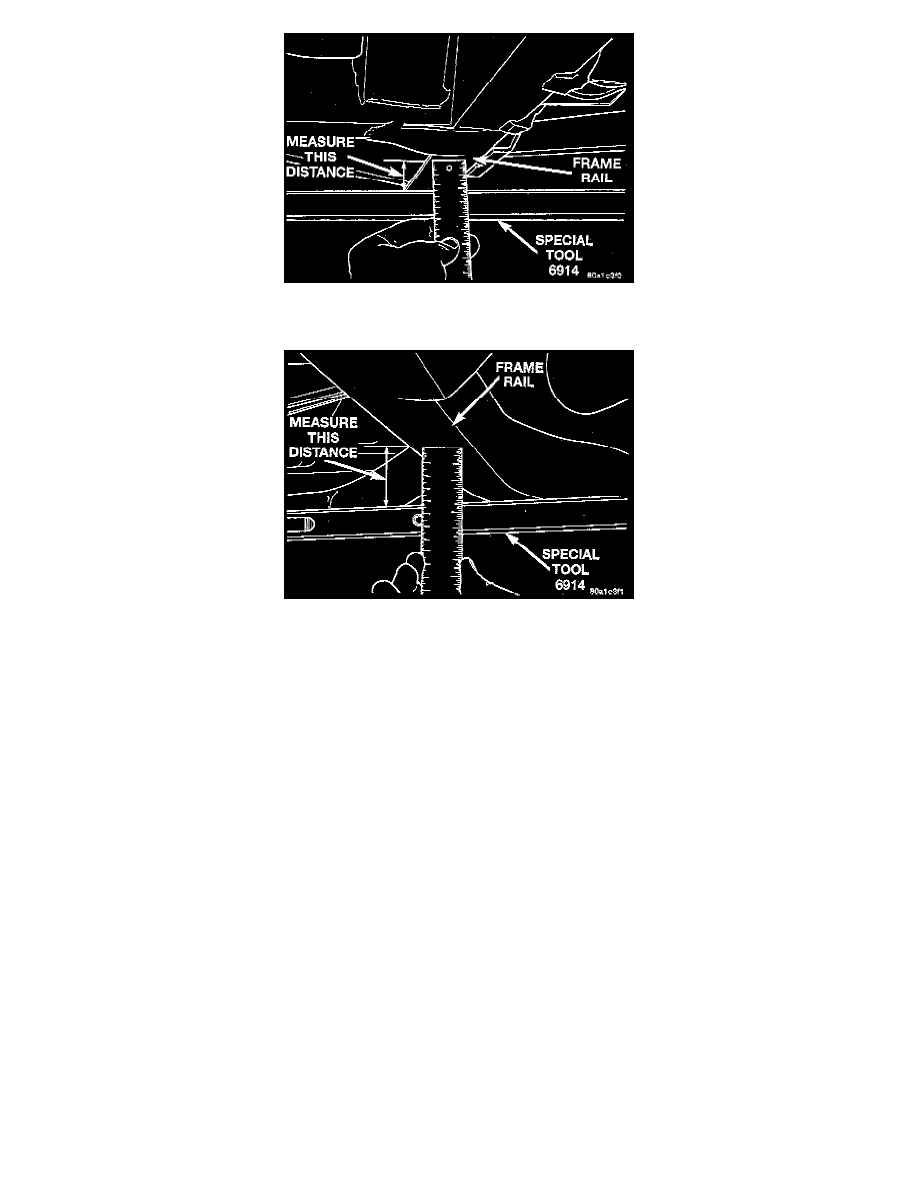
5. Check the distance from each of the front frame rails to the top surface of the Vehicle Height Checking Fixture, Special Tool 6914, or equivalent
(at front edge).
6. Check distance from both rear frame rails to top edge of Vehicle Height Checking Fixture, Special Tool 6914, or equivalent.
NOTE: Vehicle curb height on the Viper can be affected if all rubber bushings used in the vehicles suspension are not tightened and torqued with
vehicle at DESIGN HEIGHT. This is due to the extreme stiffness of the rubber used in the suspension component bushings. Use the following
procedure to ensure all bushings are torqued to specifications with the vehicle set to its specified design height.
7. If vehicle does not meet curb height specifications, loosen all bolts on rubber bushings of suspension components, and shock absorber mounting
bolts. Correctly ballast or jack vehicle to obtain the specified vehicle design height. See Setting Vehicle Design Height for the correct vehicle
design height setting procedure. While vehicle is at specified design height, tighten and torque to specification, all suspension component fasteners
previously loosened. Remove all ballast and jacking equipment from vehicle and check vehicle curb height again to see if it meets specifications.
8. If vehicle still does not meet vehicle curb height specifications. Inspect following suspension components of vehicle for conditions which may
cause vehicle to not meet vehicle curb height specifications.
-
Shock absorber assembly mounting bushings.
-
Upper and lower control arm mounting bushings.
-
Shock absorber springs.
-
Frame damage to vehicle which affects mounting location of a suspension component.
-
Front and rear sway bar.
-
Inspect all suspension components for signs of damage which may have bent a component.
9. If vehicle and/or component inspection does not determine a cause why vehicle is not meeting front or rear curb height specification, coil springs
on the shock absorber assemblies can be shimmed or have a reduced height spring seat installed. The shimming procedure or reduced height spring
seat should allow vehicle to be set to correct curb height specification. If shock absorber springs require shimming or installation of a reduced
height spring seat, both shock absorbers on the end of the vehicle require height adjustment must be serviced the same. When shimming of shock
absorber springs or installation of a reduced height spring seat is required, refer to Shock Absorber for correct shock absorber removal and
installation procedure.
NOTE: After shock absorber springs have been shimmed, or have had reduced height spring seats installed and shock absorbers are installed
back on the vehicle, vehicle must be ballasted or jacked to the specified vehicle design height before tightening and torquing the shock absorber
mounting bolts. See Setting Vehicle Design Height.
10. Remeasure curb height.
11. Remove the vehicle height checking fixtures from the vehicle.