
Econoline E250 3/4 Ton V8-4.6L SOHC VIN W (2000)
Note: When any part of the hydraulic system has been disconnected for repair or installation of new components, air can enter the system and cause
spongy brake pedal action. This requires bleeding of the hydraulic system after it has been correctly connected. The hydraulic system can be bled
manually or with pressure bleeding equipment.
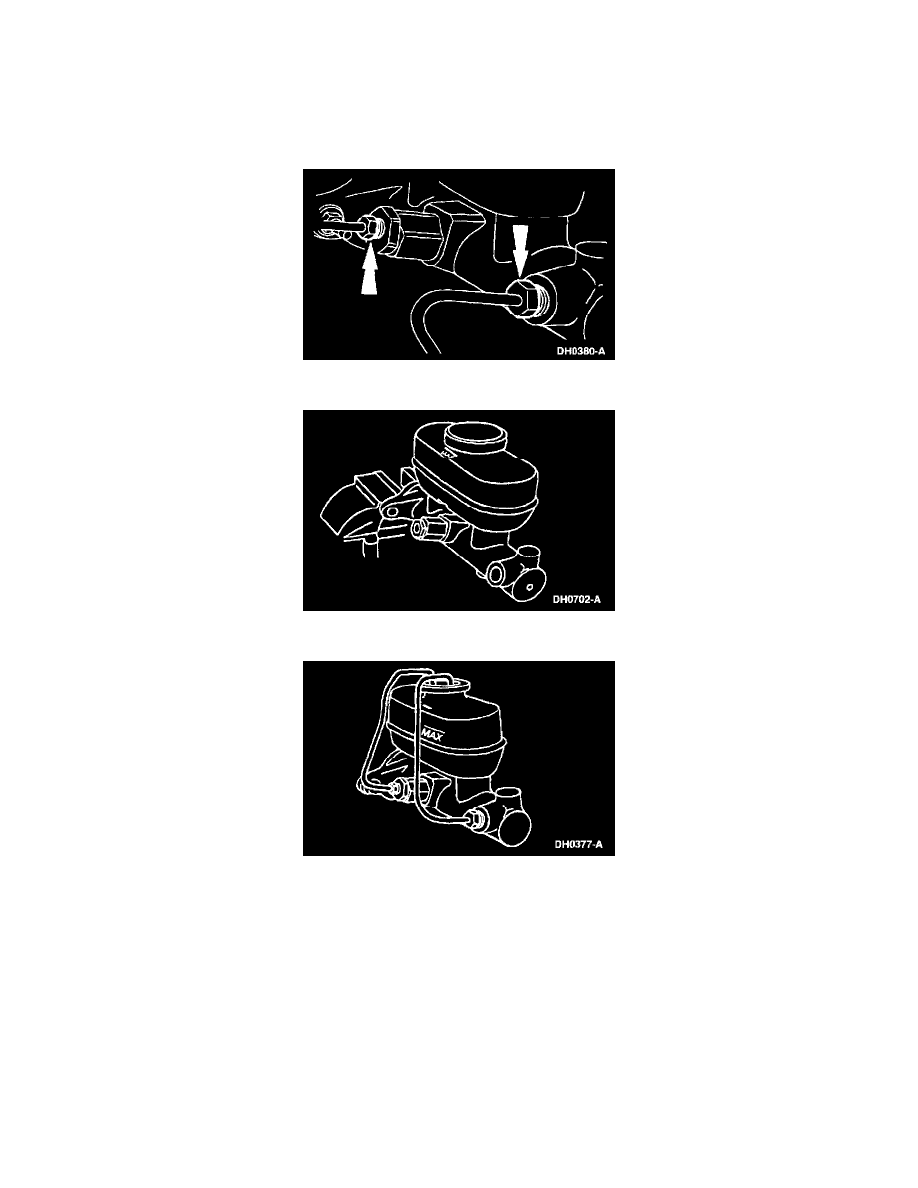
Note: When the brake master cylinder has been installed new or the system has been emptied, or partially emptied, it should be primed to prevent air
from entering the system.
1. For in-vehicle priming, disconnect the brake lines.
2. For bench priming, mount the brake master cylinder in a vise.
3. Install short brake tubes with the ends submerged in the brake master cylinder reservoir, and fill the brake master cylinder reservoir with High
Performance DOT 3 Brake Fluid C6AZ-19542-AB or equivalent DOT 3 fluid meeting Ford specification ESA-M6C25-A.
4. Have an assistant pump the brake pedal, or slowly depress the primary piston until clear fluid flows from both brake tubes, without air bubbles.
5. If the brake master cylinder has been primed at the bench, install it in the vehicle.