
Focus L4-2.0L VIN N (2006)
Brake Bleeding: Service and Repair
Brake System Pressure Bleeding
Brake System Pressure Bleeding
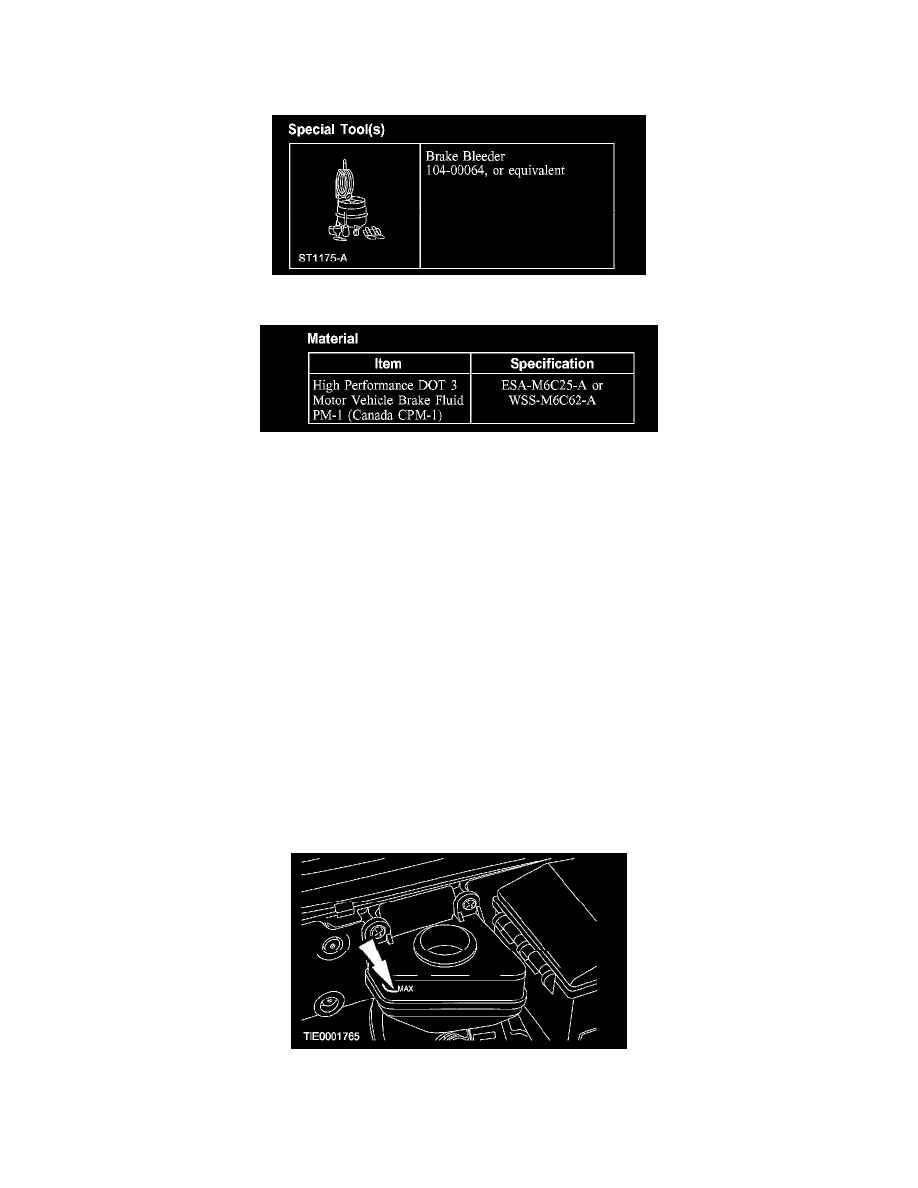
Special Tool(s)
Material
Bleeding
WARNING: Use of any other than the approved DOT 3 brake fluid will cause permanent damage to brake components and will render the
brakes inoperative. Failure to follow these instructions may result in personal injury.
WARNING: Brake fluid contains polyglycol ethers and polyglycols. Avoid contact with the eyes. Wash hands thoroughly after handling. If
brake fluid contacts the eyes, flush the eyes for 15 minutes with cold running water. Get medical attention if irritation persists. If taken
internally, drink water and induce vomiting. Get medical attention immediately. Failure to follow these instructions may result in personal
injury.
CAUTION: Do not allow the brake master cylinder reservoir to run dry during the bleeding operation. Keep the brake master cylinder reservoir filled
with the specified brake fluid. Never reuse the brake fluid that has been drained from the hydraulic system.
CAUTION: Brake fluid is harmful to painted and plastic surfaces. If brake fluid is spilled onto a painted or plastic surface, immediately wash it with
water.
CAUTION: Make sure the battery is disconnected on vehicles fitted with anti-lock brakes (ABS).
NOTE: The system consists of separate circuits for each front and diagonally opposite rear wheel. Each circuit can be bled independently.
1. Clean the outside of the brake master cylinder reservoir.
2. Remove the reservoir cap and fill the brake fluid reservoir with clean, DOT 3 motor vehicle brake fluid.
3. NOTE: Master cylinder pressure bleeder adapter tools are available from various manufacturers of pressure bleeding equipment. Follow the
instructions of the manufacturer when installing the adapter.