
Mustang V8-5.4L SC VIN S (2007)
Brake Bleeding: Service and Repair
Component Bleeding
Component Bleeding
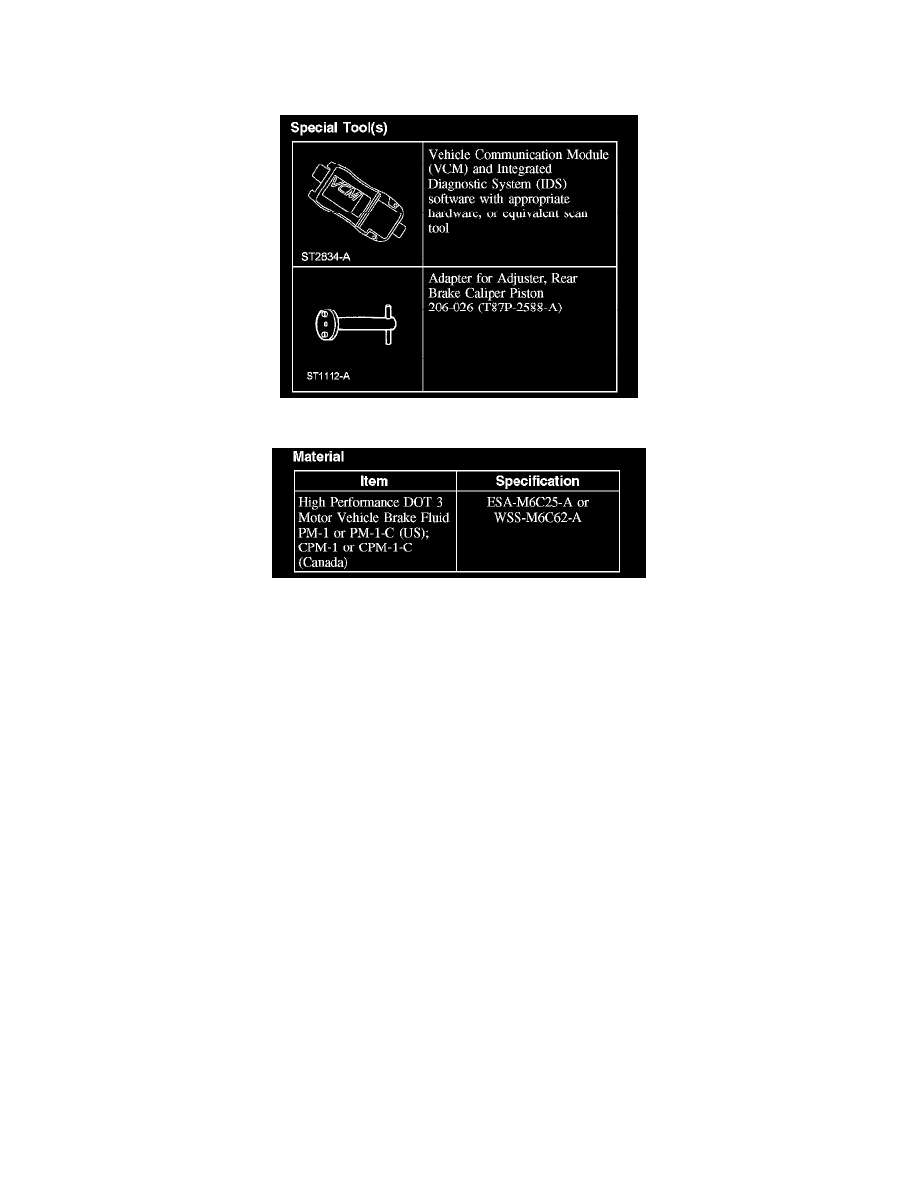
Special Tool(s)
Material
Master Cylinder
WARNING: Use of any brake fluid other than approved DOT 3 will cause permanent damage to brake components and will render the
brakes inoperative. Failure to follow these instructions may result in personal injury.
WARNING: Carefully read cautionary information on product label. For EMERGENCY MEDICAL INFORMATION seek medical advice.
In the USA or Canada on Ford/Motorcraft products call: 1-800-959-3673. For additional information, consult the product Material Safety
Data Sheet (MSDS) if available. Failure to follow these instructions may result in personal injury.
CAUTION: Do not allow the brake master cylinder reservoir to run dry during the bleeding operation. Keep the brake master cylinder reservoir filled
with clean, specified brake fluid. Never reuse the brake fluid that has been drained from the hydraulic system.
CAUTION: Brake fluid is harmful to painted and plastic surfaces. If brake fluid is spilled onto a painted or plastic surface, immediately wash it with
water.
NOTE: When any part of the hydraulic system is disconnected for repair or installation of new components, air can enter the system and cause spongy
brake pedal action. This requires bleeding of the hydraulic system after it is correctly connected. The hydraulic system can be bled manually or with
pressure bleeding equipment.
NOTE: When a new brake master cylinder is installed, or the system is emptied or partially emptied, it should be primed to prevent air from entering
the system.
1. For in-vehicle priming, disconnect the brake tubes.