
Alignment: Specifications (page 2 of 4)
- Make
- GMC
- Model
- Envoy 4WD
- Engine
- L6-4.2L VIN S
- Year
- 2003
- Section
- Alignment
Alignment: Description and Operation
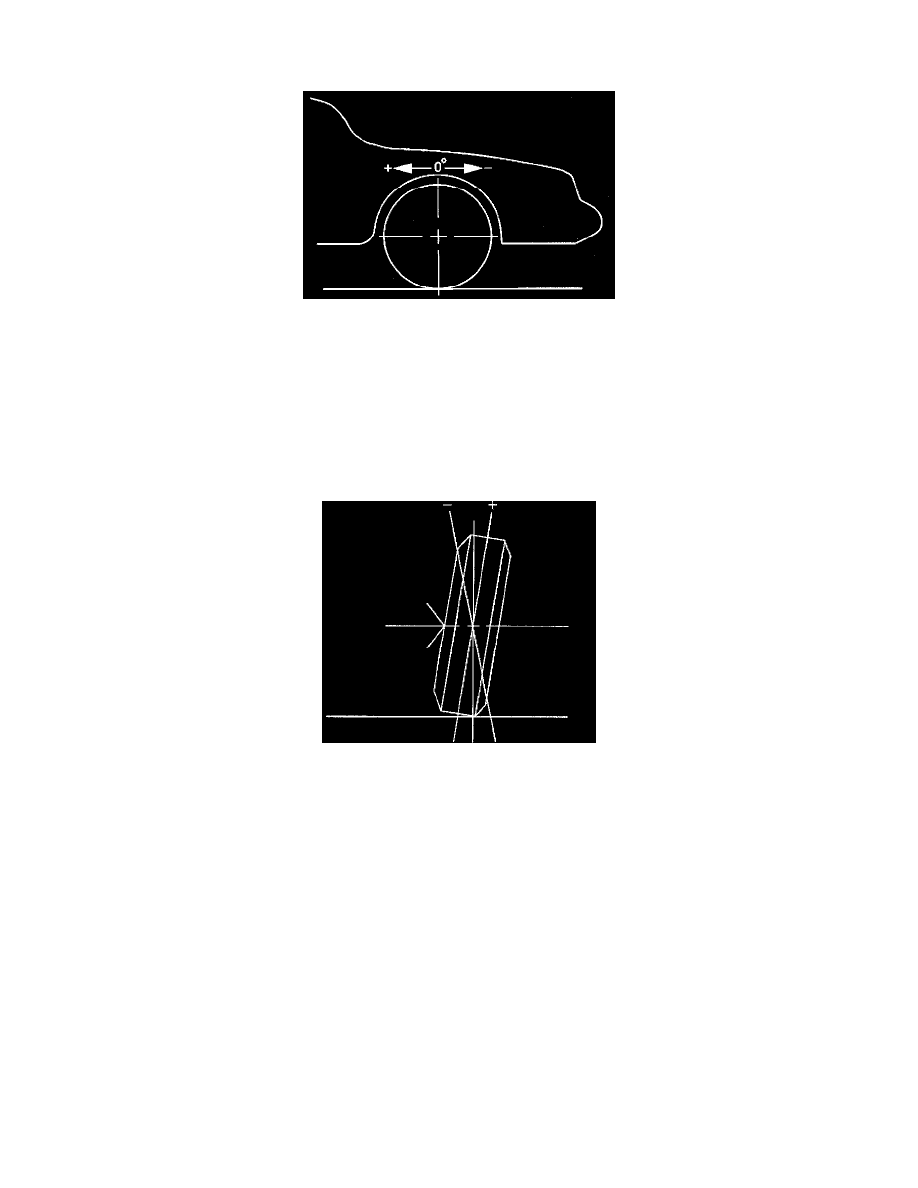
Caster Description
Caster is the tilting of the uppermost point of the steering axis either forward or backward, when viewed from the side of the vehicle. A backward tilt
is positive (+) and a forward tilt is negative (-). Caster influences directional control of the steering but does not affect the tire wear and is not
adjustable on this vehicle. Caster is affected by the vehicle height, therefore it is important to keep the body at its designed height. Overloading the
vehicle or a weak or sagging rear spring will affect caster. When the rear of the vehicle is lower than its designated trim height, the front suspension
moves to a more positive caster. If the rear of the vehicle is higher than its designated trim height, the front suspension moves to a less positive caster.
With too little positive caster, steering may be touchy at high speed and wheel returnability may be diminished when coming out of a turn. If one
wheel has more positive caster than the other, that wheel will pull toward the center of the vehicle. This condition will cause the vehicle to pull or lead
to the side with the least amount of positive caster.
Camber Description
Camber is the tilting of the wheels from the vertical when viewed from the front of the vehicle. When the wheels tilt outward at the top, the camber is
positive (+). When the wheel tilts inward at the top, the camber is negative (-). The amount of tilt is measured in degrees from the vertical. Camber
settings influence the directional control and the tire wear.
Too much positive camber will result in premature wear on the outside of the tire and cause excessive wear on the suspension parts.
Too much negative camber will result in premature wear on the inside of the tire and cause excessive wear on the suspension parts.
Unequal side-to-side camber of 1 degree or more will cause the vehicle to pull or lead to the side with the most positive camber.
Toe Description
Pinch or Ctrl + scroll to zoom. Double-tap to reset.
Parts & tools for this job For 2003 GMC Envoy 4.2L
- TOOLTie rod end toolSearch: tie rod end puller
- TOOLBall joint separatorSearch: ball joint separator
- FLUIDPower steering fluidSearch: GMC power steering fluid
Links open Amazon search results in a new tab. As an Amazon Associate I earn from qualifying purchases.