
Alignment: Specifications (page 2 of 3)
- Make
- Lincoln
- Model
- Navigator 4WD
- Engine
- V8-5.4L
- Year
- 2010
- Section
- Alignment
Alignment: Description and Operation
Wheel Alignment Angles
The front caster and camber are adjusted by removing the lower arm front and rear bolts and installing adjuster kits to allow the arm to be adjusted in the
frame slots. Front toe is adjusted by the use of the front wheel knuckle tie rods. The rear camber is adjusted by removing the upper arm camber set shim
or shim pins to allow the arm to be adjusted in the frame slot. The rear toe is adjusted by the use of the rear toe link cam bolt and nut.
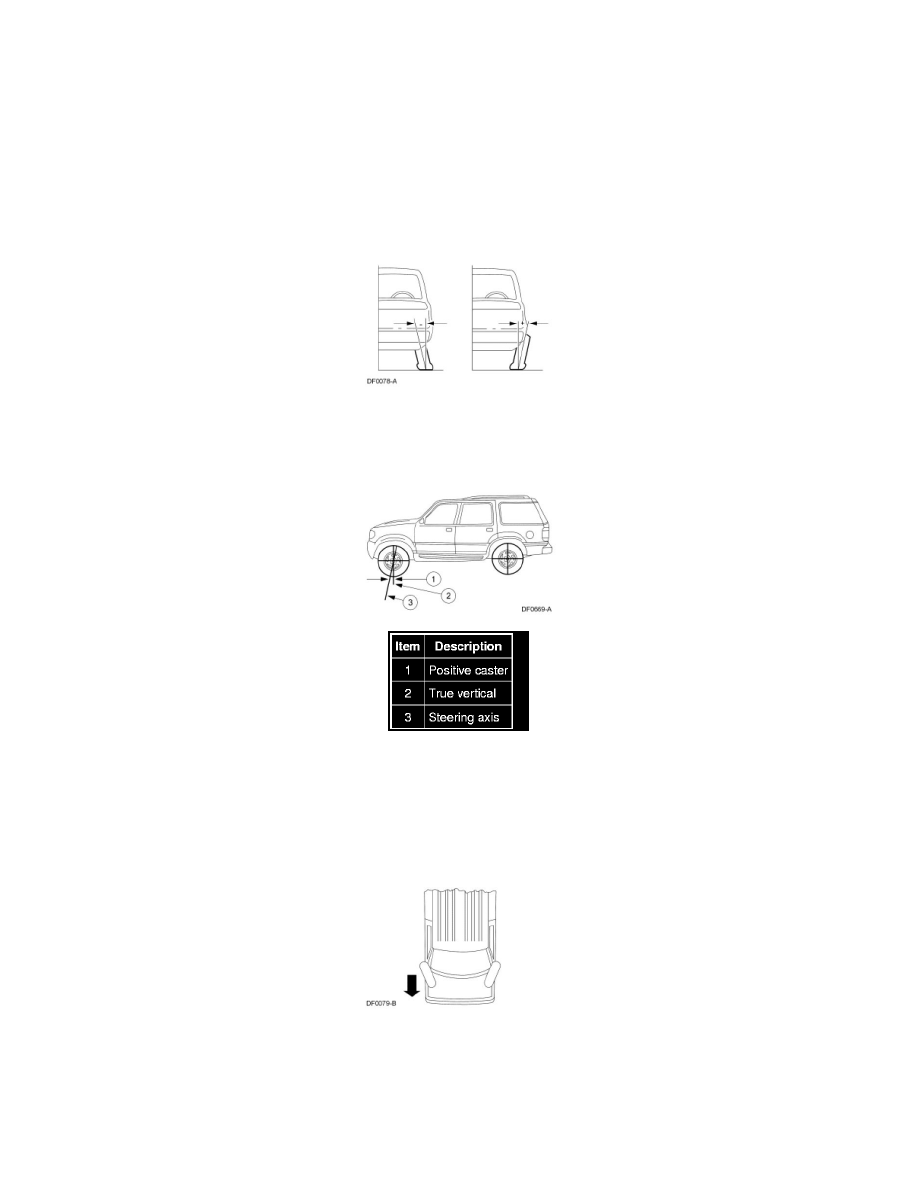
Camber
Negative and Positive Camber
Camber is the vertical tilt of the wheel when viewed from the front. Camber can be positive or negative and has a direct affect on tire wear.
Caster
Caster is the deviation from vertical of an imaginary line drawn through the ball joints when viewed from the side. The caster specifications will give the
vehicle the best directional stability characteristics when loaded and driven. The caster setting does not affect tire wear.
Toe
Positive Toe (Toe In)
Negative Toe (Toe Out)
Pinch or Ctrl + scroll to zoom. Double-tap to reset.
Parts & tools for this job For 2010 Lincoln Navigator 5.4L
- TOOLTie rod end toolSearch: tie rod end puller
- TOOLBall joint separatorSearch: ball joint separator
- FLUIDPower steering fluidSearch: Lincoln power steering fluid
Links open Amazon search results in a new tab. As an Amazon Associate I earn from qualifying purchases.