
B9 Tribeca F6-3.0L DOHC (2006)
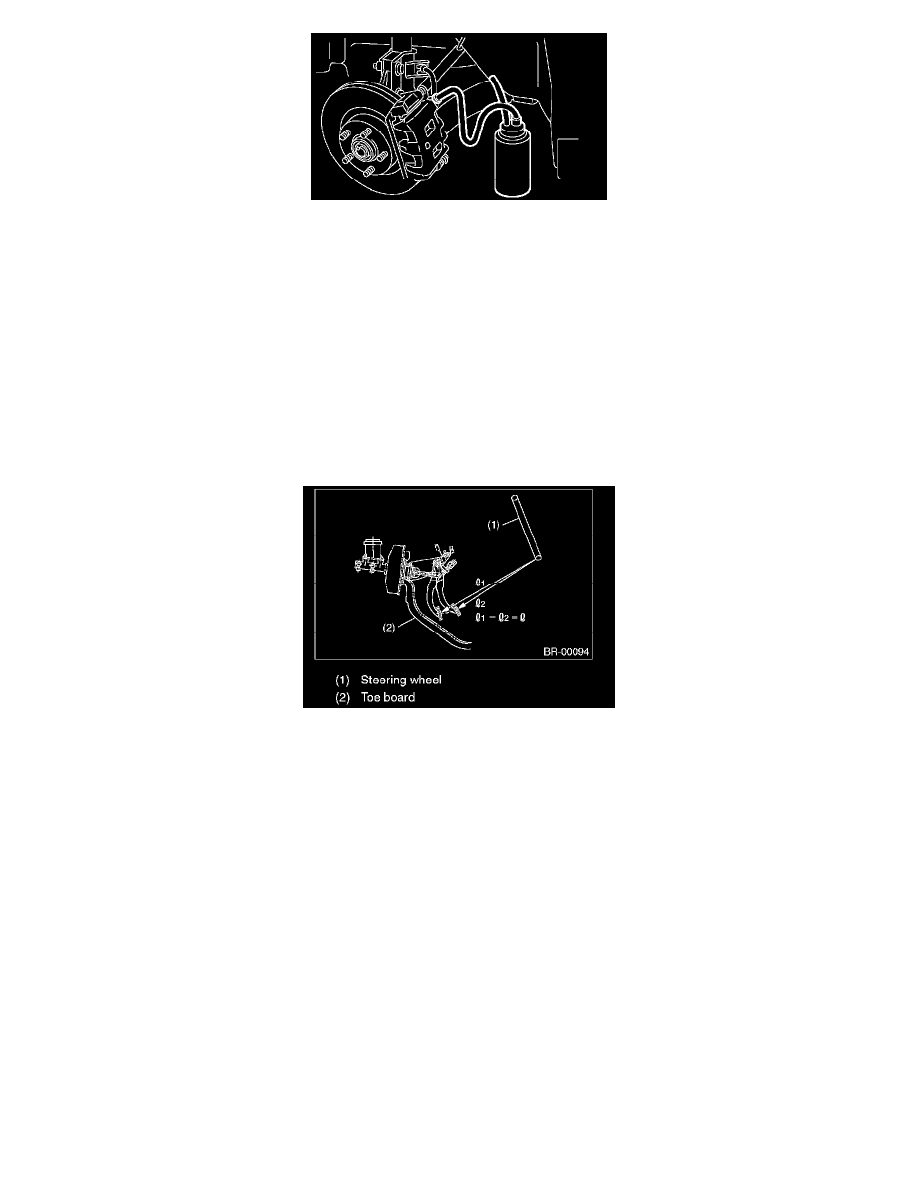
4. Depress the brake pedal several times, and keep it pressed.
5. Loosen the air bleeder screw to drain brake fluid. Tighten the air bleeder quickly, and release the brake pedal.
6. Repeat the steps 4) to 5) until there are no more air bubbles in the vinyl tube.
7. Repeat the steps from 2) to 6) above to bleed air from each wheel.
NOTE: Perform the operation in the order from closest wheel cylinder to the master cylinder.
8. Securely tighten the air bleeder screws.
Tightening torque: 8 Nm (0.8 kgf-m, 5.8 ft. lbs.)
9. Check that there are no brake fluid leaks in the entire system.
10. Check the pedal stroke.
Run the engine at idle after warming up the engine, and depress the brake pedal with a force of 500 N (51 kgf, 112 lb). Measure the distance between
the brake pedal and steering wheel. Release the pedal, and measure the distance between pedal and steering wheel again.
Specification of pedal stroke: When depressing the pedal with a force of 500 N (51 kgf, 112 lb). Less than 115 mm (4.53 inch)
11. If the distance is more than specification, there is a possibility of air being caught in the brake line.
Bleed the brake line of all air until the pedal stroke meets the specification.
12. Operate the hydraulic control unit in the sequence control mode.
13. Check the pedal stroke again.
14. If the distance is more than specification, there is a possibility of air being caught in the hydraulic unit. Repeat above steps 2) to 9) until the pedal
stroke meets the specification.
15. Fill brake fluid up to the MAX level of the reservoir tank.
16. Test run the vehicle and ensure that the brakes operate normally.