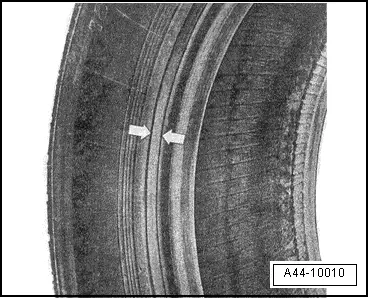
Tyre damage due to insufficient inflation pressure
The most common causes for tyre failure is minor external damage, a defective valve or a leaking rim due to corrosion or damage.
Excessive heat due to driving with very low tyre pressure led to overheating and subsequent separation of the carcass from the rubber material.
The tyre shown here was sporadically driven with an inflation pressure which was insufficient for the load. A typical indication for this is the scuffing all round the bead caused by the wheel flange and also the discolouration. Small, furrowed creases are visible along the inside of the sidewall.
When the tyre rolls, strong shear forces develop between the steel belt layers, especially at the ends of the belts.
Wide furrows close to the bead all round the the tyre indicate that the tyre was driven with insufficient pressure.
Driving a vehicle with insufficient tyre pressure or ignoring or not recognising tyre damage can have serious consequences.
The tyre can no longer withstand the forces which develop when the vehicle is driven.
The function of the tyre is severely restricted by the defects mentioned above. The rubber compounds separate, which results in the partial separation of tyre components or even its complete destruction.
Such damage usually develops over a long period of time. If an already damaged tyre is exposed to high stress, the centrifugal forces which occur at high speeds can tear components off the tyre.
Links open Amazon search results in a new tab. As an Amazon Associate I earn from qualifying purchases.
Help keep workshop manuals free
workshop-manuals.com provides free online workshop manuals.
If they helped you fix your car, please consider sharing or
making a small donation to keep the servers running.