
General notes on brake fluid
- Make
- Audi
- Model
- A5 Cabriolet
- Year
- 2009–2017
- Section
- Hydraulic system › General notes on brake fluid
General notes on brake fluid
Warning
- Do not under any circumstances allow brake fluid to come into contact with fluids that contain mineral oils (e.g. oil, petrol, cleaning agents). Mineral oils damage the plugs and seals in the brake system.
- Brake fluid is poisonous and must NOT be drawn off by sucking through a hose. Because of its caustic properties it must also not come into contact with paintwork.
- Brake fluid is hygroscopic, i.e. it absorbs moisture from the surrounding air, and should therefore always be stored in airtight containers.
- Brake fluid flushed out during the bleeding process must not be re-used and must be disposed of in the proper manner.
- Always observe the relevant environmental regulations for disposal → Chapter.
Note
- Only use new brake fluid conforming to US standard FMVSS 116 DOT 4.
- Genuine VW/Audi brake fluid conforms to this specification.
- Do not use liquids containing silicone.
- Avoid contamination of brake fluid with any dirt particles or bits of fluff (e.g. from cleaning cloths etc.).
- Rinse off spillages using plenty of water.
- When the system is open do not work with compressed air and do not move the vehicle.
- During the final road test, ensure that at least one ABS-controlled braking operation is performed (pulsations must be felt at the brake pedal).
- The brake system warning lamp flashes if the level of the brake fluid is too low, in case of a malfunction of the ABS or a malfunction of the electronic parking brake.
The boiling point decreases as the water content increases, which means a considerable rise in brake fluid temperature can lead to formation of vapour bubbles and brake failure.
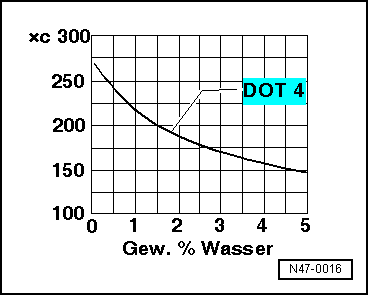
The colour of the brake fluid becomes darker over the course of time. A dark brake fluid colour is not an indication of its condition. The change in colour is caused by chemical reactions.
Warning Rubber parts of brake system (sleeves, seals) are not compatible with mineral oil, fuel and cleaning agents.
Even minute quantities coming into contact with a seal or sleeve will affect the component and could impair brake operation. The consequences of a contaminated brake system only become apparent months later, and then give rise to greater expenses, particularly in vehicles equipped with ABS.
A = Sleeve (original size)
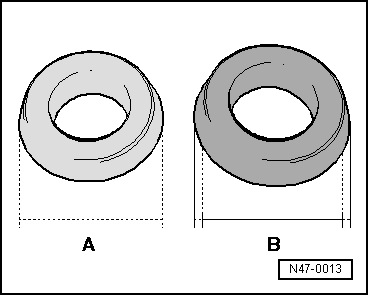
B = Sleeve (swollen due to contact with mineral oil)
Always keep brake fluid containers properly sealed. This is the only way of preventing contamination by oil, dirt, cleaning agents or moisture.
Brake fluid containers should be kept completely separate from oils (including hydraulic fluid) and cleaning agents to prevent any mixture of fluids or even filling of the brake system with an incorrect fluid.
We recommend using brake fluid approved by Audi ETKA.
MaintenanceBooklet405Work descriptions; Changing brake fluid (every 2 years)
Parts & tools for this job For 2009 Audi A5
- TOOLBrake bleeder kitSearch: one man brake bleeder kit
- FLUIDBrake fluidSearch: brake fluid
- TOOLBrake line flaring toolSearch: brake line flaring tool
As an Amazon Associate we earn from qualifying purchases.