
Workshop Manuals Factory service & repair Audi
01 Technical data for engines02 Injection and ignition system (8-cyl. 5-valve injection engine)03 Simos injection and ignition system (6-cyl. 2.4 ltr.)04 Engine: TDI injection and glow plug system (6-cyl. 2.7 ltr., 3.0 ltr. 4-valve common rail)05 Injection and ignition system (6-cyl. 3.0 ltr. injection engine)06 6-cylinder direct petrol injection engine (3.2 ltr. 4-valve), mechanics07 6-cylinder injection engine (2.4 ltr. 4-valve), mechanics08 6-cylinder TDI engine (2.7 ltr.; 3.0 ltr. 4-valve common rail), mechanics09 Fuel supply system, petrol engines10 Fuel supply system, diesel engines11 Simos direct petrol injection and ignition system (6-cyl. 3.2 ltr. 4-valve)12 8-cylinder engine (4.2 ltr. 5-valve with timing chains), mechanics13 6-cylinder injection engine (3.0 ltr. 5-valve), mechanics14 Engine: TDI injection and glow plug system (4-cyl. 2.0 ltr. unit injector, 4-valve)15 4-cylinder TDI unit injector engine (2.0 ltr. 4-valve), mechanics16 Direct petrol injection and ignition system (4-cyl. 2.0 ltr. 4-valve turbo)17 4-cylinder direct petrol injection engine (2.0 ltr. 4-valve turbo), mechanics18 10-cylinder direct petrol injection engine (5.2 ltr. 4-valve), mechanics19 Direct petrol injection and ignition system (10-cyl. 5.2 ltr. 4-valve)20 Direct petrol injection and ignition system (8-cyl. 4.2 ltr. 4-valve)21 8-cylinder direct petrol injection engine (4.2 ltr. 4-valve), mechanics22 6-cylinder direct injection engine (2.8 ltr. 4-valve), mechanics23 Direct injection and ignition system (6-cyl. 2.8 ltr. 4-valve)24 10-cylinder direct petrol injection engine (5.0 ltr. 4-valve turbo RS 6), mechanics25 Direct petrol injection and ignition system (10-cyl. 5.0 ltr. 4-valve turbo)26 Simos direct injection and ignition system (6-cyl. 3.0 ltr. TFSI 4-valve)27 6-cylinder direct injection engine with supercharger (3.0 ltr. 4-valve TFSI), mechanics28 Engine: TDI injection and glow plug system (4-cyl. 2.0 ltr. 4-valve common rail)29 4-cylinder TDI engine (2.0 ltr. 4-valve common rail), mechanics30 6-cylinder TDI engine (2.7 ltr.; 3.0 ltr. 4-valve common rail, EU5), mechanics31 Simos direct petrol injection and ignition system (6-cyl. 3.2 ltr. 4-valve with AVS)32 Gearbox: Servicing multitronic 01J and 0AN33 Rear final drive 01R34 Rear final drive 0AR35 Rear final drive 08V36 Servicing 6-speed manual gearbox 0A3, four-wheel drive37 Servicing 6-speed manual gearbox 0A2, front-wheel drive38 Servicing automatic gearbox 09L, four-wheel drive39 Automatic gearbox 09L, four-wheel drive40 6-speed manual gearbox 01X, front-wheel drive41 Gearbox: multitronic 01J, front-wheel drive42 6-speed manual gearbox 02X, four-wheel drive43 6-speed manual gearbox 0A2, front-wheel drive44 6-speed manual gearbox 0A3, four-wheel drive45 Gearbox: multitronic 0AN, front-wheel drive46 Automatic gearbox 09E, four-wheel drive47 Servicing automatic gearbox 09E, four-wheel drive48 Running gear: Trailer Operation Guide49 Running gear, front-wheel drive and four-wheel drive50 Brake system51 Running gear: Wheel/Tyre Guide52 Air conditioning53 Heating and air conditioning: Auxiliary Heater54 Electrical: Communication55 Electrical system56 Fitting instructions: retrofitting key-operated switch to deactivate airbag on front passenger side57 General body repairs, exterior58 General body repairs, interior
Audi A6 C6 (2004-2011)50 · Brake system
50 · Brakes

General notes

Make
Audi
Model
A6 C6
Year
2004–2011
Section
Brake fluid › General notes
Brake systemGeneral notes

General notes

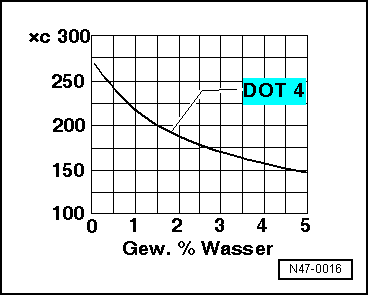
Brake fluid is hygroscopic; in other words it has the tendency to absorb water and moisture from the atmosphere.

The boiling point decreases as the water content increases, which means that vapour bubbles can form when the brake fluid becomes hot. This can cause brake failure.
N47-0016

The colour of the brake fluid becomes darker over the course of time. A dark brake fluid colour is not an indication of its condition. The change in colour is caused by chemical reactions and may occur within a short period (several weeks), particularly in vehicles equipped with ABS.

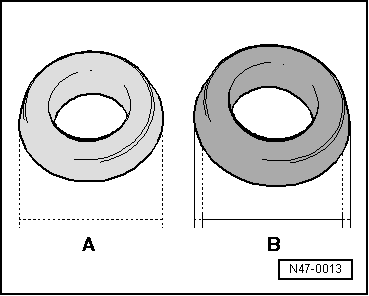
Warning Rubber brake system components (rubber sleeves, seals) are not compatible with mineral oil, petrol and cleaning agents.

Even minute quantities coming into contact with a seal or rubber sleeve will affect the component and could impair brake operation. The consequences of a contaminated brake system only become apparent months later, and then give rise to greater expenses, particularly in vehicles equipped with ABS.

A = Rubber sleeve (original size)
N47-0013

B = Rubber sleeve (swollen due to contact with mineral oil)

Summary of the above mentioned points:

Always keep brake fluid containers properly sealed. This is the only way of preventing contamination by oil, dirt, cleaning agents or moisture.

Brake fluid containers should be kept completely separate from oils (including hydraulic fluid) and cleaning agents to prevent any mixture of fluids or even filling of the brake system with an incorrect fluid.

We recommend using brake fluid approved by Audi ETKA.

Parts & tools for this job For 2004 Audi A6

As an Amazon Associate we earn from qualifying purchases.