
Workshop Manuals Factory service & repair Audi
01 Servicing 6-cylinder TDI engine, common rail (EA 897 Gen. I)02 4-cylinder TDI engine (2.0 ltr. 4-valve common rail - generation II)03 Direct petrol injection and ignition system (4-cyl. 2.0 ltr. 4-valve turbo with timing chain)04 8-cylinder direct injection engine (4.0 ltr. 4-valve TFSI)05 4-cylinder TDI engine, 2.0 ltr. 4-valve common rail (EA 288 Gen. I)06 6-cylinder direct injection engine (evo) with supercharger (3.0 ltr. 4-valve TFSI)07 4-cylinder direct injection engine (1.8, 2.0 ltr. 4-valve TFSI - generation III)08 Technical data for engines09 Technical data for diesel engines10 6-cylinder direct injection engine with supercharger (3.0 ltr. 4-valve TFSI)11 Fuel supply system, petrol engines12 6-cylinder direct injection engine (2.5 ltr., 2.8 ltr. 4-valve)13 6-cylinder TDI engine (3.0 ltr. 4-valve common rail)14 Fuel supply system, diesel engines15 4-cylinder direct injection engine (1.8, 2.0 ltr. 4-valve TFSI - generation II)16 6-cylinder TDI engine, 3.0 ltr. 4-valve common rail (EA 897 Gen. I)17 Rear final drive 0BC, 0BD, 0BE, 0BF18 Servicing 6-speed manual gearbox 0B1, front-wheel drive19 Gearbox: Servicing multitronic 0AW20 Servicing 7-speed dual clutch gearbox 0B5 (S tronic)21 Servicing 7-speed dual clutch gearbox 0CJ, 0CL, 0CK22 Servicing 6-speed manual gearbox 0CS, 0DJ, 0CX23 7-speed dual clutch gearbox 0CK24 6-speed manual gearbox 0B1, front-wheel drive25 6-speed manual gearbox 0CS, 0DJ26 7-speed dual clutch gearbox 0B5 (S tronic)27 Gearbox: multitronic 0AW, front-wheel drive28 8-speed automatic gearbox 0BK, four-wheel drive29 8-speed automatic gearbox 0BW hybrid, front-wheel drive30 Running gear: Specifications for testing the braking force (according to German legislation)31 Running gear: Trailer Operation Guide32 Running gear: Wheel/Tyre Guide33 Running gear, front-wheel drive and four-wheel drive34 Brake system35 Heating, air conditioning36 Heating and air conditioning: Auxiliary/supplementary heater37 Electrical system38 Electrical: Communication39 Electrical: Basic information on high-voltage vehicles40 Electrical system, hybrid41 General body repairs, interior42 General body repairs, exterior
Audi A6 C7 (2011-2018)34 · Brake system
34 · Brakes

General notes on brake fluid

Make
Audi
Model
A6 C7
Year
2011–2018
Section
Hydraulic system › General notes on brake fluid
Brake systemGeneral notes on brake fluid

General notes on brake fluid

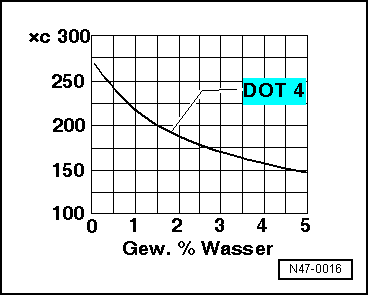
Brake fluid is hygroscopic, i.e. it has the tendency to absorb water and moisture from the atmosphere.

The boiling point decreases as the water content increases, which means a considerable rise in brake fluid temperature can lead to formation of vapour bubbles and brake failure.
N47-0016

The colour of the brake fluid becomes darker over the course of time. A dark brake fluid colour is not an indication of its condition. The change in colour is caused by chemical reactions.

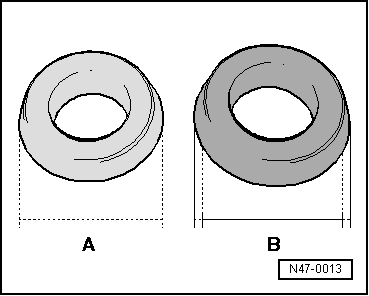
Even minute quantities coming into contact with a seal or sleeve will affect the component and could impair brake operation. The consequences of a contaminated brake system only become apparent months later, and then give rise to greater expenses, particularly in vehicles equipped with ABS.

A = Sleeve (original size)
N47-0013

B = Sleeve (swollen due to contact with mineral oil)

Summary of the above mentioned points:

  • Always keep brake fluid containers properly sealed. This is the only way of preventing contamination by oil, dirt, cleaning agents or moisture.
  • Brake fluid containers should be kept completely separate from oils (including hydraulic fluid) and cleaning agents to prevent any mixture of fluids or even filling of the brake system with an incorrect fluid.

Warning Risk to health

  • Brake fluid is poisonous and must NOT be drawn off by sucking through a hose.
  • Always wear chemical-resistant protective gloves to prevent brake fluid from contacting skin.
  • Always observe the relevant environmental regulations for disposal.
Accident risk: if the water content in the brake fluid is too high, this can cause vapour bubbles in the fluid.
  • Brake fluid is hygroscopic, i.e. it absorbs moisture from the surrounding air.
  • Seal open brake hoses and brake lines using sealing plugs from assembly parts set 5Q0 698 311.
  • Always keep brake fluid in sealed airtight containers.
Risk of malfunction if brake fluid comes into contact with fluids containing mineral oils.
  • Do not under any circumstances allow brake fluid to come into contact with fluids that contain mineral oils (e.g. oil, petrol, cleaning agents). Protective gloves must be free of oil and grease.
Risk of damage to paintwork surfaces
  • Due to its corrosive effect, brake fluid must not be allowed to come into contact with paintwork. Rinse off brake fluid spillages immediately using plenty of water.

Note

  • Always use fresh brake fluid.
  • Rinse off brake fluid spillages using plenty of water.

Parts & tools for this job For 2011 Audi A6

As an Amazon Associate we earn from qualifying purchases.