
Removing and installing protective cap
- Make
- Audi
- Model
- Q7 Mk2
- Year
- 2015–2023
- Section
- Front brake caliper › Removing and installing protective cap
Removing and installing protective cap
Special tools and workshop equipment requiredPiston resetting appliance T10145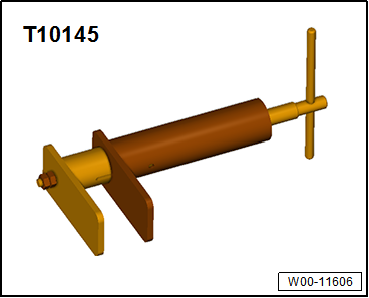
Clamp brake caliper in jaws of vice. Use protective jaw covers.
Warning Risk of injury.
- Wear safety goggles.
- When pressing out brake caliper piston, DO NOT reach into brake caliper with your fingers.
- Place a cloth over bore in brake caliper to catch any brake fluid spatter. Wrap another cloth tightly around nozzle of compressed-air gun applied to brake caliper.
- Always wear chemical-resistant protective gloves to prevent brake fluid from contacting skin.
Note
- Take care not to damage paint on brake caliper when removing brake caliper pistons and protective caps.
- The brake caliper pistons can only be removed one at a time.
Use the piston resetting appliance T10145(item a) to hold the opposite brake caliper piston in place in the brake caliper.
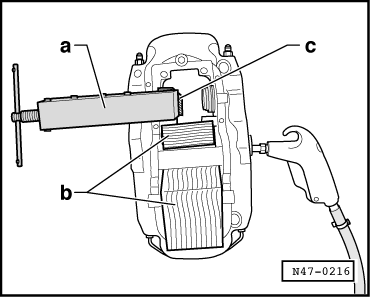
To avoid damaging the paint on the caliper, insert a piece of rubber between the piston resetting appliance T10145 and the caliper.
Use blocks of wood or similar (b) to keep the other brake caliper pistons in place. Also place a piece of wood (c) against the piston resetting appliance T10145 to prevent the brake caliper piston from being damaged when it is forced out.
Apply compressed air nozzle to threaded hole for brake hose and press piston out of caliper.
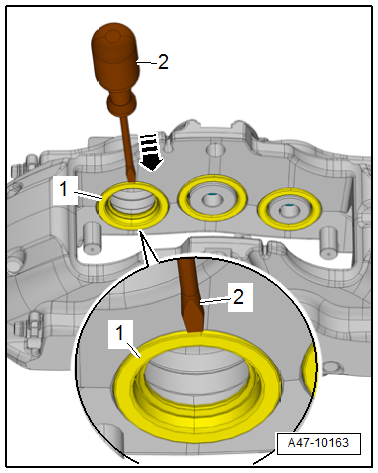
Carefully drive the protective cap (1) out of the brake caliper using a screwdriver (2) (tap it lightly with a hammer (arrow)), taking care not to damage the paint on the caliper.
Note
- Install all parts supplied in repair kit.
- Use only methylated spirits to clean the brake components.
- The brake caliper must be replaced if a brake caliper piston or piston bore is damaged.
The surfaces of the brake caliper piston must be cleaned (with methylated spirits only) and then dried.
Fit protective cap onto brake caliper piston.
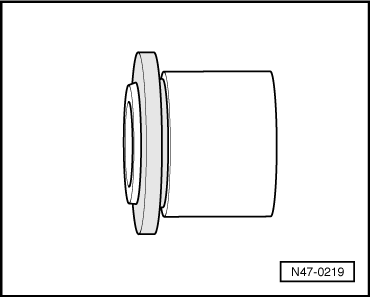
Push piston into caliper, exerting even pressure and making sure piston is straight.
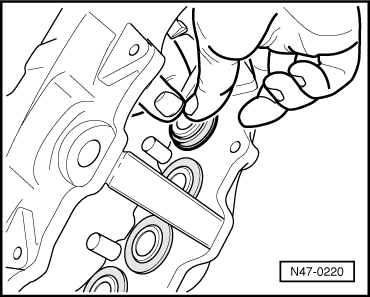
Press protective cap into groove on brake caliper.
The protective cap must be securely seated in the groove. If necessary, press in further using piston resetting appliance T10145.Repeat procedure on next brake caliper piston.
Parts & tools for this job For 2015 Audi Q7
- PARTFront brake padsSearch: Audi Q7 2015 front brake pads
- TOOLCaliper piston rewind toolSearch: brake caliper piston rewind tool
- FLUIDBrake fluidSearch: brake fluid
As an Amazon Associate we earn from qualifying purchases.