
Generating vacuum with hand vacuum pump
- Make
- Audi
- Model
- Q7 Mk2
- Year
- 2015–2023
- Section
- Vacuum system › Generating vacuum with hand vacuum pump
Brake systemGenerating vacuum with hand vacuum pump
Generating vacuum with hand vacuum pump
Special tools and workshop equipment requiredHand vacuum pump VAS 6213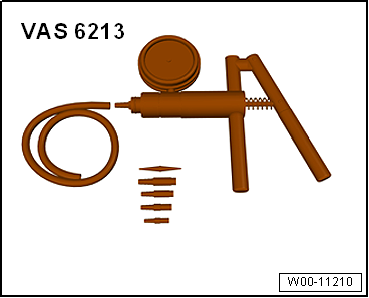
Instead of vacuum generation using the engine or vacuum pump, vacuum can also be generated by means of the hand vacuum pump VAS 6213 in certain cases.
To do this, connect hand vacuum pump VAS 6213 to vacuum hose from connection (B) on brake servo tester VAS 6721.
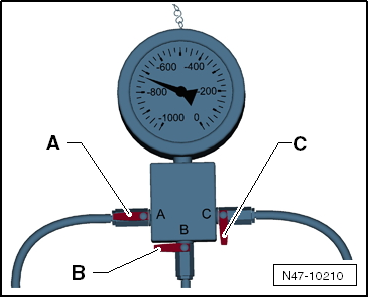
Open shut-off valve (B).
Generate vacuum with hand vacuum pump VAS 6213 until brake servo tester VAS 6721 indicates between 600 and 950 mbar.
Then carry out the corresponding checks.
Parts & tools for this job For 2015 Audi Q7
- PARTBrake padsSearch: Audi Q7 2015 brake pads
- TOOLBrake bleeder kitSearch: one man brake bleeder kit
- FLUIDBrake fluidSearch: brake fluid
As an Amazon Associate we earn from qualifying purchases.