
General notes on brake fluid
- Make
- Audi
- Model
- R8 Mk1
- Year
- 2007–2015
- Section
- Hydraulic system › General notes on brake fluid
General notes on brake fluid
The boiling point decreases as the water content increases, which means a considerable rise in brake fluid temperature can lead to formation of vapour bubbles and brake failure.
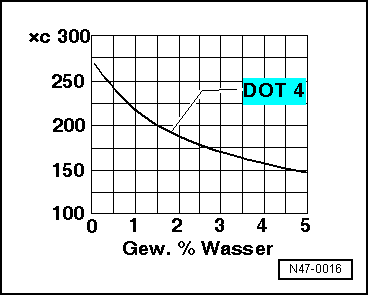
The colour of the brake fluid becomes darker over the course of time. A dark brake fluid colour is not an indication of its condition. The change in colour is caused by chemical reactions.
Warning Risk of malfunction if brake fluid contacts fluids containing mineral oils
- Rubber parts of brake system (sleeves, seals) are not compatible with mineral oil, fuel and cleaning agents.
Even minute quantities coming into contact with a seal or sleeve will affect the component and could impair brake operation. The consequences of a contaminated brake system only become apparent months later, and then give rise to greater expenses, particularly in vehicles equipped with ABS.
A = Sleeve (original size)
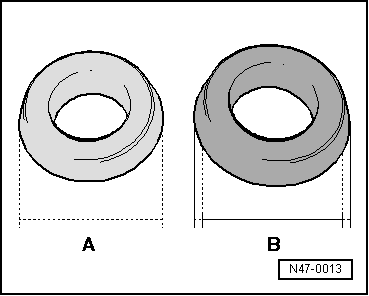
B = Sleeve (swollen due to contact with mineral oil)
- Always keep brake fluid containers properly sealed. This is the only way of preventing contamination by oil, dirt, cleaning agents or moisture.
- Brake fluid containers should be kept completely separate from oils (including hydraulic fluid) and cleaning agents to prevent any mixture of fluids or even filling of the brake system with an incorrect fluid.
Warning Risk of accident!
- Brake fluid is hygroscopic, i.e. it absorbs moisture from the surrounding air, and should therefore always be stored in airtight containers.
- Brake fluid is poisonous and must NOT be drawn off by sucking through a hose.
- When using compressed air in the hydraulics of the brake system, always wear protective goggles to prevent brake fluid from contacting eyes.
- Always wear chemical-resistant protective gloves to prevent brake fluid from contacting skin.
- Always observe the relevant environmental regulations for disposal.
- Do not under any circumstances allow brake fluid to come into contact with fluids that contain mineral oils (e.g. oil, petrol, cleaning agents). Always ensure that your hands are free of oil and grease before handling brake fluid.
- Due to its corrosive effect, brake fluid must not be allowed to come into contact with paintwork. Rinse off brake fluid spillages immediately using plenty of water.
Note
- Always use fresh brake fluid.
Parts & tools for this job For 2007 Audi R8
- TOOLBrake bleeder kitSearch: one man brake bleeder kit
- FLUIDBrake fluidSearch: brake fluid
- TOOLBrake line flaring toolSearch: brake line flaring tool
As an Amazon Associate we earn from qualifying purchases.