
Machining valve seats
- Make
- Audi
- Model
- TT Mk1
- Year
- 1998–2006
- Section
- Servicing valve gear › Machining valve seats
6-cylinder engine, mechanicsMachining valve seats
Machining valve seats
Note
- If a good seating pattern cannot be obtained by grinding the valve seats (lapping), they must be refaced (machined):
Note
- When servicing engines with leaking valves, it is not sufficient to machine (reface) the valve seats and renew the valves. The valve guides must also be checked for wear. This is particularly important on high mileage engines → Chapter.
- Valve seats should only be machined to the extent required to give a proper seating pattern.
- The maximum permissible machining dimension must be calculated before starting work.
- If the machining dimension is exceeded, the function of the hydraulic valve play compensation can no longer be guaranteed and the cylinder head must be renewed.
Insert valve and press firmly against valve seat.
Note
- If the valve has to be renewed as part of a repair, use a new valve for the measurement.
Measure distance (a) between end of valve stem and upper cylinder head surface with a depth gauge.
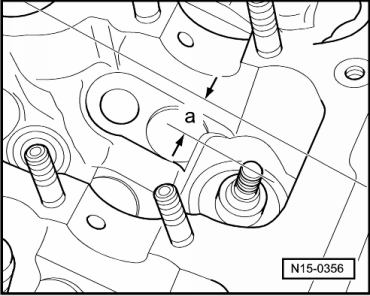
Calculate the maximum permissible machining dimension using the measured distance and the minimum dimension.
| Minimum dimensions | |||
|---|---|---|---|
| Short inlet valve | Long inlet valve | Short exhaust valve | Long exhaust valve |
| 31.8 mm | 10.2 mm | 31.8 mm | 10.2 mm |
Measured distance minus minimum dimension = max. permissible machining dimension.
| Example for long inlet valve: | ||
|---|---|---|
| Measured distance | 10.6 mm | |
| - | Minimum dimension | -10.2 mm |
| = | Maximum permissible machining dimension | = 0.4 mm |
Note
- If the maximum permissible machining dimension is 0 mm or less than 0 mm, repeat the measurement with a new valve. If the measured result is again 0 mm or less than 0 mm, renew the cylinder head.
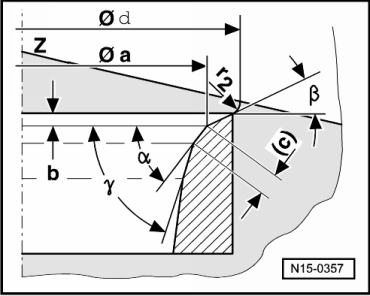
Note
- Calculating maximum permissible machining dimension Anchor.
Note
- Calculating maximum permissible machining dimension Anchor.
Parts & tools for this job For 1998 Audi TT
- PARTEngine gasket setSearch: Audi TT 1998 engine gasket set
- TOOLTorque wrenchSearch: 3/8 inch torque wrench
- TOOLFeeler gauge setSearch: feeler gauge set
As an Amazon Associate we earn from qualifying purchases.