
Removing and installing brake pads
- Make
- Audi
- Model
- TT Mk3
- Year
- 2014–2023
- Section
- Front brakes › Removing and installing brake pads
Removing and installing brake pads
Special tools and workshop equipment requiredTorque wrench V.A.G 1331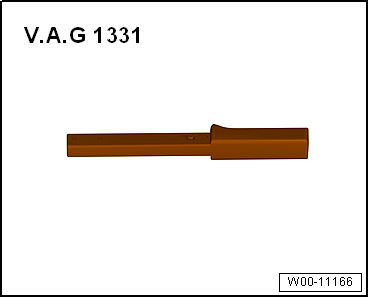
Note
- Mark brake pads when removing them if they are to be reinstalled. Reinstall in their original position to prevent uneven braking.
Remove front wheel Running gear, axles, steeringRep. gr.44Wheels, tyres.
Counterhold guide pins (1 and 2) and remove bolts (arrows).
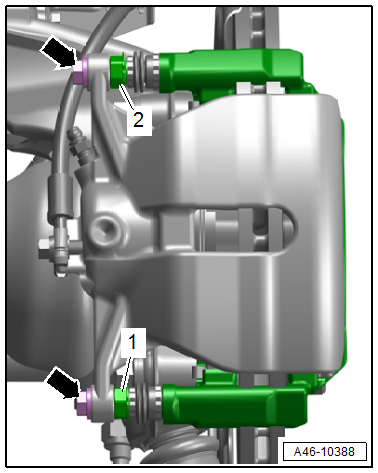
Detach brake caliper.
Warning Risk of damage to brake hose
- Do not leave the brake caliper hanging from the brake hose. Take care that brake hose is not damaged by weight of brake components.
- The brake hose must be renewed if it is damaged.
- Do not apply brake when brake caliper is removed.
Tie brake caliper to body with suitable wire.
Unplug electrical connector (arrow) on contact for pad wear indicator on brake caliper (right-side).
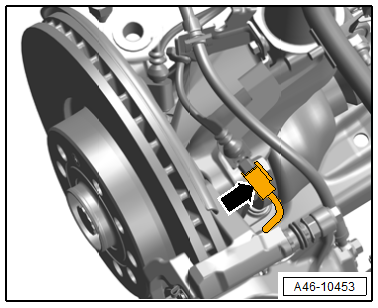
Remove brake pads.
Installation is performed in reverse sequence; note the following:
When renewing the brake pads, check the brake disc for wear and damage.
Check brake discs for wear → Chapter.
Note
- Always renew brake pads on both sides of axle.
- Install all parts supplied in the repair kit when fitting new brake pads.
Warning Risk to health
- Do not blow out the brake system with compressed air.
Note
- Use only methylated spirits for cleaning the brake caliper housing.
- Check protective caps on brake caliper pistons for damage; if necessary, install all parts supplied in repair kit → Chapter.
- Check bearing bushes on guide pins for damage and ensure that guide pins move freely; if necessary, install all parts supplied in repair kit → Chapter.
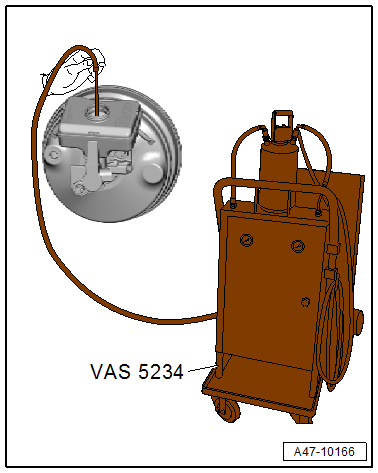
Warning Escaping brake fluid can cause the vehicle to become dirty and may damage the paintwork.
- If the brake pads are worn and brake fluid has been topped up unnecessarily, brake fluid can overflow when the brake caliper pistons are pressed back into the brake cylinders.
- Before pressing the pistons back, check the brake fluid level. Brake fluid must be extracted if the fluid level is up to the “MAX” mark.
- Use brake filling and bleeding equipment VAS 5234 to extract brake fluid from brake fluid reservoir.
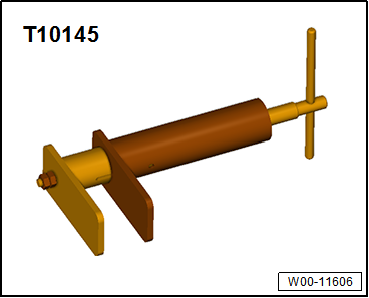
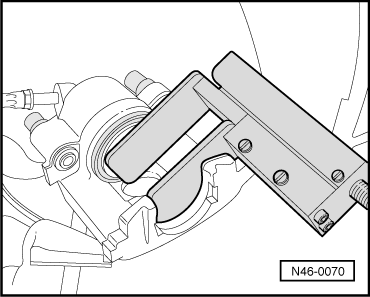
Press brake caliper piston all the way back into caliper using piston resetting appliance T10145.
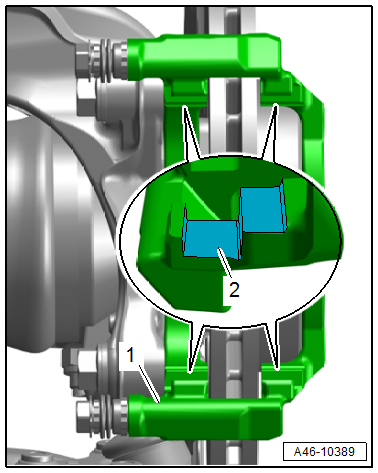
Clean pad contact surfaces (2) on brake carrier (1) and apply a small amount of lithium grease G 052 150 A2.
If fitted, pull protective foil off pad backplates.
If used pads are being re-fitted, take care to install the marked pads in their original positions.
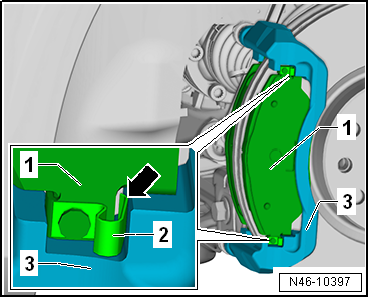
Insert brake pads, paying attention to installation position → Fig..
Fit brake pads (1) so that retaining springs (2) engage in cut-outs in brake carrier (3).
Note
- Check that all retaining springs (2) are seated correctly after fitting brake pads.
Slide brake caliper over fitted brake pads.
Counterhold guide pins (1 and 2) and tighten new bolts (arrows) for brake caliper.
Note
- Make sure the brake hose is routed correctly.
- The brake hose must not be kinked, crushed or twisted or chafe against parts of the vehicle at any point.
Plug in electrical connector (arrow) on contact for pad wear indicator on brake caliper (right-side).
Warning Risk of accident!
- Firmly depress the brake pedal several times with the vehicle stationary, so that the brake pads are properly seated in their normal operating position.
- Make sure that the brakes work properly before the vehicle is driven on the road.
Check brake fluid level and top up if necessary.
- Chapter“Exploded view - front brakes”
- Running gear, axles, steeringRep. gr.44Wheels, tyres
Parts & tools for this job For 2014 Audi TT
- PARTFront brake padsSearch: Audi TT 2014 front brake pads
- TOOLCaliper piston rewind toolSearch: brake caliper piston rewind tool
- FLUIDBrake fluidSearch: brake fluid
As an Amazon Associate we earn from qualifying purchases.