Catera V6-3.0L VIN R (1997)
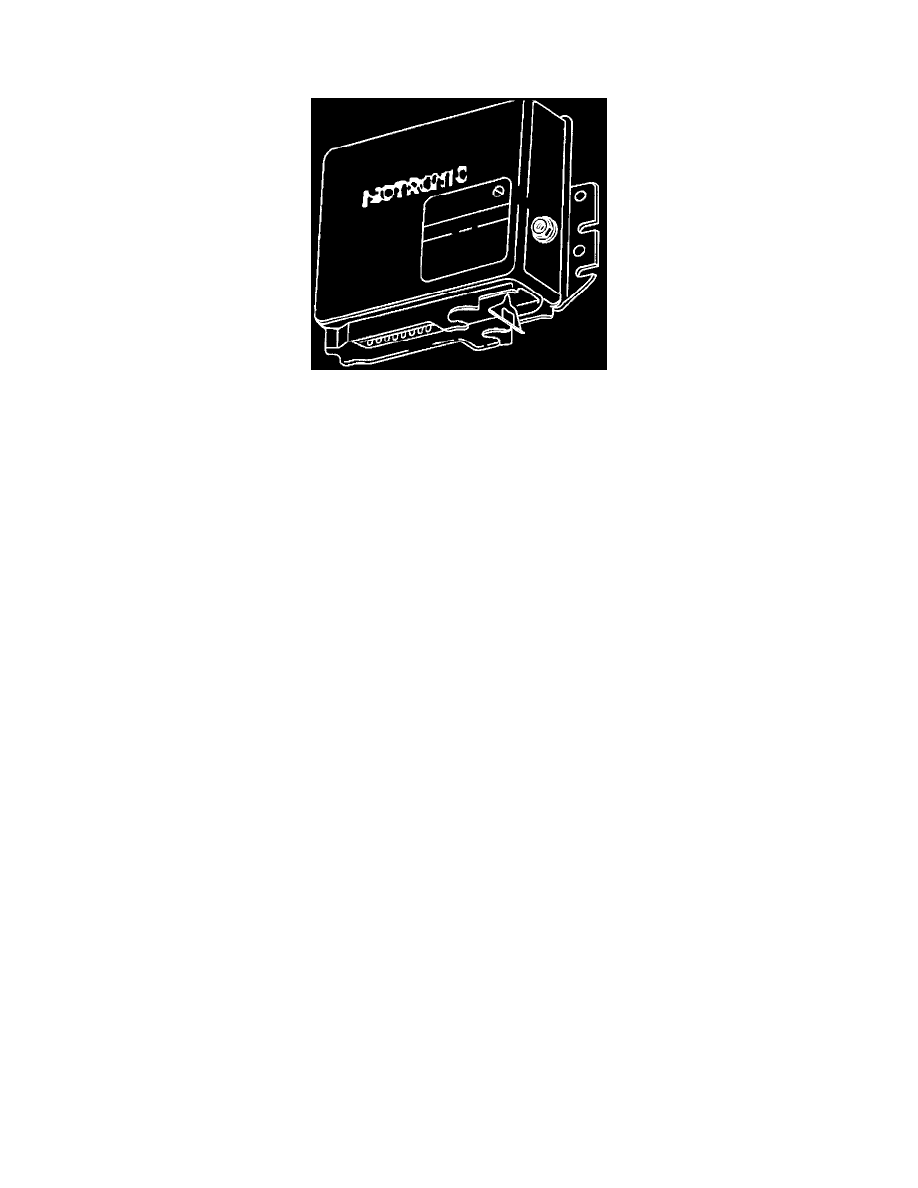
Engine Control Module: Description and Operation
General System Description
Engine Control Module
Description
The Engine Control Module (ECM) uses sensors and other inputs in order to obtain the information about the engine/vehicle operation and on the
various systems that it controls. The details of the basic operation are covered in Descriptions and Operations. The functional checks, the diagnosis, and
the on-vehicle service are covered in Computer and Control Systems.
On-Board Diagnostics
This vehicle is equipped with advanced diagnostic capabilities. The OBD II system is a much more complex system than the prior on-board diagnostics.
The ECM interacts with many more emission related components/systems and monitors emission related components/systems for deterioration. Most of
these diagnostics will detect a problem before the customer notices a change in the driveability. Rather than waiting for a hard circuit/component failure,
OBD II diagnostics monitor the system performance, and a Diagnostic Trouble Code (DTC) will set if the system performance degrades.
Powertrain Diagnostic Trouble Codes
The Malfunction Indicator Lamp (MIL) operation and the DTC storage are dictated by the DTC type. A DTC is ranked as a Type A or Type B if the
DTC is emissions related. Types C and D are not emissions related. Each DTC type has its own set of MIL operation, a DTC storage and a DTC clearing
criteria.
Operation
The ECM is in the engine compartment, inside the relay center. The ECM is the control center of the engine controls system. The ECM controls the
following components:
^
The fuel Injection system
^
The ignition system
^
The Emission Control systems
^
The On-board diagnostics for engine functions
^
The A/C and Multi-Ram systems
The ECM constantly looks at the information from various sensors and other inputs, and controls the systems that affect the vehicle performance and the
emissions. The ECM also performs diagnostic tests on various parts of the system. The ECM can recognize operational problems and alert the driver via
the Malfunction Indicator Lamp (MIL). When the ECM detects a malfunction, the ECM stores a Diagnostic Trouble Code (DTC). The problem area is
identified by the particular DTC that is set. This aids the technician in making repairs.
The ECM connects to the engine wiring harness by one 88-pin connector.
ECM Function