
Alignment: Description and Operation (page 3 of 3)
- Make
- Hummer
- Model
- H2
- Engine
- V8-6.2L
- Year
- 2008
- Section
- Alignment
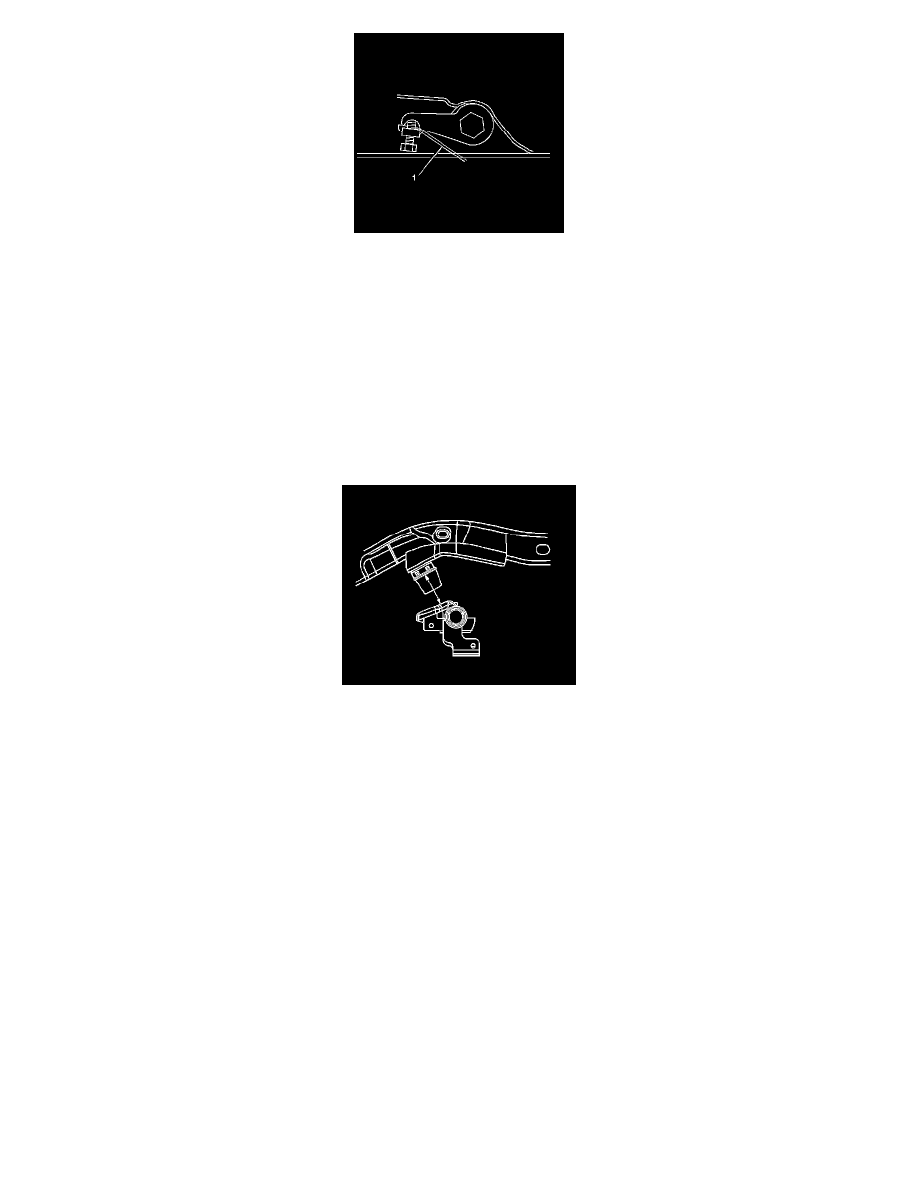
1. For vehicles equipped with a torsion bar suspension, turn the bolt (1) that contacts the torsion arm clockwise to raise, and counterclockwise to
lower, the height adjustment. One revolution of the bolt into the nut increases the Z height by approximately 6 mm (0.2 in).
2. For vehicles without torsion bars, replace damaged or worn components as necessary.
D Height Measurement
The D height dimension measurement determines the proper rear end ride height. No adjustment procedure is available. Repair may require replacement
of suspension components.
1. With the vehicle on a flat surface, lift upward on the rear bumper 38 mm (1.5 in).
2. Suddenly remove your hands.
3. Allow the vehicle to settle into position.
4. Repeat the jouncing operation 2 more times.
5. The D height is obtained by measuring the distance between the edge of the jounce cup along the jounce bumper center line and the jounce pad on
the rear axle.
6. The true D height dimension number is the average of the high and the low measurements. Refer to Trim Height Specifications (See:
Specifications/Mechanical Specifications/Suspension/System Specifications/Trim Height Specifications) .
7. If these measurements are out of specifications, inspect for the following conditions:
*
Sagging front suspension-Refer to Torsion Bar Replacement (See: Steering and Suspension/Suspension/Torsion Bar/Service and Repair) .
*
Sagging rear coil springs-Refer to Coil Spring Replacement (See: Steering and Suspension/Suspension/Suspension Spring ( Coil / Leaf
)/Service and Repair) .
*
Proper air suspension operation
*
Worn rear suspension components
*
Improper tire inflation-Refer to Vehicle Certification, Tire Placard, Anti-Theft, and Service Parts ID Label (See: Application and ID/Vehicle
Certification, Tire Placard, Anti-Theft, and Service Parts ID Label) .
*
Improper weight distribution
*
Collision damage
Pinch or Ctrl + scroll to zoom. Double-tap to reset.
Parts & tools for this job For 2008 Hummer H2 6.2L
- TOOLTie rod end toolSearch: tie rod end puller
- TOOLBall joint separatorSearch: ball joint separator
- FLUIDPower steering fluidSearch: Hummer power steering fluid
Links open Amazon search results in a new tab. As an Amazon Associate I earn from qualifying purchases.