
L322 Range Rover Service Procedures
GENERAL INFORMATION
03-12
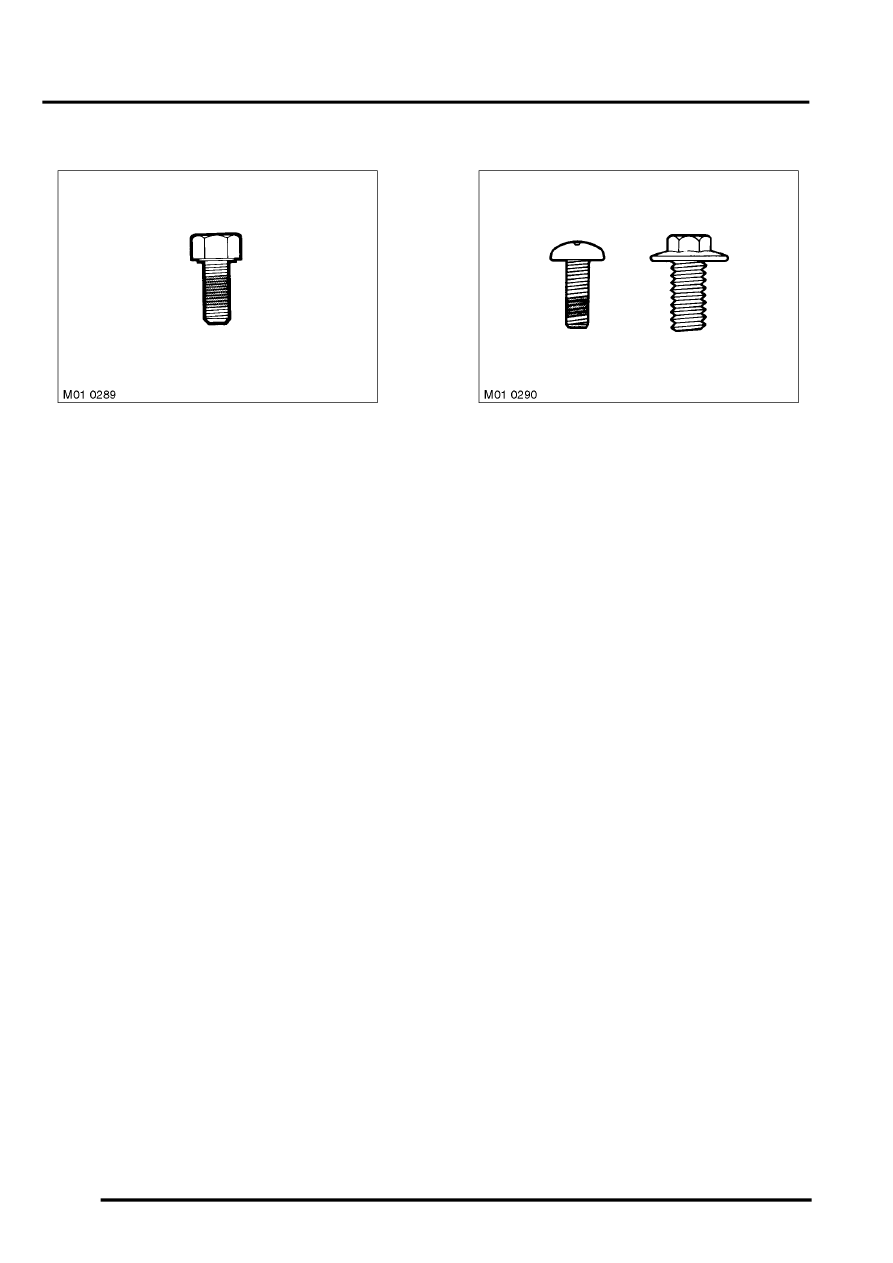
Encapsulated bolts and screws
Encapsulated bolts and screws have a micro-
encapsulated locking agent pre-applied to the
thread. They are identified by a coloured section
which extends 360
°
around the thread. The locking
agent is released and activated by the assembly
process and is then chemically cured to provide the
locking action.
Unless a specific repair procedure states otherwise,
encapsulated bolts may be re-used providing the
threads are undamaged and the following procedure
is adopted:
l
Remove loose adhesive from the bolt and
housing threads.
l
Ensure threads are clean and free of oil and
grease.
l
Apply an approved locking agent.
An encapsulated bolt may be replaced with a bolt of
equivalent specification provided it is treated with an
approved locking agent.
Self-locking bolts and screws
Self-locking bolts and screws, i.e. nylon patched or
trilobular thread can be re-used providing resistance
can be felt when the locking portion enters the female
thread.
Nylon patched bolts and screws have a locking agent
pre-applied to the threads. They are identified by the
presence of a coloured section of thread which
extends for up to 180
°
around the thread.
Trilobular bolts (i.e. Powerlok) have a special thread
form which creates a slight interference with the
thread of the hole or nut into which it is screwed.
DO NOT re-use self-locking fasteners in critical
locations (e.g. engine bearings, flywheel). Always
use the correct replacement self-locking nut, bolt or
screw.
DO NOT fit non self-locking fasteners in applications
where a self-locking nut, bolt or screw is specified.