
6 L4-2.5L (2010)
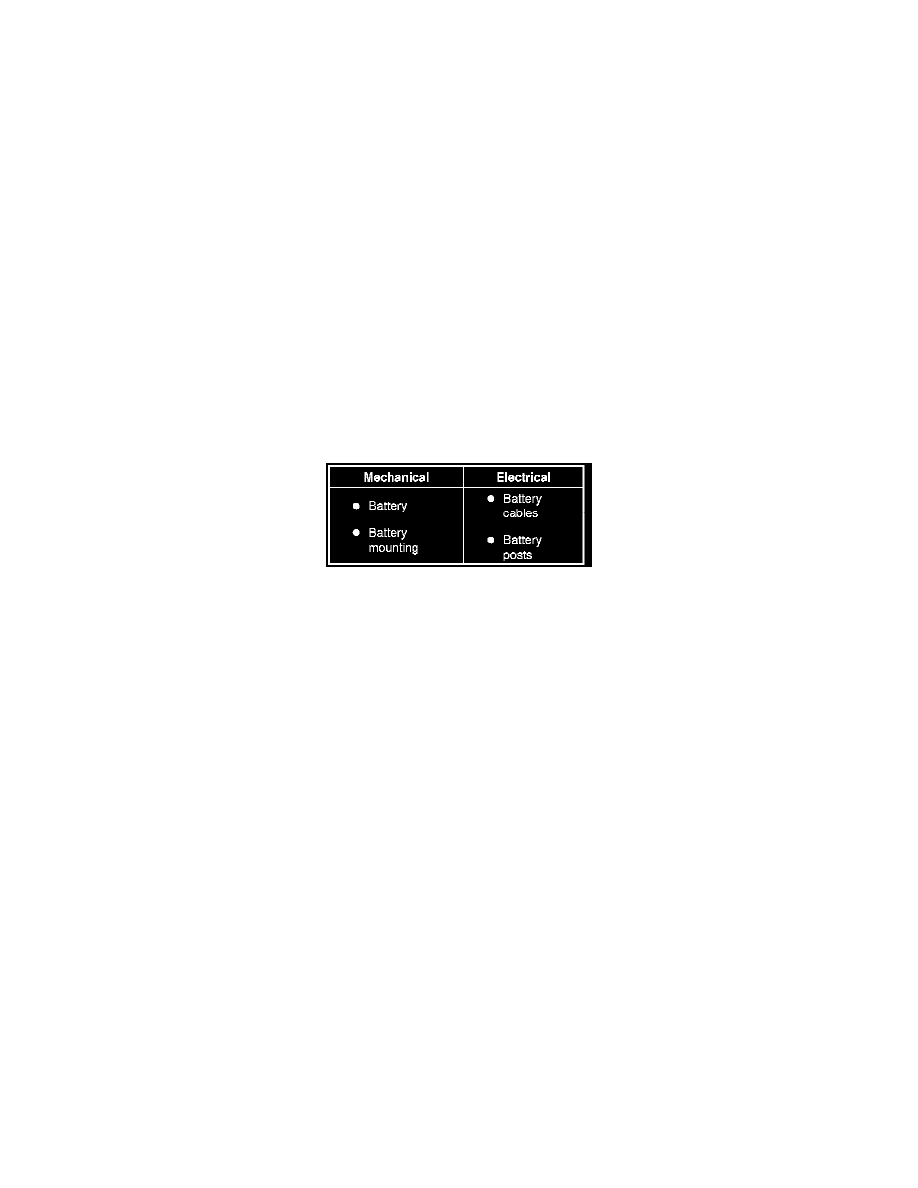
Battery: Testing and Inspection
BATTERY INSPECTION [L5]
WARNING:
1
Since battery acid is toxic, be careful when handling the battery.
2
Since battery acid is highly corrosive, be careful not to allow it to contact clothing or the vehicle.
3
In case battery acid contacts skin, eyes, or clothing, flush it immediately with running water. Especially if the acid gets in the eyes, flush with
water for more than 15 min and get prompt medical attention.
Electrolyte Specific Gravity
1. Measure the electrolyte specific gravity using a hydrometer.
-
If it is less than the specification, recharge the battery. See: Service and Repair/Procedures
Battery electrolyte specific gravity [20 °C {68 °F}]
-
1.22-1.29
Inspection and Verification
1. Verify that the customer concern by operating the system.
2. Visually inspect for obvious signs of mechanical or electrical damage. Visual Inspection Chart
3. If an obvious cause for a concern is found, correct the cause before proceeding to the next step.
4. If the fault is not visually evident, proceed to the pin point test.
Battery Condition Test
NOTE:
-
Failure to fully charge the battery before retesting may cause false readings.
Pin point test
1. Verify the battery condition using the Battery Analyzer.
-
If the meter read, GOOD BATTERY, inspect the generator. See: Charging System/Alternator/Testing and Inspection
-
If the meter read, GOOD-RECHARGE, charge the battery and inspect the generator. See: Charging System/Alternator/Testing and Inspection
-
If the meter read, CHARGE & RETEST, fully charge the battery and retest.
-
If the meter read, REPLACE BATTERY, install a new battery.
-
If the meter read, BAD CELL-REPLACE, install a new battery.
Back-up Current
1. Verify that the ignition is off (key has been removed) and that all doors are closed.
2. Disconnect the negative battery cable.
3. Connect the tester between the negative battery terminal and negative battery cable, leave the battery undisturbed for 10 min, and then measure the
back-up current.
-
If not within the specification, measure the back-up current while removing the fuses one by one from the inside of the main fuse block and the
inside of the fuse block.
CAUTION:
-
Operating electrical loads while the back-up current is being measured can damage the tester.