
Electrolyte level: testing (batteries with viewer)
- Make
- SEAT
- Model
- Arosa
- Year
- 1997–2004
- Section
- Electrical system › Electrolyte level: testing (batteries with viewer)
Electrolyte level: testing (batteries with viewer)
- Standard acid extractor
- Filler battery bottle VAS 5045Chapter “Battery charge test”
Warning
Follow the rules for risk prevention in any contact with sulphuric acid. Wear appropriate protective clothing.
Adhere to the corresponding laws batteries and sulphuric acid in disposing of batteries.
For greater the battery life it is essential to maintain the exact level of electrolyte.
If the electrolyte level (sulphuric acid and water) is too high it will leak, causing damage outside the battery, for example in components of the engine compartment.
If the electrolyte level is too low, the battery loses capacity (output) due to the drying of the elements. If the plates of the elements are not covered in electrolyte (sulphuric acid), the plates, the bridges of the plates and the bridges of the elements corrode. All of this affects the functioning of the battery and makes it unusable.
Switch off the ignition.
Check the electrolyte level by eye.
Note!
- (arrow).
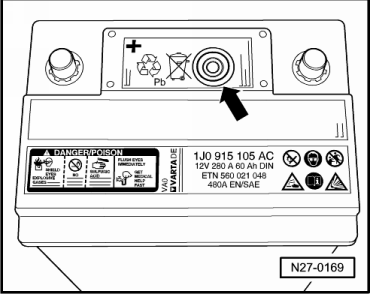
- and marks on the battery casing.
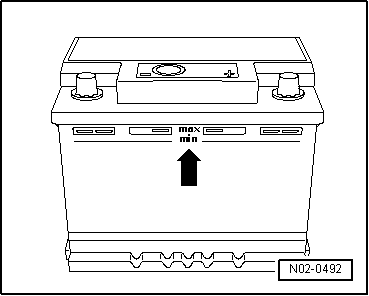
It may be difficult to check the electrolyte level through the viewer or even against the “min” and “max” marks on the battery casing.
In this case remove the plastic covering the caps to unscrew them.
The description of the test process and of the necessary work is found between pages Chapter “Visual check” and Chapter “Battery charge test”.
If the electrolyte level is too low, add distilled water only with the filler bottle VAS 5045 up to the max. mark
Note!
- VAS 5045 prevents overfilling of the battery and spillage of electrolyte. When the maximum filling level is reached, the flow of distilled water is interrupted.
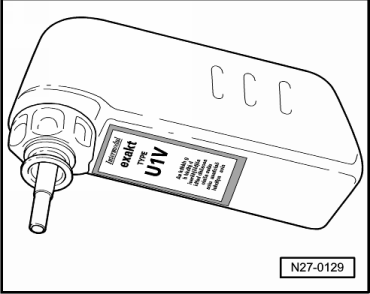
- To avoid impurities in the electrolyte that can provoke high self-discharge, add only distilled water.
Parts & tools for this job For 1997 SEAT Arosa
- TOOLDigital multimeterSearch: automotive digital multimeter
- PARTAssorted fuse kitSearch: car fuse assortment kit
- TOOLWire crimper and connector kitSearch: wire crimper connector kit
As an Amazon Associate we earn from qualifying purchases.