
General notes on brake fluid
- Make
- Volkswagen
- Model
- Amarok 2H
- Year
- 2010–2020
- Section
- Hydraulic system › General notes on brake fluid
General notes on brake fluid
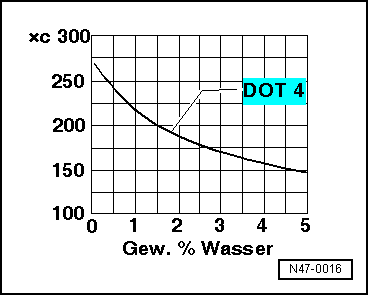
As the water content in the brake fluid rises, so its boiling point falls. If the brake fluid gets very hot, this can lead to vapour bubbles being formed, and failure of the brake.
The colour of the brake fluid becomes darker over the course of time. A dark brake fluid colour is not an indication of its condition. The discolouration is caused by chemical reactions.
Warning Rubber parts of brake system (sleeves, seals) are not compatible with mineral oil, fuel and aggressive cleaning agents.
Even the smallest amounts on a seal or a sleeve will result in changes to the parts. The consequences of a contaminated brake system only become apparent months later, and then give rise to greater expenses, particularly in vehicles equipped with ABS.
(A) = Sleeve (original size)
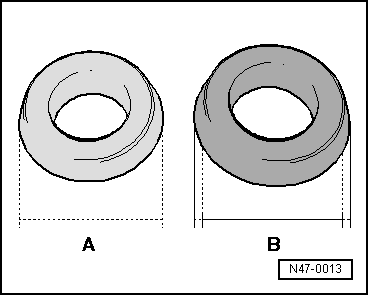
(B) = Sleeve (swollen due to contact with mineral oil)
Always keep brake fluid containers properly sealed. This is the only way of preventing contamination by oil, dirt, cleaning agents or moisture.
Carefully store brake fluid containers separately from oil (including hydraulic oil) and cleaning fluids. This is in order to avoid confusion with other fluids or even filling a brake system with the wrong product.
Warning Brake fluid specification
- Volkswagen recommends using new brake fluid in accordance with VW Standard 501 14 in order to ensure optimum function of the brake system. Alternatively, it is possible to use a brake fluid that complies with the requirements of US Standard FMVSS 116 DOT 4 or DIN ISO 4925 CLASS 4. The specification is stated on the brake fluid packaging.
- Suitable brake fluids are available from a Volkswagen partner.
Note
- Comply with the brake fluid change intervals as stated in the Maintenance Tables and the Service Schedule.
MaintenanceBookletDescriptions of work; brake fluid: changing
Parts & tools for this job For 2010 Volkswagen Amarok
- TOOLBrake bleeder kitSearch: one man brake bleeder kit
- FLUIDBrake fluidSearch: brake fluid
- TOOLBrake line flaring toolSearch: brake line flaring tool
As an Amazon Associate we earn from qualifying purchases.