
Hydraulic system: General information
- Make
- Volkswagen
- Model
- Beetle A5
- Year
- 2011–2019
- Section
- Hydraulic system › General information
Brake systemGeneral information
General information
Warning Only use new brake fluid conforming to VW standard (VW 501 14).
Note
- Bleeding brake system on vehicles with ABS is performed in same way as vehicles with a conventional brake system.
- Never allow brake fluid to come into contact with fluids that contain mineral oils (e.g. oil, petrol, cleaning agents). Mineral oils damage the seals and boots in the brake system.
- Brake fluid is poisonous. Also due to its corrosive effect brake fluid must not come into contact with paintwork.
- Brake fluid is hygroscopic, which means it absorbs moisture from the ambient air and should therefore always be stored in air-tight containers.
- Wash away spilt brake fluid using plenty of water.
- Do not reuse drained (used) brake fluid.
- Always observe the relevant environmental regulations for disposal
- Always keep brake fluid containers properly sealed. This is the only way of preventing contamination by oil, dirt, cleaning agents or moisture.
- Store brake fluid containers with care.
- Do not store them together with oil (also hydraulic oil) or cleaning solutions.
- Any measures must be taken to prevent brake fluid from being mixed with other fluids and to prevent the brake system from being filled with the wrong fluid.
- If one of the chambers of the brake fluid reservoir has run completely dry, it is necessary to perform primary bleeding → Chapter of the braking system first.
- Changing brake fluid; Maintenance manual MaintenanceBookletBrake and clutch system: Changing brake fluid.
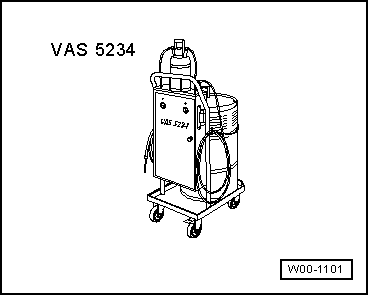
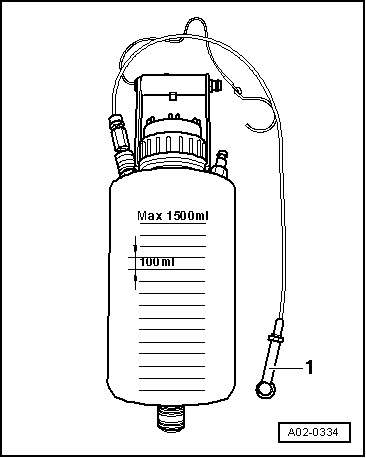
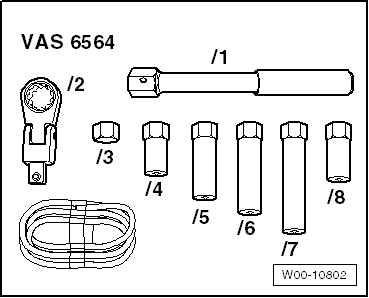
- Bleeding the brake system is described using brake filling and bleeding equipment VAS 5234.
- A pre-pressure of 2 bar is required for bleeding the ABS hydraulic unit N55.
Note
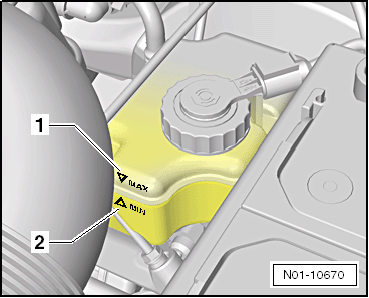
- Brake fluid must not be filled above MAX marking (1) to prevent brake fluid from running out.
Parts & tools for this job For 2011 Volkswagen Beetle
- PARTBrake padsSearch: Volkswagen Beetle 2011 brake pads
- TOOLBrake bleeder kitSearch: one man brake bleeder kit
- FLUIDBrake fluidSearch: brake fluid
As an Amazon Associate we earn from qualifying purchases.