
Brake fluid level: checking
- Make
- Volkswagen
- Model
- Golf Mk7 Estate
- Year
- 2013–2020
- Section
- Other controlling and regulating components › Brake fluid level: checking
‹ Prev Thickness of brake pads/linings and condition of brake discs, front and rear: checkingNext › Diesel particulate filter: checking
Heating, air conditioningBrake fluid level: checking
Brake fluid level: checking
Note as follows:
The brake fluid is dependent on pad wear.Brake fluid VW 501 14 with part number B 000 750 must be used.Warning
- Brake fluid must under no circumstances come into contact with fluids containing mineral oils (oil, petrol, cleaning solutions). Mineral oils will damage seals and rubber grommets of brake system.
- Brake fluid is poisonous. In addition, due to its corrosive nature, it must not come into contact with paint.
- Brake fluid is hygroscopic, i.e. it attracts moisture from the surrounding air and therefore must always be stored in air-tight containers.
- Wash away spilt brake fluid using plenty of water.
- Observe disposal regulations!
At delivery inspection the fluid level must be at max. marking.
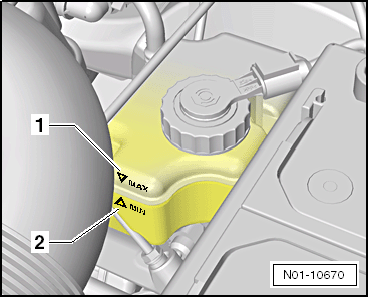
Note
- To prevent brake fluid from flowing out of the reservoir, the max. marking (1) must not be exceeded.
The fluid level must always be judged in conjunction with lining/pad wear.
When vehicle is in use, fluid level tends to drop slightly due to lining/pad wear and automatic adjustment.
Recommended brake fluid level, if brake pads are almost at wear limit:“At min. marking or just above”(2), “REPLENISHING IS NOT REQUIRED”.
“Between min. and max. marking”.
Warning If the fluid level is below min. marking (2), the brake system must be checked for leaks before fluid is topped up, “Repair measure”.
‹ Prev Thickness of brake pads/linings and condition of brake discs, front and rear: checkingNext › Diesel particulate filter: checking
Parts & tools for this job For 2013 Volkswagen Golf
- TOOLBrake bleeder kitSearch: one man brake bleeder kit
- FLUIDBrake fluidSearch: brake fluid
- TOOLBrake line flaring toolSearch: brake line flaring tool
As an Amazon Associate we earn from qualifying purchases.