
Workshop Manuals Factory service & repair Volkswagen
01 4-cylinder injection engine (1.4 l direct injection engine, turbocharger)02 4-cyl. direct injection engine (1.8 l and 2.0 l, 4 V, EA 888 gen III, turbocharger, chain drive)03 3-cylinder direct-injection engine (1.0 l engine, 4V, EA 211, turbocharger)04 4-cylinder direct-injection engine (1.2 l engine, 4V, EA 211, turbocharger)05 Engine: 4-Cyl. Common Rail (1.6 l and 2.0 l, 4V, Turbocharger, EA288)06 Fuel supply system - Petrol engines07 Fuel supply system - Diesel engines08 4-cylinder direct-injection engine (1.4 l, natural gas, EA 211, turbocharger)09 Fuel supply system - natural gas engines10 4-cyl. direct injection engine (2.0 l, 4 V, turbocharger, chain drive, generation III) Volkswagen R GmbH11 Fuel supply system – petrol engines, Volkswagen R GmbH12 4-cylinder injection engine (1.6 l engine)13 4-cyl. direct injection engine (1.8 l, 2.0 l, 4 V, turbocharger, chain drive, generation III)14 4-cyl. diesel engine (2.0 l engine, common rail)15 Propshaft and rear final drive16 6-speed manual gearbox 02Q, 0BB and 0FB17 6-speed manual gearbox 02S18 6-speed dual clutch gearbox 0D919 7-speed dual clutch gearbox 0CW20 6-speed manual gearbox 0AJ21 5-speed manual gearbox 0A422 5-speed manual gearbox 0AH23 5-speed manual gearbox 0AF24 6-speed dual clutch gearbox 0D9, Volkswagen R GmbH25 Propshaft and rear final drive Volkswagen R GmbH26 6-speed manual gearbox 0FB Volkswagen R GmbH27 6-speed manual gearbox 02Q28 6-speed automatic gearbox 09G29 Running gear, axles, steering30 Brake system31 Wheels and Tyres Guide32 Heating, air conditioning33 Heating and air conditioning: Auxiliary heater34 Electrical System, General Information35 Electrical system36 Electrical: Communication37 General body repairs, interior38 General body repairs, exterior39 Vehicle-specific paint information
Volkswagen Golf Mk7 Estate (2013-2020)29 · Running gear, axles, steering
29 · Steering & suspension

Checking outer constant velocity joint

Make
Volkswagen
Model
Golf Mk7 Estate
Year
2013–2020
Section
Drive shaft › Checking outer constant velocity joint
Running gear, axles, steeringChecking outer constant velocity joint

Checking outer constant velocity joint

The joint is to be dismantled to renew the grease if it is heavily soiled, or to check the running surfaces of the balls for wear and damage.

Removing

Before dismantling, mark position of ball hub in relation to ball cage and joint body with an electric scriber or oil stone.
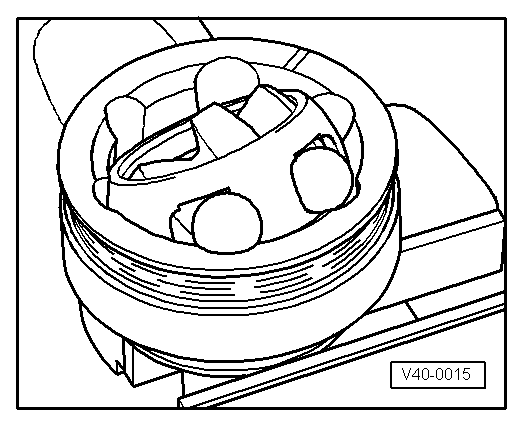
V40-0015

Swing ball hub and ball cage.

Remove balls one at a time.

Turn cage until the two rectangular windows (arrow) lie on joint body.
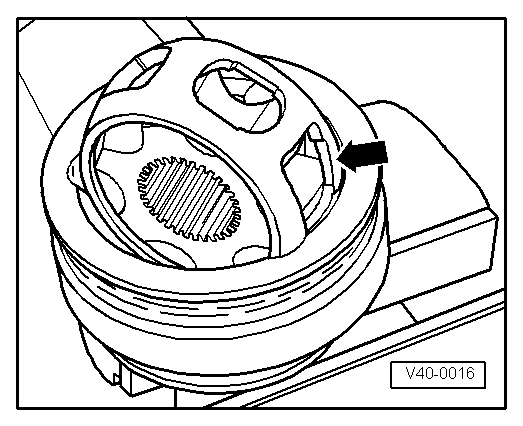
V40-0016

Take out cage with hub.

Swing segment of hub into square cage window.
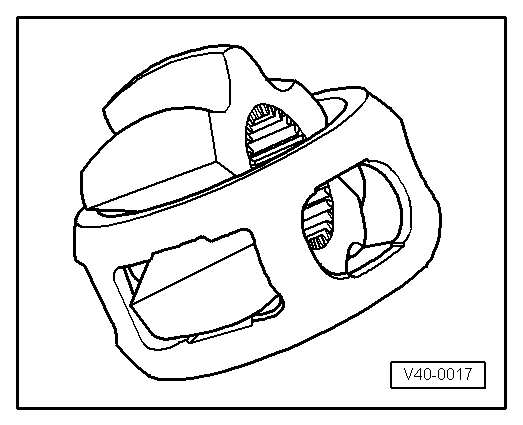
V40-0017

Tip hub out of cage.

The six balls for each joint belong to a tolerance group. Check stub axle, hub, cage and balls for small indentations (pitting) and traces of seizing. Excessive circumferential backlash in the joint is noticeable during load change jolts. In this case the joint must be renewed. Smoothing and traces of wear of the balls are no reason to change the joint.

Installing

Pack half of total grease quantity (40 g) into joint body.

Fit cage with hub into joint body.

Press in opposing balls one after the other; the original position of the hub relative to the cage and joint body must be restored.

Fit new retaining ring into hub.

Distribute remaining grease in boot.

Parts & tools for this job For 2013 Volkswagen Golf

As an Amazon Associate we earn from qualifying purchases.