
Brake fluid level: checking
- Make
- Volkswagen
- Model
- Passat B7
- Year
- 2010–2015
- Section
- Differential › Brake fluid level: checking
‹ Prev Checking thickness of brake pads/linings and condition of brake discs, front and rearNext › 6-speed dual clutch gearbox 0D9: changing gear oil and filter
6-speed manual gearbox 0AJBrake fluid level: checking
Brake fluid level: checking
Warning
- Brake fluid must under no circumstances come into contact with fluids containing mineral oils (oil, petrol, cleaning solutions). Mineral oils will damage seals and rubber grommets of the brake system.
- Brake fluid is poisonous. In addition, due to its corrosive nature, it must not come into contact with paint.
- Brake fluid is hygroscopic, i.e. it attracts moisture from the surrounding air and therefore must always be stored in air-tight containers.
- Wash away spilt brake fluid using plenty of water.
- Observe disposal regulations!
Warning When replenishing, ensure to not spill any liquids in the engine compartment.
Spilled liquids may cause damage in the engine compartment.
Toothed belts, V-belts and poly V-belts which came into contact with oil, brake fluid or coolant must always be renewed.
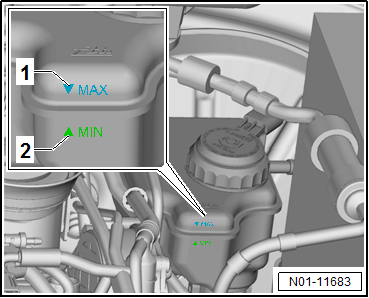
At delivery inspection, the fluid level must be at MAX. marking (1).
Note
- To prevent brake fluid from flowing out of the reservoir, the max. marking (1) must not be exceeded.
Note
- The fluid level must always be judged in conjunction with lining/pad wear.
- When vehicle is in use, fluid level tends to drop slightly due to lining/pad wear and automatic adjustment.
“replenishing is NOT required”.
Warning If the fluid level is below min. marking (2), the brake system must be checked for leaks before fluid is topped up, “Repair measure”.
‹ Prev Checking thickness of brake pads/linings and condition of brake discs, front and rearNext › 6-speed dual clutch gearbox 0D9: changing gear oil and filter
Parts & tools for this job For 2010 Volkswagen Passat
- TOOLBrake bleeder kitSearch: one man brake bleeder kit
- FLUIDBrake fluidSearch: brake fluid
- TOOLBrake line flaring toolSearch: brake line flaring tool
As an Amazon Associate we earn from qualifying purchases.