
Removing and installing brake pads/linings
- Make
- Volkswagen
- Model
- Passat NMS, US and China
- Year
- 2011–2019
- Section
- Front brakes › Removing and installing brake pads/linings
Removing and installing brake pads/linings
Special tools and workshop equipment requiredTorque wrench V.A.G 1331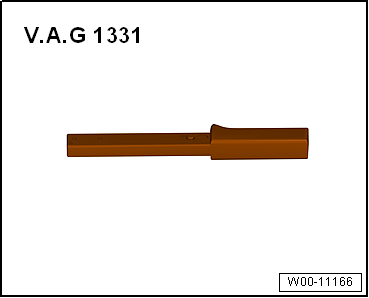
Mark brake pads/linings when removing if they are to be reused. Fit in same position when installing, or braking will be uneven.
Remove wheels.
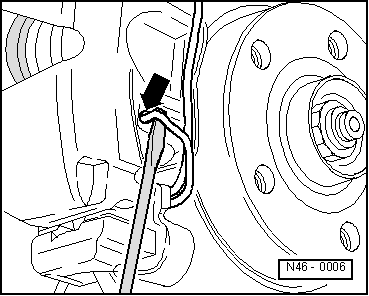
Lever brake pad retaining spring out from brake caliper (arrow) with a screwdriver and remove.
Remove cover caps (arrows).
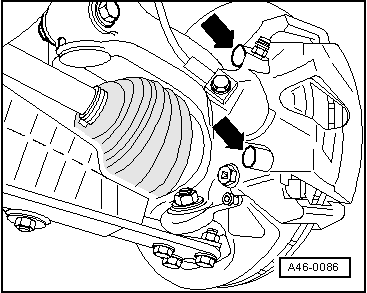
Unscrew both guide pins (arrows) and remove from brake caliper.
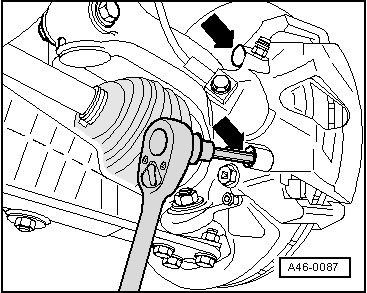
Remove brake caliper and secure with wire so that weight of brake caliper does not strain or damage brake hose.
Take brake pad out of brake caliper or from brake carrier.
WARNINGHealth hazard due to poisonous dust coming out of brake system.Risk of irreversibly deposited dust particles in the lungs. Risk of respiratory health problems.Never blow out the brake system with compressed air.Thoroughly clean contact surface for brake pads on brake carrier and remove any corrosion.
Clean brake caliper, in particular the bonding surface for the brake pad. It must be free of adhesive residue and grease.
Use only methylated spirits for cleaning the brake caliper.
Install in reverse order. Note the following when doing this:
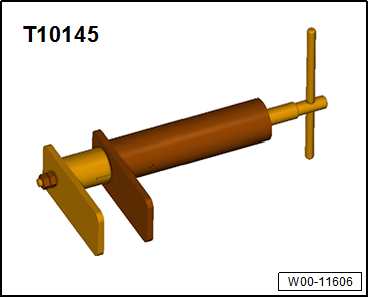
Before pressing piston back into cylinder with piston resetting tool, draw off brake fluid from brake fluid reservoir. Otherwise, particularly if reservoir has been topped up, fluid will overflow and cause damage.
Insert piston resetting tool T10145(1) into brake caliper (2) and push back brake piston.
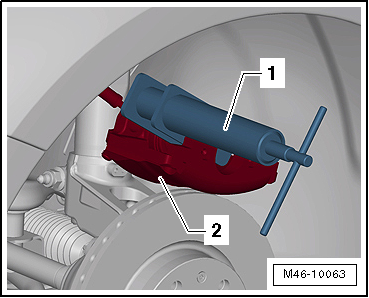
Pull protective foil off outer brake pad backplate.
Fit outer brake pad to brake carrier.
Insert inner brake pad with retaining spring into brake caliper (piston).
When positioning the brake caliper, ensure that the brake pad does not stick to the brake caliper housing before it is positioned correctly.
Do not damage adhesive surface.
Bolt brake caliper to brake carrier with both guide pins.
Fit both cover caps.
Insert retaining spring into brake caliper.
Install wheel and tighten.
Note
- Every time after changing pads, depress brake pedal firmly several times with vehicle stationary so that brake pads are properly seated in their normal operating position.
- Check brake fluid level after changing brake pads.
- Chapter“Assembly overview - front brakes”
- Running gear, axles, steeringRep. gr.44Wheels, tyres; Specified torque for wheel bolts.
Parts & tools for this job For 2011 Volkswagen Passat
- PARTFront brake padsSearch: Volkswagen Passat 2011 front brake pads
- TOOLCaliper piston rewind toolSearch: brake caliper piston rewind tool
- FLUIDBrake fluidSearch: brake fluid
As an Amazon Associate we earn from qualifying purchases.