
Gas system test
- Make
- Volkswagen
- Model
- Polo Mk4
- Section
- Ignition system › Gas system test
Gas system test
1) The Main Vehicle Inspection (similar to the MOT Test in the UK) includes visual and functional inspection of certain components without dismantling and is also carried out to check if the vehicle complies with the German Road Traffic Licensing Regulations.
Warning
- Gas system tests must only be performed by specially trained personnel, which must be trained at regular intervals.
- Autogas is highly inflammable and, in combination with air, creates a combustible mixture.
- There must be no open flame or source of ignition near the autogas system.
- Inhaling autogas can lead to light-headedness and lung damage. High concentrations may lead to suffocation due to lack of oxygen.
- Autogas is not odourless because a gas having a strong odour is added.
Note
- When working on the autogas system always ensure for tidiness and cleanliness!
When identifying components, the ECE standard for the fuel tank must be checked.
Check autogas system for damage, corrosion and security.
Start engine.
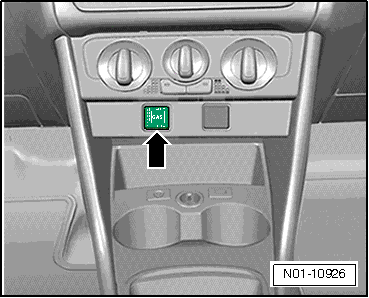
Check, in centre console, if engine is in gas or petrol mode.
“ON” LED (arrow) lights up in gas mode.
Start engine.
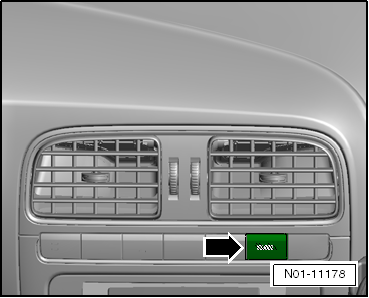
Press fuel selection button (petrol, gas) E395(arrow) in middle dash panel trim.
Note
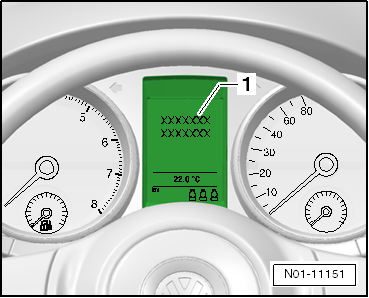
- In the dash panel insert K changeover (1) to gas mode is displayed briefly.
- Operation in gas mode is signalised by symbol (2) in dash panel insert K.
Note
- The engine always starts in petrol mode. The changeover to gas mode takes place automatically. Prerequisites are engine temperature of 30°C and engine speed from 1,200 rpm.
Switch on ignition to set the pressure ratios in the autogas system to the operating mode. For the leakage test, the ignition can be switched off.
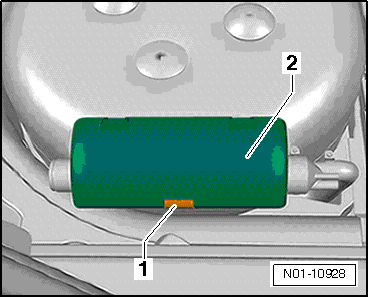
Remove the protective covers for autogas tank in the spare wheel well as follows:
Release retaining lug (1) and remove protective cover (2).
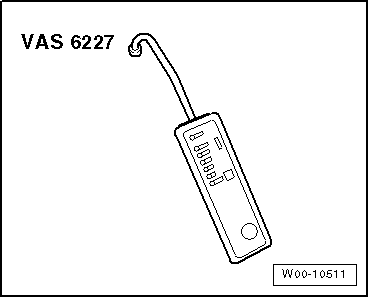
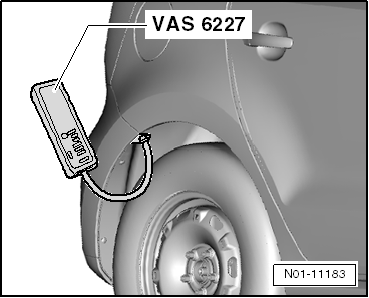
Check then for leaks using gas leak detector for natural gas vehicles VAS 6227.
Note
- Always check all threaded connections of the autogas system!
Any other result than a green LED for »OK« is not permitted on the gas leak detector for natural gas vehicles VAS 6227. When a yellow or red LED lights up, rectify the leak (repair measure) and repeat the “gas system test”.
When using another gas leak detector for natural gas vehicles VAS 6227 the limit of 50 ppm must not be exceeded.
Note
- As autogas is heavier than air, it will always fall. For this reason the test must be performed below a threaded connection at two positions 90° apart.
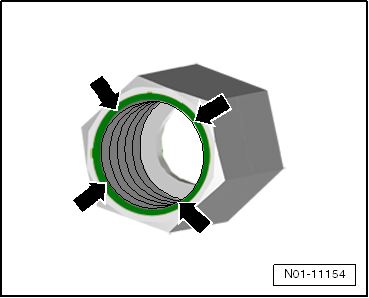
Check both positions above the threaded connection or slowly move the test probe over the whole threaded connection.
- Test area of filler connection in lower wheel housing (measure total concentration, if “not OK” remove wheel housing liner and repeat test more carefully).
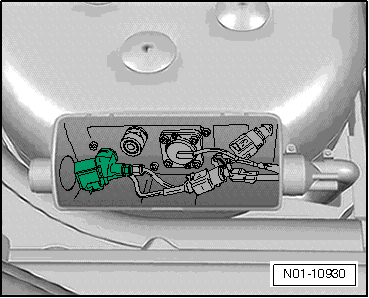
- Tank shut-off valve in spare wheel well
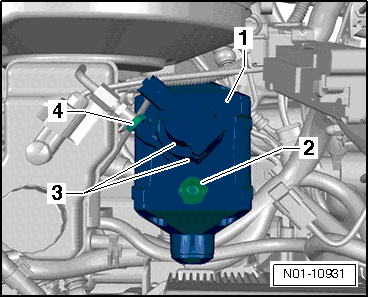
- Evaporator (1) with threaded connections (2, 3 and 4)
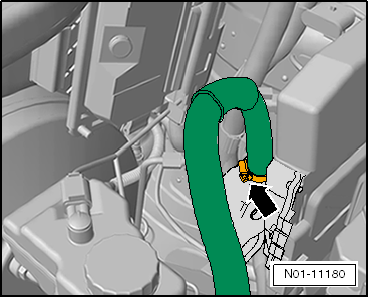
- Connection (arrow) with connecting hose to evaporator.
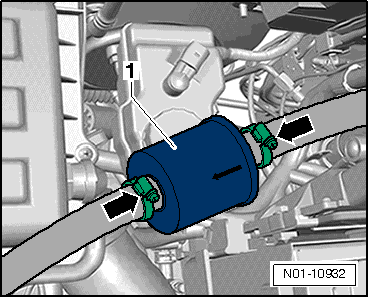
- Threaded connections (arrows) of fuel filter (1) (engine code: CMAA)
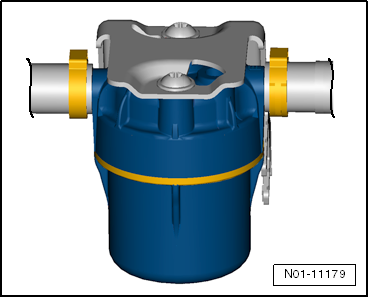
- Connections of filter (1) and the filter itself (engine code: CNKA).
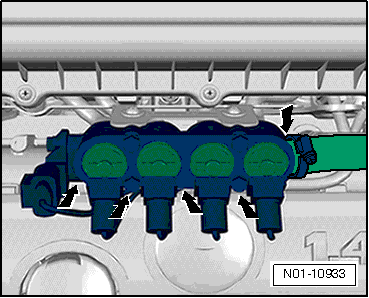
- Connections (arrows) on rail.
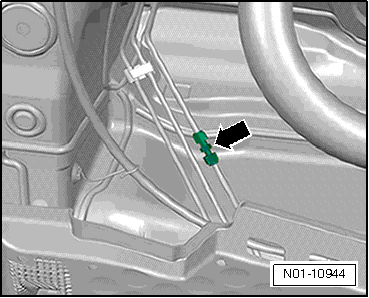
- Connections (arrow) below vehicle (luggage compartment floor)
The completed report serves to document for the gas system test. The report must be signed and stamped by an authorised signatory. This report needs to be presented at the Main Vehicle Inspection1) and is accepted by the tester.
1) The Main Vehicle Inspection (similar to the MOT Test in the UK) includes visual and functional inspection of certain components without dismantling and is also carried out to check if the vehicle complies with the German Road Traffic Licensing Regulations.
Parts & tools for this job For Volkswagen Polo
- PARTSpark plugsSearch: Volkswagen Polo spark plugs
- TOOLSpark plug socketSearch: spark plug socket
- TOOLSpark plug gap toolSearch: spark plug gap tool
As an Amazon Associate we earn from qualifying purchases.