
Leaks at shock absorbers (Running gear, axles, steering)
- Make
- Volkswagen
- Model
- Touran Mk2
- Year
- 2015–2023
- Section
- Repair instructions › Leaks at shock absorbers
Running gear, axles, steeringLeaks at shock absorbers
Leaks at shock absorbers
Shock absorbers are often replaced because of externally visible leakage. Inspections on the test rig and in the vehicle have shown that in the majority of cases this replacement is not justified.
Slight loss of fluid (“sweating”) at the piston rod seal is not a reason for replacing a shock absorber. An oil sweating shock absorber is acceptable under the following conditions:
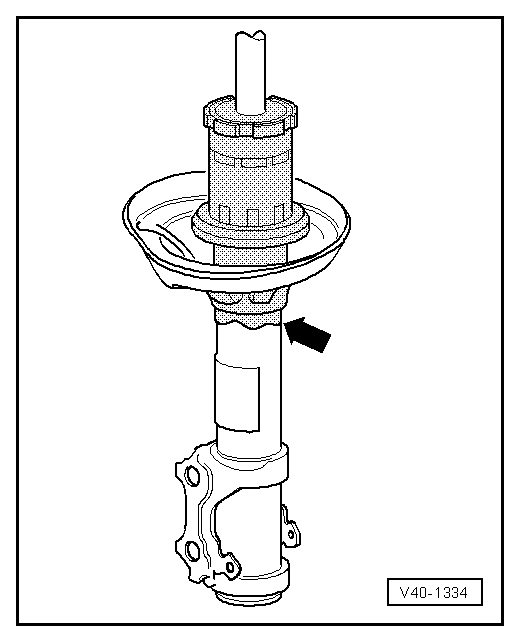
- Fluid seepage (as shown in the shaded part of the illustration) is visible, but the fluid is dull and possibly dried by dust.
- The fluid seepage extends only from the top shock absorber seal (piston rod oil seal) down to the bottom spring plate (arrow).
Parts & tools for this job For 2015 Volkswagen Touran
- TOOLCoil spring compressorSearch: coil spring compressor
- TOOLBall joint separatorSearch: ball joint separator
- PARTShock absorbersSearch: Volkswagen Touran 2015 shock absorbers
As an Amazon Associate we earn from qualifying purchases.