
S80 2.9 L6-2.9L VIN 94 B6294S (2000)
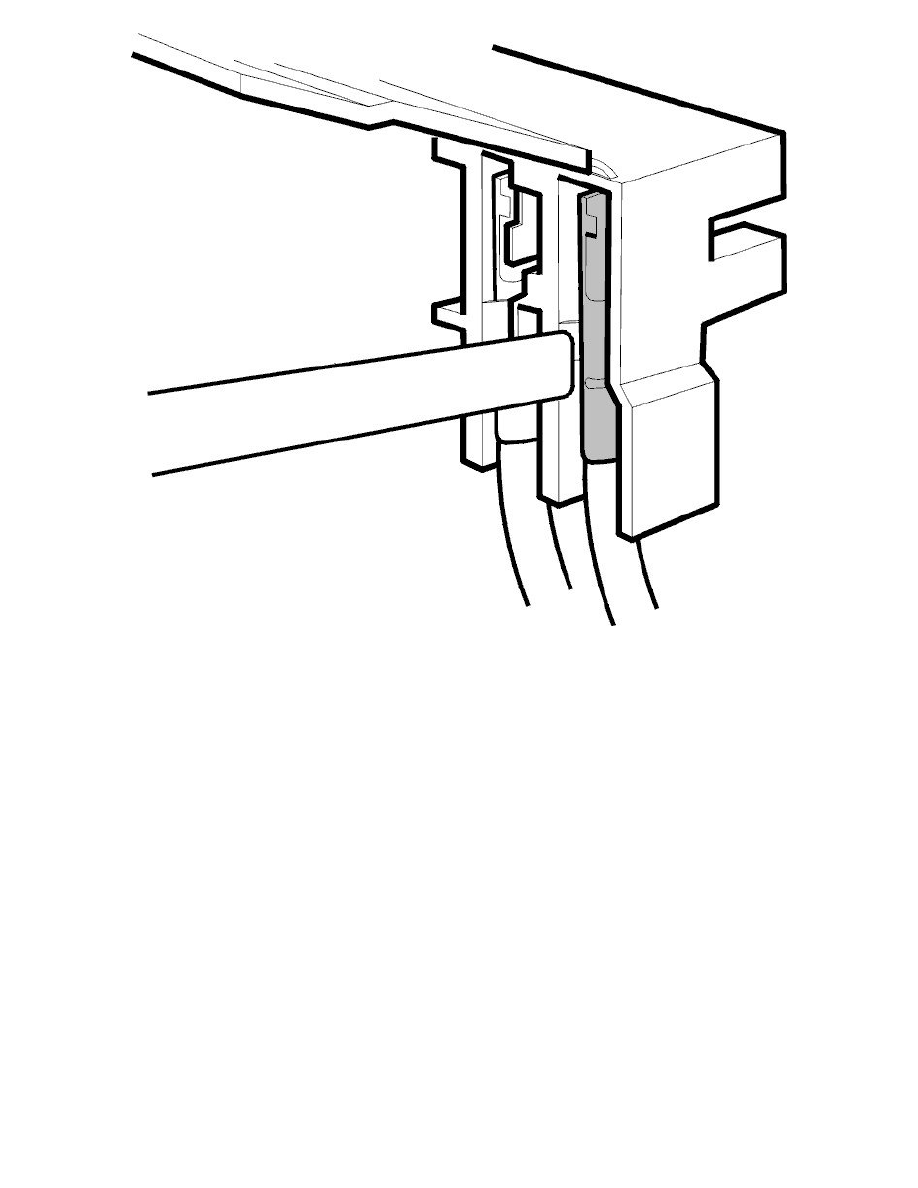
Use a feeler gauge approx. 0.15 mm.
Press in locking catch and extract the cable terminal.
-
Proceed to chapter New cable terminal See: Diagrams/Diagnostic Aids/New Cable Terminal Seal sws and plug See: Replacing Cable
Terminals/Seal SWS and Plug. Replacing a cable terminal in order to crimp a new cable terminal.
Soldering, General
Soldering, general
Soldering is a relatively easy method to apply to cable terminals. No expensive equipment is required and the core area dimension is not a critical factor.
The disadvantages with soldering are uneven results and that impurities and dirt on the contact points make it more difficult to get a clean soldered
connection.
To ensure a good contact the soldering point must be free from dirt, oxidized metal, grease, paint etc.
Note! Note! Avoid soldering connections that carry a high power load.
Soldered connection quality
Choice of solder wire, flux and soldering tool as well as the location and method used affect the overall quality of a soldered connection.
Ensure that solder does not creep too far up the cable when soldering a terminal on to a cable, as there is a risk the cable can become brittle and break.
Soldering tool
There are different types of soldering tool. Usually a soldering iron with temperature control is used so that the temperature created on the soldering iron
tip can be adjusted.
Soldering wire
It is important to use soldering wire with a high quality non-corrosive flux. Use 50-50 or 60-40 rosin core solder.