
S80 2.9 L6-2.9L VIN 94 B6294S (2000)
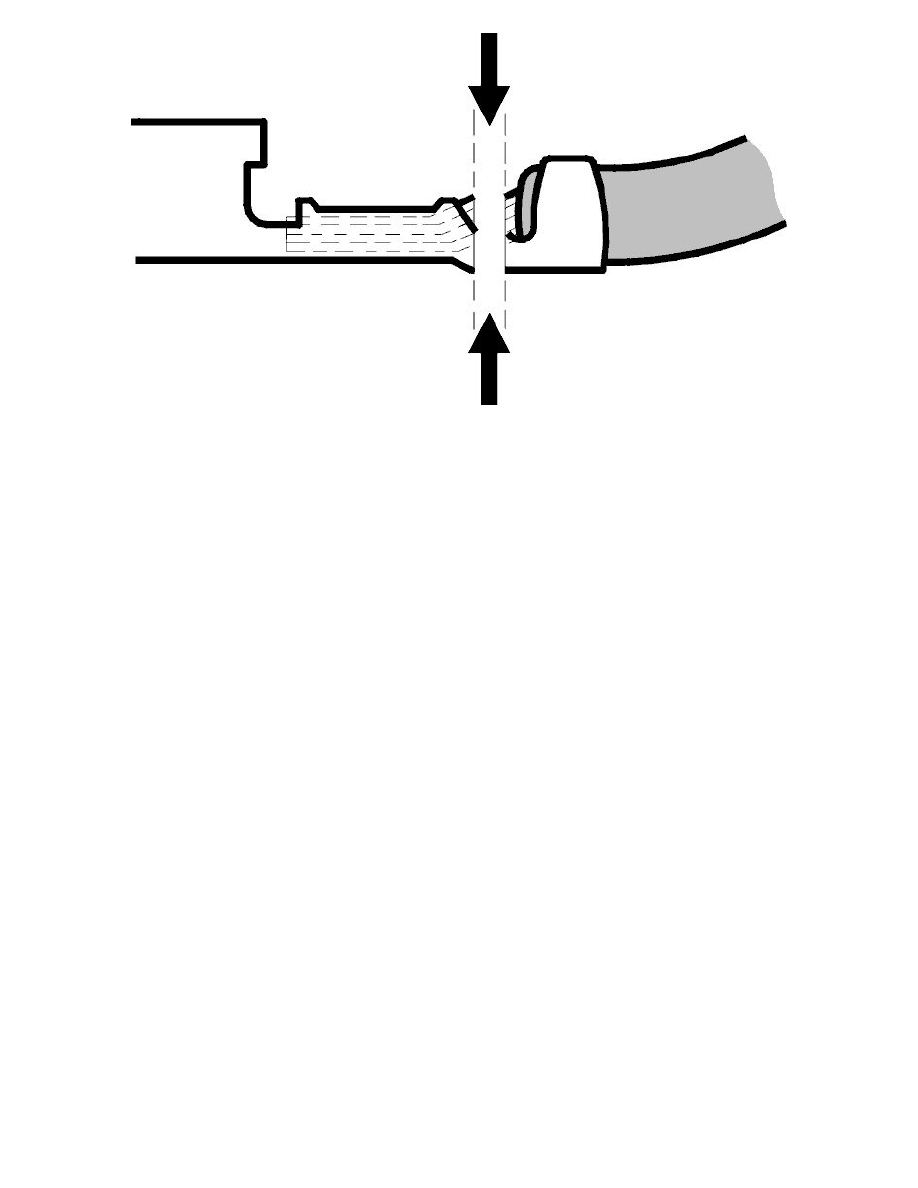
Minimize length loss on cables
If there is a risk that the cable will be too short when the cable terminal is replaced follow this procedure in order to minimize length loss
for tightly routed cables:
-
Cut the cable terminal between the core crimp and the insulation wings.
Inspect the cable insulation
Check if there is
-
Visible mechanical wear or damage from excessive loadings.
-
Visible damage from excessive electrical loadings in the form of discoloration or melted material.
If the damage is only at the end of the cable
Cut off the damaged section and check that the length remaining is sufficient.
If the cable is too short it must be renewed or a new section of cable added
-
See Replacing a cable See: Cables/Replacing a Cable. Replacement of cable
-
See Splicing using insulated moisture proof butt connector See: Cables/Splicing Using Insulated Moisture Proof Butt Connector. Splicing cable
If there is damage along the cable
Replace the cable with a new one
-
See Replacing a cable See: Cables/Replacing a Cable. Replacement of cable
For small areas of damage such as scratches (not deep ones) it can be enough to apply reinforcement to the cable insulation by using a heat-shrinkable
tubing over the damaged area. If good sealing properties are required then either a shrinkable tubing with internal coating of glue or self-vulcanizing tape
p/n 3540116-5 must be used.
Stripping the Cable
Stripping the cable
Stripping the cable for a cable terminal