
Engine Control Module (System Overview): Description and Operation (page 34 of 42)
- Make
- Volvo
- Model
- XC90
- Engine
- L5-2.5L Turbo VIN 59 B5254T2
- Year
- 2004
- Section
- Computers and Control Systems › Engine Control Module › Description and Operation
The potentiometer whose signal is closest to the calculated throttle angle will then be assumed to be correct. The other potentiometer is then classified as
not functioning and a diagnostic trouble code (DTC) is stored. The system then constantly monitors the throttle angle of the remaining potentiometer in
comparison to the calculated throttle angle. If there is a difference between these values, the engine control module (ECM) will not rely on any of the
throttle unit potentiometers. The power stage in the throttle unit is then disengaged, and the throttle switches to limp home mode (return position).
Part 2
Function (Continued)
Adaptation of the throttle unit
Normally the engine control module (ECM) adapts the throttle unit during manufacture of the car. There are a number of other occasions when the
throttle unit must be adapted. A new adaptation is obviously required if the throttle unit or the engine control module (ECM) is replaced, but also if the
software in the engine control module (ECM) is replaced. This is because the adaptation values are stored in the EEPROM memory in the control
module, at a predetermined location in the memory for each software. These storage locations may vary between different software, in which case a new
adaptation will be required. The final reason for adaptation is that the values for the throttle unit may have changed during its service life. Therefore
there is a routine which begins adaptation of the throttle unit if the car is left with the engine off and the throttle on for 30 seconds (and other basic
conditions for adaptation of the throttle unit are met). A new adaptation is then carried out. If the "new" values are different from the "old" values, the
new values are used. Adaptation usually takes place automatically when the engine control module (ECM) detects that the adaptation has not been run or
that the values from a previous adaptation are outside certain tolerances. However a number of basic conditions must be met to ensure that the adaptation
is carried out correctly:
Basic conditions for adaptation of the throttle unit:
-
ignition on/engine off
-
battery voltage above 10 V
-
accelerator pedal (AP) released (unaffected)
-
the car must be stationary (no speed signal)
-
engine coolant temperature (ECT) between 5 and 100° C
-
intake air temperature (IAT) above 5° C.
During adaptation, the engine control module (ECM) checks that the values obtained are within reasonable limits. This helps to determine whether the
throttle unit is functioning correctly or not. When the adaptation has been carried out, all relevant values are stored in the EEPROM memory in the
control module so that they can be retrieved if the power supply is broken. This means that if the battery is replaced for example, a new adaptation is not
necessary.
Fuel trim
Overview
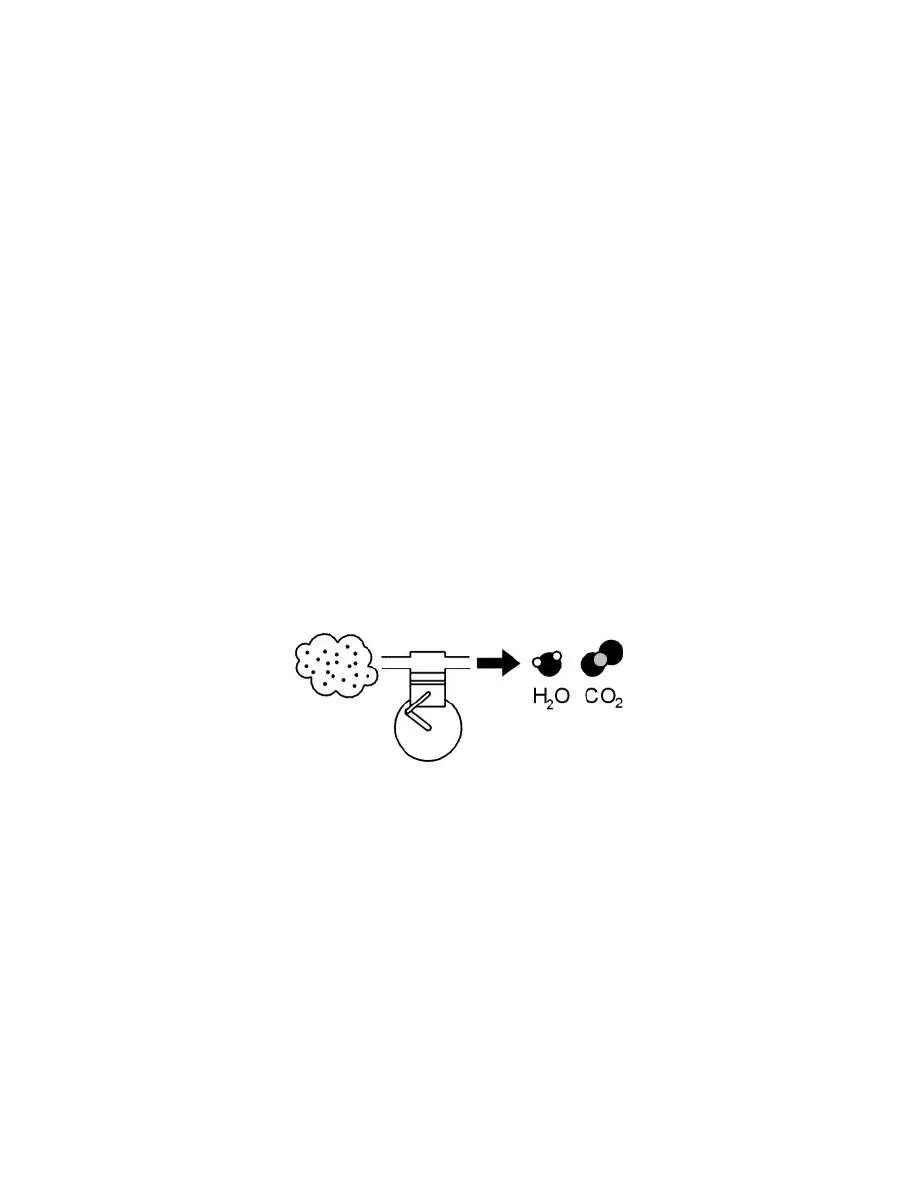
Fuel trim reduces exhaust emissions. Fuel trim reduces nitrous oxide (NOx), carbon monoxide (CO) and hydrocarbon (HC) emissions.
Theoretically, if the correct amount of oxygen is added during combustion, fuel can be converted to water (H2O) and carbon dioxide (CO2). Emissions
would then be completely safe.
In practice considerable amounts of hydro-carbons (HC) and varying amounts of carbon monoxide (CO) and carbon dioxide (CO2) remain.
Pinch or Ctrl + scroll to zoom. Double-tap to reset.
The same page in: XC90 AWD L5-2.5L Turbo VIN 59 B5254T2 (2005), XC90 2.5T AWD L5-2.5L Turbo VIN 59 B5254T2 (2003), XC90 2.5T AWD L5-2.5L Turbo VIN 59 B5254T2 (2003), XC90 2.5T AWD L5-2.5L Turbo VIN 59 B5254T2 (2003), XC90 2.5T AWD L5-2.5L Turbo VIN 59 B5254T2 (2003), XC90 AWD L5-2.5L Turbo VIN 59 B5254T2 (2005), XC90 AWD L5-2.5L Turbo VIN 59 B5254T2 (2005), XC90 AWD L5-2.5L Turbo VIN 59 B5254T2 (2005), XC90 AWD L6-2.9L Turbo VIN 91 B6294T (2004), XC90 AWD L6-2.9L Turbo VIN 91 B6294T (2004), XC90 AWD L6-2.9L Turbo VIN 91 B6294T (2004), XC90 AWD L6-2.9L Turbo VIN 91 B6294T (2004), XC90 L5-2.5L Turbo VIN 59 B5254T2 (2004).
Parts & tools for this job For 2004 Volvo XC90 2.5L
- TOOLOBD2 scannerSearch: OBD2 scanner
- TOOLDigital multimeterSearch: automotive digital multimeter
- TOOLBack-probe test leadsSearch: back probe test leads
Links open Amazon search results in a new tab. As an Amazon Associate I earn from qualifying purchases.