
Compressor Clutch Control
- Make
- Aston Martin
- Model
- DB7 Factory Workshop Manual Volume 2: Electrics, Body and Air Conditioning
- Year
- 1994–1998
- Section
- Refrigeration components › Compressor Clutch Control
Compressor Clutch Control
The compressor pulley is driven continuously when the engine is running. An electromagnetic clutch allows the compressor to be engaged or disengaged. The clutch is energised by battery supply voltage when the clutch relay RF3 is closed by a signal from the ECM (pin 21) via the engine management system.
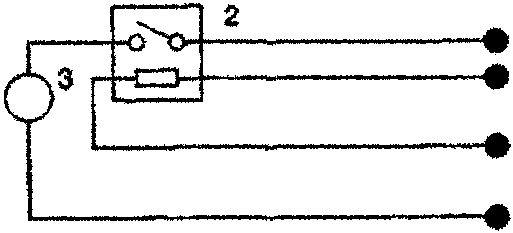
- +ve battery supply
- Clutch relay
- Compressor clutch
- Pin 20 ECM supply to clutch relay solenoid
- Earth-Ground
- Earth-Ground
Trinary Switch
High Side Low Pressure Switch
The high side low pressure switch (HSLP) is connected in the earth-ground return lead of the compressor clutch coil. The switch is a function of the trinary switch and monitors the pressure on the high side of the refrigeration system. If the pressure drops below 25 psi (+ 5 psi) the contacts open to de-energise the clutch coil and disengage the clutch. Low pressure occurs when there is a fault in the system, and the HSLP switch contacts remain open until the fault has been rectified.
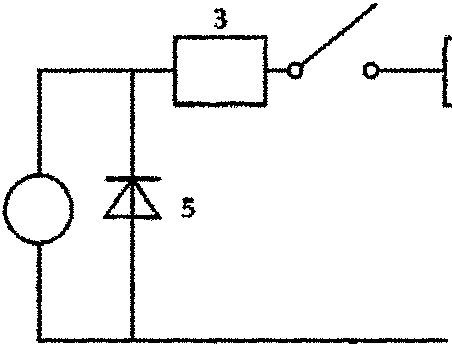
- Clutch relay supply
- Compressor clutch
- HSLP switch
- Protection diode
- Earth-ground
Condenser
The condenser (Fig. 3) consists of a refrigerant coil mounted in a series of thin cooling fins to provide maximum heat transfer in the minimum amount of space. It is mounted directly behind the car radiator and receives the full flow of ram air induced by the forward motion of the car and the suction of the cooling fan. Refrigerant enters the inlet at the top of the condenser as a high pressure hot vapour. As the vapour passes down through the condenser coils cooled by ram air, a large quantity of heat is transferred to the outside air and the refrigerant changes to a high pressure warm liquid.
Parts & tools for this job For 1994 Aston Martin DB7
- PARTClutch kitSearch: Aston Martin DB7 1994 clutch kit
- TOOLClutch alignment toolSearch: clutch alignment tool
- FLUIDGear oilSearch: Aston Martin DB7 manual gearbox oil
Links open Amazon search results in a new tab. As an Amazon Associate I earn from qualifying purchases.