
Refrigerant Oil (Capacity Specifications): Specifications
- Make
- Dodge
- Model
- Challenger
- Engine
- V8-5.7L
- Year
- 2010
- Section
- Refrigerant Oil › Specifications › Capacity Specifications
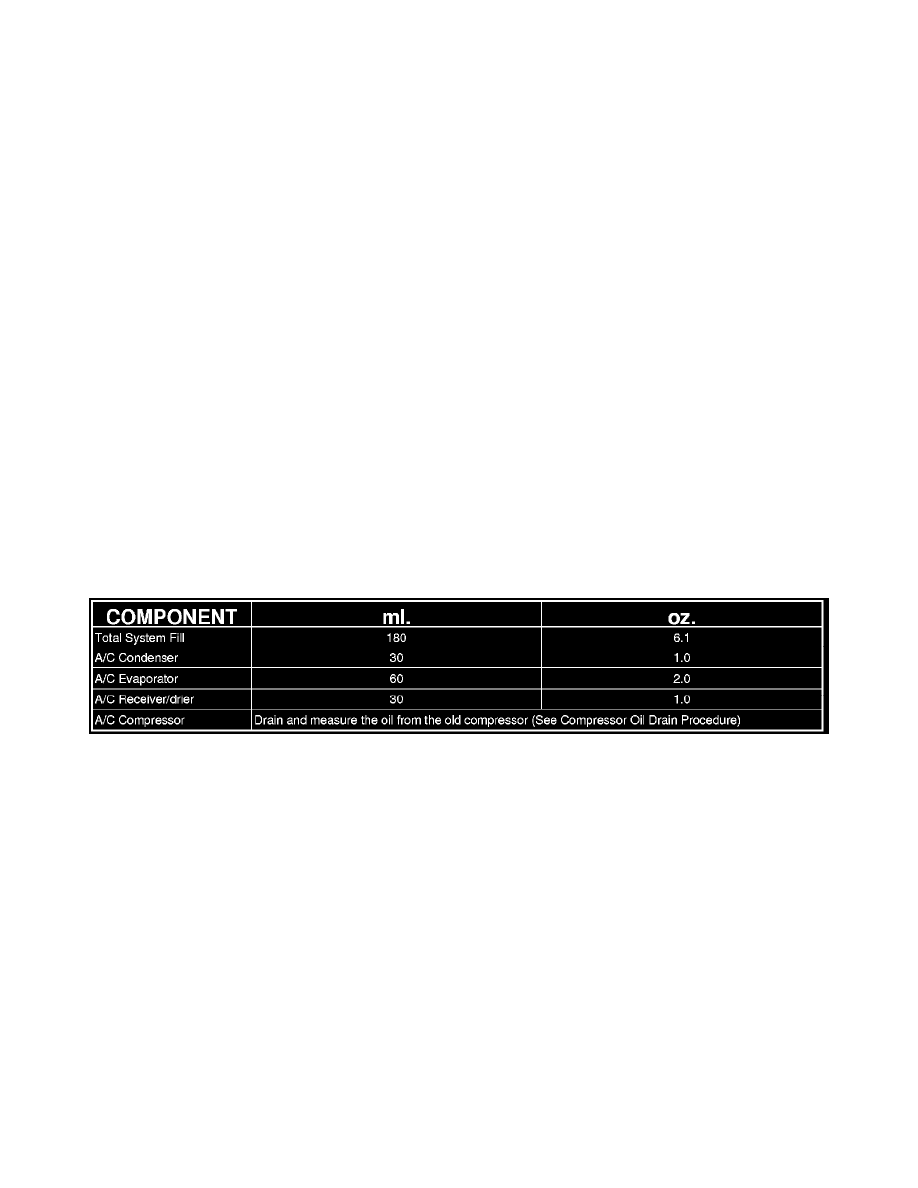
Refrigerant Oil: Capacity Specifications
REFRIGERANT OIL CAPACITY
When an A/C system is assembled at the factory, all components except the A/C compressor are refrigerant oil free. After the refrigerant system has been
charged and operated, the refrigerant oil in the A/C compressor is dispersed throughout the refrigerant system. The receiver/drier, A/C evaporator, A/C
condenser and the A/C compressor will each retain a significant amount of the needed refrigerant oil.
It is important to have the correct amount of refrigerant oil in the A/C system. This ensures proper lubrication of the A/C compressor. Too little oil will
result in damage to the A/C compressor, while too much oil will reduce the cooling capacity of the A/C system and consequently result in higher
discharge air temperatures.
CAUTION: The oil used in the A/C compressor is ND-8 PAG R-134a refrigerant oil. Only refrigerant oil of the same type should be used to
service the A/C system. Do not use any other refrigerant oil. The oil container should be kept tightly capped until it is ready for
use and then tightly capped after use to prevent contamination from dirt and moisture. Refrigerant oil will quickly absorb any
moisture it comes in contact with, therefore, special effort must be used to keep all R-134a system components moisture-free.
Moisture in the refrigerant oil is very difficult to remove and will cause a reliability problem with the A/C compressor.
NOTE: Most reclaim/recycling equipment will measure the lubricant being removed during recovery. This amount of lubricant should be
added back into the system. Refer to the reclaim/recycling equipment manufacturers instructions.
It will not be necessary to check the oil level in the A/C compressor or to add oil, unless there has been an oil loss. An oil loss may occur due to a rupture
or leak from a refrigerant line, a connector fitting, a component, or a component seal. If a leak occurs, add 30 milliliters (1 fluid ounce) of refrigerant oil
to the refrigerant system after the repair has been made. Refrigerant oil loss will be evident at the leak point by the presence of a wet, shiny surface
around the leak.
Refrigerant oil must be added when an A/C condenser, A/C evaporator or A/C receiver/drier is replaced (refer to the Refrigerant Oil Capacities chart).
The refrigerant oil level in a new A/C compressor must first be adjusted prior to compressor installation (refer to COMPRESSOR OIL DRAIN
PROCEDURE ).
REFRIGERANT OIL CAPACITIES
COMPRESSOR OIL DRAIN PROCEDURE
CAUTION: Be certain to adjust the refrigerant system oil level when replacing an A/C compressor. Failure to properly drain and measure the
refrigerant oil from the A/C compressor can prevent the A/C system from operating as designed and cause serious compressor
damage.
The A/C compressor is filled with refrigerant oil from the factory. Use the following procedure to drain and measure refrigerant oil from the A/C
compressor.
1. Drain all of the refrigerant oil from the old A/C compressor into a clean measured container.
2. Drain all of the refrigerant oil from the new A/C compressor into a clean measured container.
3. Refill the new A/C compressor with the same amount of refrigerant oil that was drained out of the old compressor. Use only clean refrigerant oil of
the type recommended for the A/C compressor in the vehicle.
4. Install the new A/C compressor onto the engine See: Heating and Air Conditioning/Compressor HVAC/Service and Repair/A/C Compressor -
Installation.
Pinch or Ctrl + scroll to zoom. Double-tap to reset.
Parts & tools for this job For 2010 Dodge Challenger 5.7L
Links open Amazon search results in a new tab. As an Amazon Associate I earn from qualifying purchases.