
Alignment: Technical Service Bulletins (page 3 of 6)
- Make
- Honda
- Model
- Fit
- Engine
- L4-1.5L
- Year
- 2008
- Section
- Alignment
Alignment: Service and Repair
Wheel Alignment
The suspension can be adjusted for front camber and front toe. However, each of these adjustments are related to each other. For example, when you
adjust camber, the toe will change. Therefore, you must adjust the front wheel alignment whenever you adjust camber or toe.
Pre-Alignment Checks
For proper inspection and adjustment of the wheel alignment, do these checks:
1. Release the parking brake to avoid an incorrect measurement.
2. Make sure the suspension is not modified.
3. Check the tire size and tire pressure.
Tire size:
Front/Rear:
Except Sport models: P175/65R14 81S
Sport model: P195/55R15 84H
Tire Pressure (at cold):
Front/Rear: 220 kPa (2.2 kgf/cm2, 32 psi)
4. Check the runout of the wheels and tires.
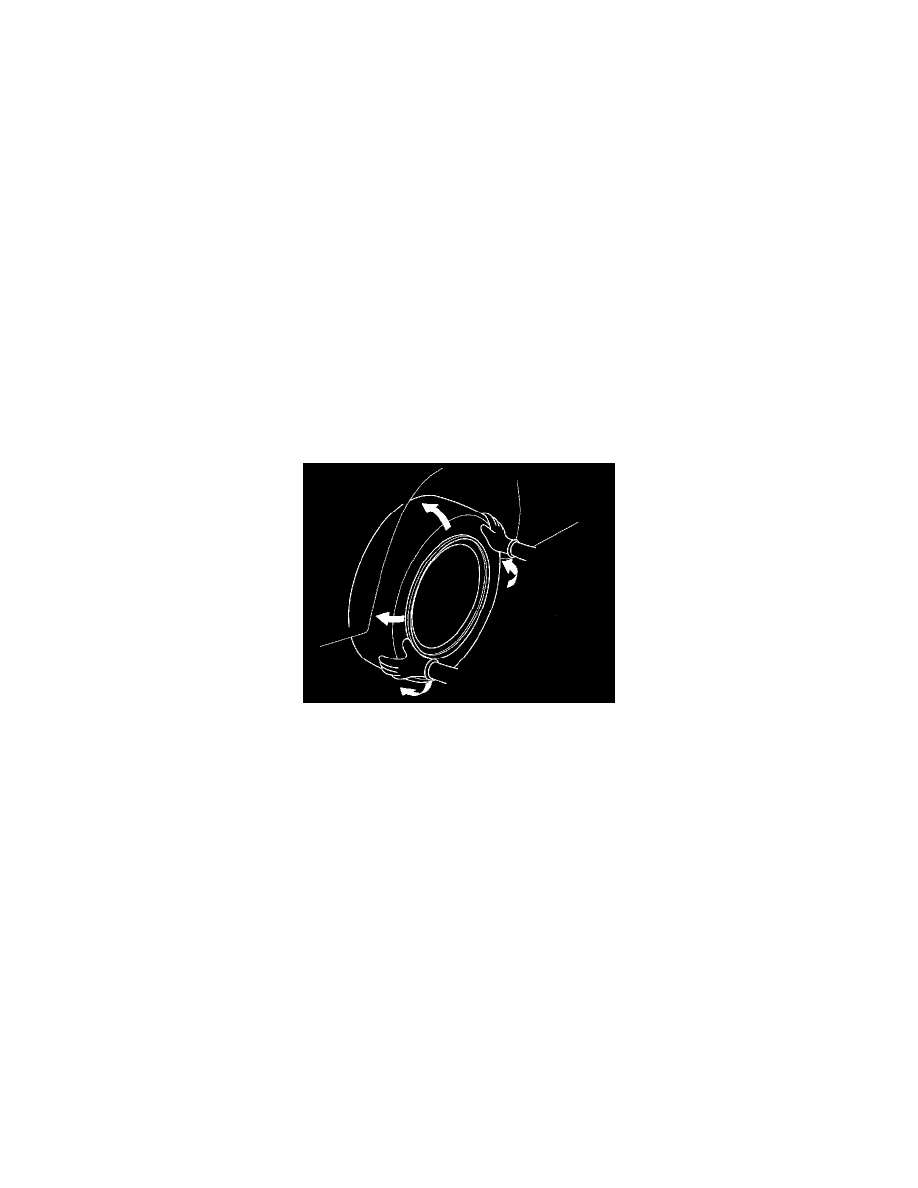
5. Check the suspension ball joints. (Hold a tire with your hands, and move it up and down and right and left to check for wobbling.)
6. Check that the steering column is set at the center tilt position.
Caster Inspection
Use commercially available computerized four wheel alignment equipment to measure wheel alignment (caster, camber, toe, and turning angle).
Follow the equipment manufacturer's instructions.
Check the caster angle.
Caster angle: 3° 45' ± 1°
^
If the measurement is within specifications, measure the camber angle.
^
If the measurement is not within specifications, check for bent or damaged suspension components.
Camber Inspection
Use commercially available computerized four wheel alignment equipment to measure wheel alignment (caster, camber, toe, and turning angle).
Follow the equipment manufacturer's instructions.
Check the camber angle.
Camber angle:
Front: 0° 00' ± 1°
(Maximum difference between the front left and right side: 1°00')
Rear: -1° 30' ± 1°
Pinch or Ctrl + scroll to zoom. Double-tap to reset.
Parts & tools for this job For 2008 Honda Fit 1.5L
- TOOLTie rod end toolSearch: tie rod end puller
- TOOLBall joint separatorSearch: ball joint separator
- FLUIDPower steering fluidSearch: Honda power steering fluid
Links open Amazon search results in a new tab. As an Amazon Associate I earn from qualifying purchases.