Rear wheel alignment (Steering)
- Make
- Rover
- Model
- 400 Workshop Manual
- Year
- 1995–2000
- Section
- Adjustments › Rear wheel alignment
SteeringRear wheel alignment
REAR WHEEL ALIGNMENT
Service repair no - 57.65.06
Check
- Ensure tyre pressures are correct and vehicle is at kerbside weight.
- Roll vehicle backwards and forwards to relieve stresses in suspension.
- Ensure that equipment is properly calibrated and take an average of 3 readings.
NOTE: Only use equipment recommended in the STEP (Service Tools and Equipment Programme) Manual.
- Ensure front wheel alignment is correct.
- Check rear wheel alignment is within tolerance.
NOTE: The following geometry settings are given in:- A - degrees and minutes, B - decimal parts of a degree and C - millimetres. Settings are for a vehicle at unladen weight.
DATA Rear wheel alignment - toe-in - per side
A - 0° ± 0° 15’ B - 0° ± 0.25° C - 5J x 14 wheel = 0.0 mm1 ± 1.604 mm C - 5 /2 J x 15 wheel = 0.0 mm ± 1.710 mm C - 6J x 15 wheel = 0.0 mm ± 1.710 mm
Adjust
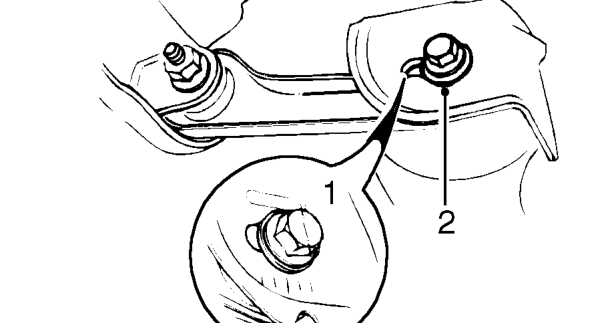
- Mark position of bolt centre line on body bracket scale.
- Loosen compensating arm adjusting bolt.
- Lever front end of trailing arm, inwards to increase or outwards to decrease toe-in.
NOTE: Distance moved on scale is approximately equal to the alignment correction required.
- Tighten adjusting bolt to retain adjustment.
- Settle suspension.
- Recheck alignment and when correct, tighten compensator arm bolt to 45 Nm.
- Repeat check and adjust procedure on other side of vehicle.
Parts & tools for this job For 1995 Rover 400
- TOOLTie rod end toolSearch: tie rod end puller
- TOOLBall joint separatorSearch: ball joint separator
- FLUIDPower steering fluidSearch: Rover power steering fluid
Links open Amazon search results in a new tab. As an Amazon Associate I earn from qualifying purchases.