Front wheel alignment (Steering)
- Make
- Rover
- Model
- Coupé, Cabriolet & Tourer 200/400 Coupé, Cabriolet & Tourer Workshop Manual
- Section
- Adjustments › Front wheel alignment
SteeringFront wheel alignment
FRONT WHEEL ALIGNMENT
Service Repair No. 57.65.01
Check
- Ensure tyre pressures are correct, vehicle is at kerbside weight and on a level surface.
- Release handbrake.
- Roll vehicle backwards and forwards to relieve stresses in steering and front suspension.
- Ensure that equipment is properly calibrated and take average of three readings.
Note: Use only equipment recommended in the S.T.E.P. (Service Tools and Equipment Programme) Manual.
- Check that front wheel alignment is within tolerance:
Front wheel alignment = toe – out 0° 10' ± 0° 15'
Adjust
- Mark position of track rod for reference.
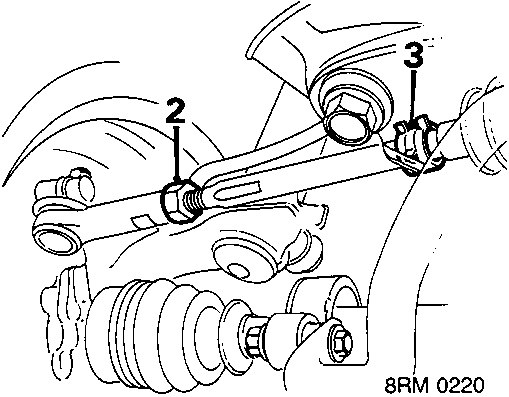
- Slacken track rod lock nut.
- Release clip securing gaiter to track rod.
- Rotate track rod to obtain correct alignment.
CAUTION: Both track rods must be rotated an equal amount.
- Roll vehicle backwards and forwards to relieve stresses in steering and front suspension.
- Recheck front wheel alignment taking average of three readings.
- Tighten track rod lock nut to 55 Nm.
- Roll vehicle backwards and forwards to relieve stresses in steering and front suspension.
- Repeat check procedure.
- Repeat adjustment procedure if necessary.
- Ensure gaiters are not strained or twisted, then tighten clip securing gaiter to track rod.
REAR WHEEL ALIGNMENT
Service Repair No. 57.65.06
Check
- Ensure tyre pressures are correct and vehicle is at kerbside weight.
- Ensure front wheel alignment is correct.
- Release handbrake, position vehicle on level surface.
- Roll vehicle backwards and forwards to relieve suspension.
Note: Use only equipment recommended in the S.T.E.P. (Service Tools and Equipment Programme) Manual.
- Ensure that equipment to be used is properly calibrated and take average of three readings.
- Check that alignment of each rear wheel is within tolerance:
Rear wheel alignment = toe – in 0° 11' ± 0° 7½ ' per wheel.
Adjust
- Mark position of adjusting bolt for reference.
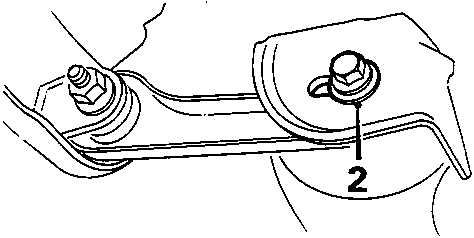
- Slacken adjusting bolt.
- Using a piece of wood against arm forward of mounting, lever compensator arm inwards to increase and outwards to decrease toe – in.
Note: As an approximate guide, distance compensator arm is moved should be equal to amount wheel is out of alignment.
- Tighten compensator arm adjusting bolt to retain adjustment.
- Roll vehicle backwards and forwards to relieve suspension.
- Recheck the alignment of wheels taking average of three readings.
- When correct reading is achieved tighten compensator arm adjusting bolt to 45 Nm.
Parts & tools for this job For Rover Coupé, Cabriolet & Tourer
- TOOLTie rod end toolSearch: tie rod end puller
- TOOLBall joint separatorSearch: ball joint separator
- FLUIDPower steering fluidSearch: Rover power steering fluid
Links open Amazon search results in a new tab. As an Amazon Associate I earn from qualifying purchases.