
Engine – Overview
- Make
- Volvo
- Model
- C30 Factory Service Manual
- Year
- 2007–2013
- Section
- 09 Miscellaneous › Design and Function › Engine – Overview
Engine – Overview
NOTE: As the illustrations in this service information are used for different model years and / or models, some variation may occur. However, the essential information is always correct.
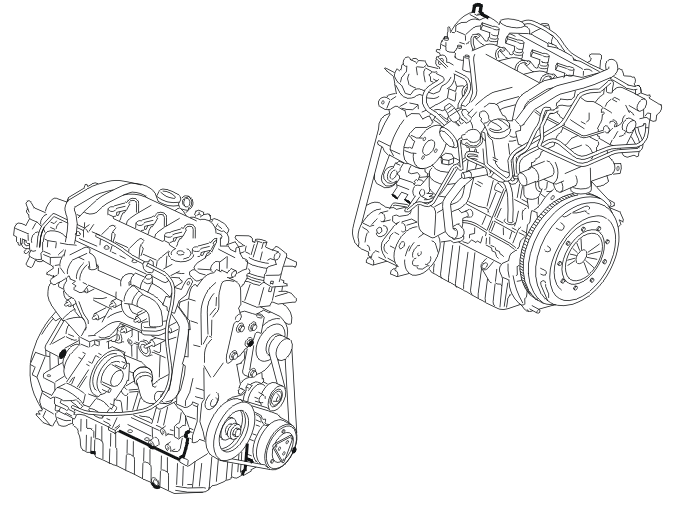
D4204T has been developed in a collaboration between Ford and Peugeot.
D4204T2 has been adapted for the French market to satisfy the French tax classification 7CV. The adaptation is located in the software for the engine control module (ECM).
The engine is a transverse, four cylinder turbo diesel engine. It has twin overhead camshafts and 16 valves.
D4204T has a maximum output of 100 kW (136 bhp) and a torque of 340 Nm.
D4204T2 has a maximum output of 96 kW (130 bhp). The torque is the same, 340 Nm.
The exhaust camshaft is powered via a toothed belt. The intake camshaft is powered by the exhaust camshaft via a short roller chain.
The valves are actuated via roller rocker arms with low friction and hydraulic valve clearance equalization. The engine has a Siemens common rail fuel injection system, where the diesel pump is powered directly by the exhaust camshaft. Injection takes place via injectors using piezoelectric elements. Fuel dosing is regulated electronically.
The cylinder block is made of cast iron with cast cylinder sleeves. The engine has a two-piece cylinder head made of aluminum. It is designed in accordance with the cross-flow principle.
The engine has a turbocharger (TC) with variable turbine geometry and charge air cooling.
The engine has a two-way catalytic converter. This can cope with a fuel mixture with 5% RME (Rape Methyl Ester). The engine satisfies the Euro 3 emissions regulations.
The engine has a two mass flywheel.
Applies to S40 (04-), V50, C30 and C70 (06-)
The fuel system includes an additive system whose job it is to calculate and control the amount of additive supplied to the main fuel tank whenever fuel (diesel) is added so as to ensure that the emissions requirement can be met.
For information on the engine control module (ECM), sensors, and valves, see Design and Function, Engine Control Module (ECM).
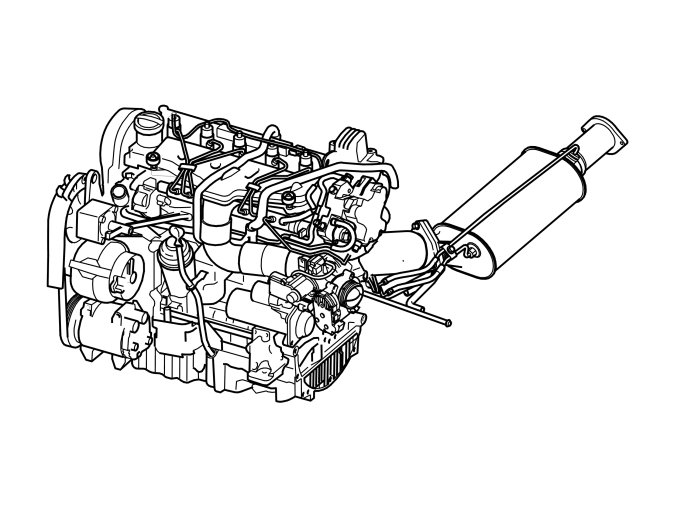
The engine has been developed by Volvo.
The engine is a transverse five cylinder direct injection turbocharged diesel engine. The engine has double overhead camshafts and 20 valves.
The engine is manufactured in several versions with different outputs/torque levels. These are described in the engine's mechanical specifications, see INFORMATION/PRODUCT SPECIFICATIONS/Specifications, mechanical.
The engine has a Bosch common rail injection system, where the diesel pump is powered directly by the intake camshaft. Injection occurs via the injectors using solenoids. The fuel dosage is electronically regulated to give reliable starts and restarts.
The engine has coolant cooled Exhaust Gas Recirculation (EGR). The engine has a stepless variable swirl system located on the cylinder head.
The engine has a turbocharger (TC) with variable turbine geometry (Variable Nozzle Turbine, VNT) and charge air cooling. To prevent icing, the crankcase ventilation gases must be heated.
Applies to S60, V70 (00-08), V70XC (-07), XC90
A water heated twin wall pipe, encased by coolant, produces a more even temperature and safer function.
Applies to other models
The crankcase ventilation is electrically heated to produce a more even temperature and safer function.
The engine is equipped with a catalytic converter. It is located immediately after the turbocharger. This means that the catalytic converter quickly reaches the correct operating temperature after start.
After the catalytic converter there is a particle filter. This operates using the through flow principle. The system uses heated oxygen sensors and temperature and differential pressure sensors for control and monitoring.
Diagnostics are carried out via the data link connector (DLC).
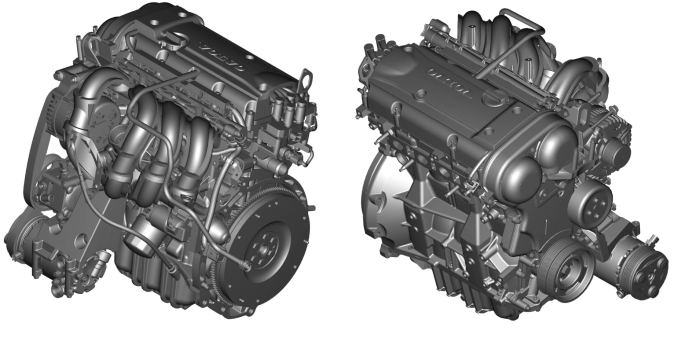
This is a 4 cylinder, transverse in-line engine of 1.6 litres. The engine has double overhead camshafts and four valves per cylinder. The camshafts are belt driven.
The firing order is 1-3-4-2. The cylinders are counted from the front, i.e. number one cylinder is closest to the crankshaft's pulley.
From model year 2008 the cylinder block is die-cast instead of sand cast. This has resulted in a new cylinder block design.
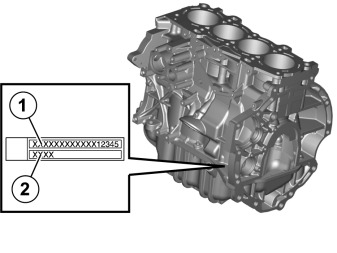
The engine number and engine code are positioned on the hot side of the engine, on the flange to the transmission.
- Engine number
- Engine code
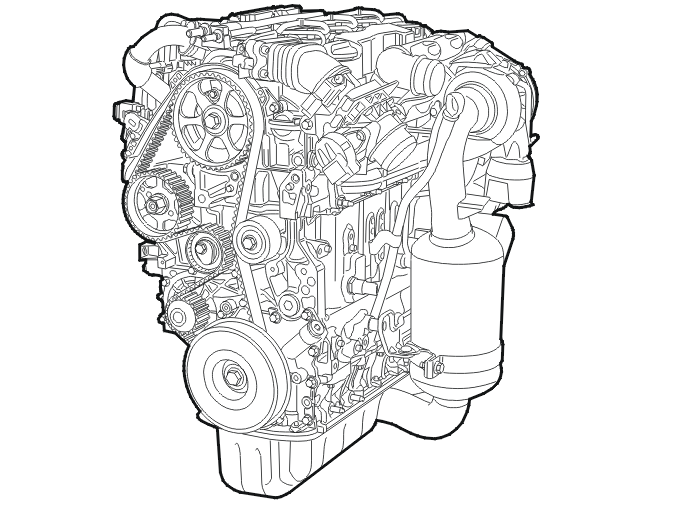
The 1.6L Duratorq-TDCi (DV) diesel D4164T is a four-cylinder, 1.6-litre diesel engine from Peugeot. This is a transverse turbo diesel engine. It has twin overhead camshafts and 16 valves.
D4164T has a maximum output of 80 kW (110 hp).
When fitted with a particle filter, the engine meets Euro 4 emissions requirements. When not fitted with a particle filter, the engine meets Euro 3 emissions requirements.
The fuel system includes an additive system whose job it is to calculate and control the amount of additive supplied to the main fuel tank whenever fuel (diesel) is added so as to ensure that the emissions requirement can be met.
The engine has a Bosch Common Rail injection system. The fuel filter includes a heater element for use in cold climates. This heater element is switched on automatically.
The EGR valve is electrically controlled by the engine control module (ECM). EGR technology is used to reduce the exhaust temperature and thereby to reduce NOx emissions. This involves returning some of the exhaust gases to the combustion chamber.
The amount of exhaust gas returned is controlled by an EGR stepper motor and can thus be adjusted precisely. The exhaust gases returned are cooled by means of an EGR cooler before being fed into the induction manifold.
The turbo system on this engine consists of a turbo unit with a VNT (Variable Nozzle Turbine) which is controlled by a turbo control valve, which in turn influences a pressure box.
The fuel filter is mounted on a retainer directly on the cylinder head and is fitted with electric fuel preheating. The fuel lines are secured using snap-on couplings.
The carbon particles that may remain in the exhaust gases after combustion are filtered out by allowing the exhaust gases to flow into the particle filter.
For information on the control module, valves, and sensors, see Design and Function for Engine Control Module (ECM).
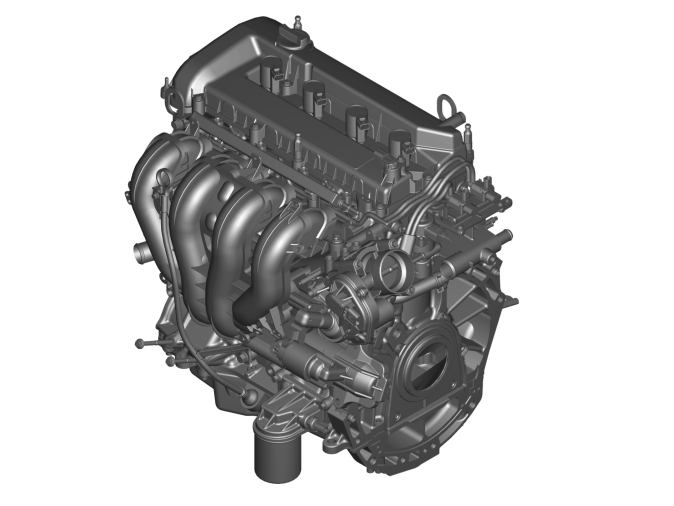
Applies to S40 (04-), V50, C30
The engine is available in three versions; two gasoline variants with a cylinder capacity of 1.8 L and 2.0 L, and a bio-ethanol variant with a cylinder capacity of 1,8 L.
Applies to S80 (07-), V70 (08-)
The engine is available in two versions; a gasoline variant with a cylinder capacity of 2.0 L, and a bio-ethanol variant with a cylinder capacity of 2.0 L.
Applies to all engine variants
The engine is a transverse, four-cylinder in-line engine with double overhead camshafts and 16 valves.
The engine is manufactured in several versions with different outputs/torque levels. These are described in the engine's mechanical specifications, see INFORMATION/PRODUCT SPECIFICATIONS/Specifications, mechanical.
The engine has chain driven camshafts, mechanical valve lifters and electronic throttle. It has a variable intake system with swirl dampers and an ignition system with direct ignition coils.
The bio-ethanol engine is a flexifuel engine. The engine has a new cylinder head with valve seats on the inlet side and new fuel distribution pipe compared to the gasoline engine. These parts have harder surface coating to maintain service life as bio-ethanol (E85) has a corroding effect.
The valve clearance is slightly smaller and the injection valves have higher capacity than in the gasoline engine.
The bioethanol engine has a pre-mounted engine block heater that should be used to facilitate starts at low temperatures, In addition, the amount of gasoline in the fuel mixture should increase at temperatures lower than -10°C, to facilitate cold starts. Because bioethanol has a lower energy content than gasoline the engine uses up 40 % more bioethanol compared with gasoline.
For information on the engine control module (ECM), sensors, and valves, see Design and Function, Engine Control Module (ECM).
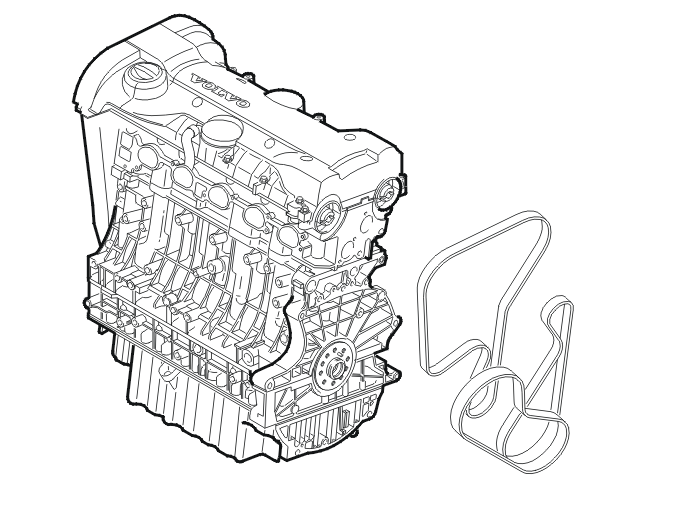
Engine B5254 is a 5 cylinder 20 valve turbocharged engine with a cylinder capacity of 2.5 dm3. Engine B5244 is a 5 cylinder 20 valve naturally aspirated engine with a cylinder capacity of 2.4 dm3.
Visually there is no different between the engines. The difference is in specific components which affect the turbocharger (TC) and natural aspiration. There are different transmission combinations for the engine. The 5 and 6 speed manual transmission are called M56 and M66. The automatic transmissions are AW55-51 and AW50AWD.
The engine and transmission are pendulum mounted. A mounting on the engine is linked via a rubber bushing to the side member and an engine mounting on the transmission.
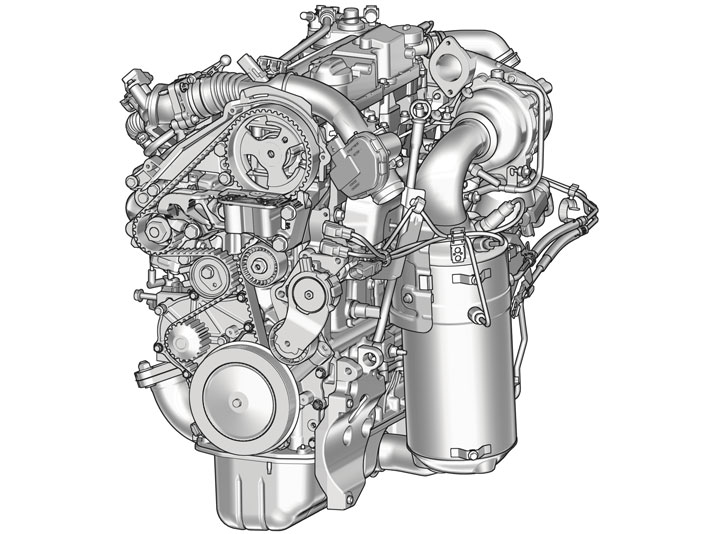
The 1.6L Duratorq-TDCi (DV) diesel D4162T is a four-cylinder, 1.6-litre diesel engine from Peugeot. This is a transverse turbo diesel engine. It has a single overhead camshaft and 8 valves.
D4162T has a maximum output of 85 kW (115 hp) and reaches a torque of 270 Nm at 1,750 rpm.
The engine meets emission standards Euro 5.
To reduce CO2-emissions EHPAS (Electric Hydraulic Power Assisted Steering) is used, which contributes to lowering the engine's fuel consumption by its way of working.
The engine has a Contitech Common Rail injection system. The fuel filter includes a heating coil for use in cold climates. This heating coil is turned on automatically.
The EGR-valve is electrically controlled by the engine control module (ECM). EGR technology is used to reduce the exhaust temperature and thereby to reduce NOx emissions. This involves returning some of the exhaust gases to the combustion chamber.
The amount of exhaust gas returned is controlled by an EGR stepper motor and can thus be adjusted precisely. The exhaust gases returned are cooled by means of an EGR cooler before being fed into the induction manifold.
The turbo system on this engine consists of a turbo unit with a VNT (Variable Nozzle Turbine) which is controlled by a turbo control valve, which in turn influences a pressure box.
The fuel filter is mounted on a retainer directly on the cylinder head and is fitted with electric fuel preheating. The fuel lines are secured using snap-on couplings.
The engine is equipped with a catalytic particle filter that works without fuel additive.
The carbon particles that may remain in the exhaust gases after combustion are filtered out by allowing the exhaust gases to flow into the particle filter.
For information on the control module, valves, and sensors, see Design and Function for Engine Control Module (ECM).
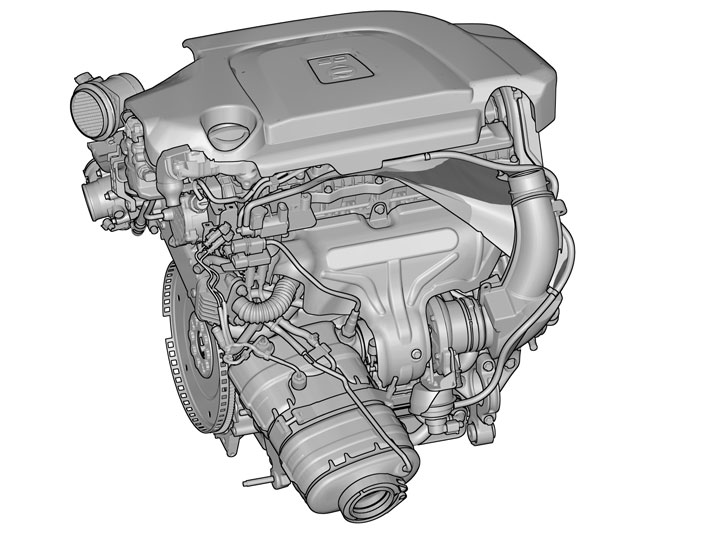
The engine has been developed by Volvo and is a transverse five cylinder direct-injected turbocharged diesel engine. It has double overhead camshafts driven by a timing belt and 20 valves.
The engine features a Bosch Common Rail injection system, where the diesel pump is driven directly by the inlet camshaft. Injection takes place via injection valves with piezo injectors.
The turbo system consists of a turbocharger.
The engine has coolant-cooled return of the exhausts (EGR, Exhaust Gas Recirculation).
The engine features a catalytic converter located directly after the turbocharger.
There is a particle filter after the catalytic converter.
For control and monitoring, the system features heated oxygen sensor as well as temperature sensors and differential pressure sensors.
Diagnostics are carried out via the data link connector (DLC).
D5204T2
D5204T2 has engine code 52.
For information about power, see Specifications, mechanical (Engine)
Parts & tools for this job For 2007 Volvo C30
- PARTEngine gasket setSearch: Volvo C30 2007 engine gasket set
- TOOLTorque wrenchSearch: 3/8 inch torque wrench
- TOOLFeeler gauge setSearch: feeler gauge set
Links open Amazon search results in a new tab. As an Amazon Associate I earn from qualifying purchases.