
Engine – Overview
- Make
- Volvo
- Model
- XC60 Factory Service Manual
- Year
- 2009–2016
- Section
- 09 Miscellaneous › Design and Function › Engine – Overview
Engine – Overview
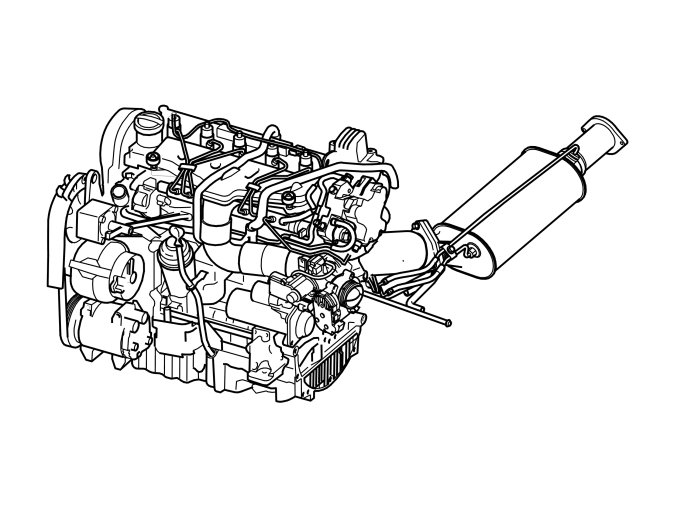
The engine has been developed by Volvo.
The engine is a transverse five cylinder direct injection turbocharged diesel engine. The engine has double overhead camshafts and 20 valves.
The engine is manufactured in several versions with different outputs/torque levels. These are described in the engine's mechanical specifications, see INFORMATION/PRODUCT SPECIFICATIONS/Specifications, mechanical.
The engine has a Bosch common rail injection system, where the diesel pump is powered directly by the intake camshaft. Injection occurs via the injectors using solenoids. The fuel dosage is electronically regulated to give reliable starts and restarts.
The engine has coolant cooled Exhaust Gas Recirculation (EGR). The engine has a stepless variable swirl system located on the cylinder head.
The engine has a turbocharger (TC) with variable turbine geometry (Variable Nozzle Turbine, VNT) and charge air cooling. To prevent icing, the crankcase ventilation gases must be heated.
Applies to S60, V70 (00-08), V70XC (-07), XC90
A water heated twin wall pipe, encased by coolant, produces a more even temperature and safer function.
Applies to other models
The crankcase ventilation is electrically heated to produce a more even temperature and safer function.
The engine is equipped with a catalytic converter. It is located immediately after the turbocharger. This means that the catalytic converter quickly reaches the correct operating temperature after start.
After the catalytic converter there is a particle filter. This operates using the through flow principle. The system uses heated oxygen sensors and temperature and differential pressure sensors for control and monitoring.
Diagnostics are carried out via the data link connector (DLC).
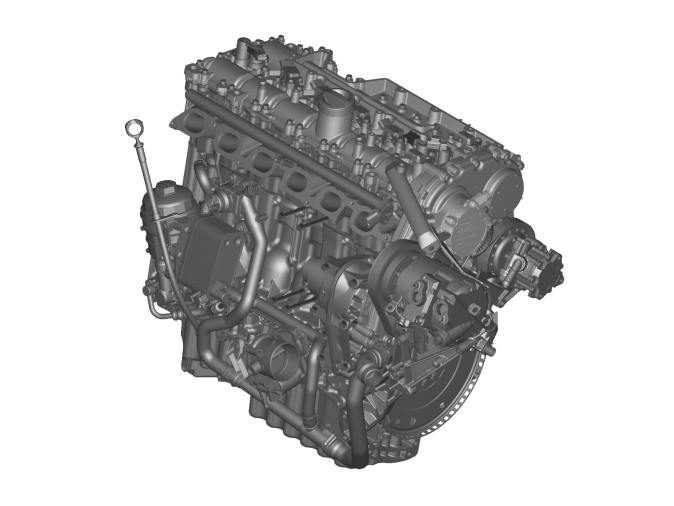
The engine has been developed by Volvo.
It is a 6 cylinder transverse in-line engine with a cylinder capacity of 3.2 L for naturally aspirated engines and 3.0 L for turbocharged engines.
The engine is extremely compact. When it was introduced it was the shortest 6-cylinder engine of 3.2 L on the market. Conventional straight 6-cylinder engines are too long to fit between the collision members in the engine compartment. The special design of this engine solves the problem.
The engine has an extremely short drive train, its length is only 625 mm from the front edge of the engine block to the rear edge of the carrier plate.
Great attention has been paid to creating a very rigid engine. Middle part, cylinder block and cylinder head have been structurally optimized to combine low weight with high rigidity.
Even the camshaft cover is structurally optimized.
The engine has double overhead camshafts and 24 valves.
Camshafts, servo pump, AC-compressor, coolant pump and alternator are driven by an auxiliary unit drive, mounted on the back of the engine.
This placement of the auxiliary unit drive gives completely new possibilities of creating a good collision-protective structure around the straight 6-cylinder drive unit.
The entire engine block and the cylinder head is made from aluminum.
The engine has a compact "pent-roof" designed combustion chamber and V-arranged valves. This gives optimal and fast filling and direct flushing via the inlet manifold followed by the combustion chamber (cross-flow) and the exhaust channel.
The squish surfaces together with the centrally positioned spark plug provide optimal combustion of the air/fuel mixture, low knock sensitivity and low, stable exhaust emissions.
The engine's firing order is 1 - 5 - 3 - 6 - 2 - 4. The firings occur every 120 degrees that the crankshaft rotates.
For information on the engine control module (ECM), sensors, and valves, see Design and Function, Engine Control Module (ECM).
The engine has been developed by Volvo and is a transverse five cylinder direct-injected turbocharged diesel engine. It has double overhead camshafts driven by a timing belt and 20 valves.
The engine features a Bosch Common Rail injection system, where the diesel pump is driven directly by the inlet camshaft. Injection takes place via injection valves with piezo injectors.
The turbo system consists of a turbocharger.
The engine has coolant-cooled return of the exhausts (EGR, Exhaust Gas Recirculation).
The engine features a catalytic converter located directly after the turbocharger.
There is a particle filter after the catalytic converter.
For control and monitoring, the system features heated oxygen sensors as well as temperature and differential pressure sensors.
Diagnostics are carried out via the data link connector (DLC).
D5244T14
D5244T14 has engine code 72.
D5244T19
D5244T19 has engine code 53 and is the corresponding engine for the Belgian market.
For information about power, see Specifications, mechanical (Engine)
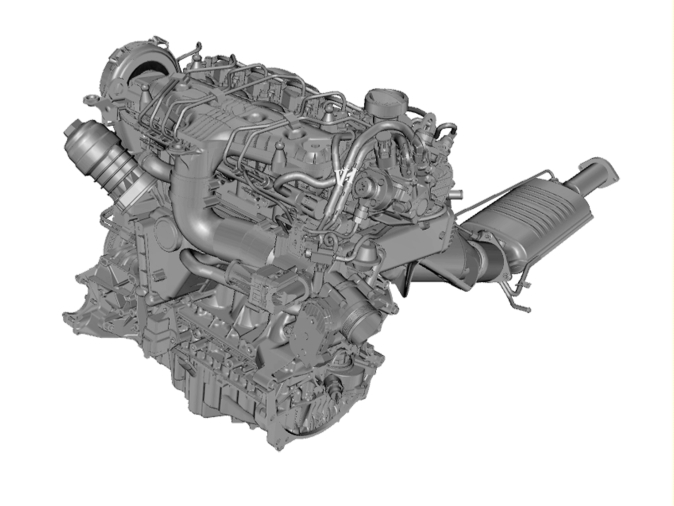
The engine has been developed by Volvo and is a transverse five cylinder direct-injected turbocharged diesel engine. It has double overhead camshafts driven by a timing belt and 20 valves.
The engine features a Bosch Common Rail injection system, where the diesel pump is driven directly by the inlet camshaft. Injection takes place via injection valves with piezo injectors.
The turbo system consists of two turbochargers of different size.
The engine has coolant-cooled return of the exhausts (EGR, Exhaust Gas Recirculation).
The engine features a catalytic converter located directly after the turbocharger.
There is a particle filter after the catalytic converter.
For control and monitoring, the system features heated oxygen sensors as well as temperature and differential pressure sensors.
Diagnostics are carried out via the data link connector (DLC).
D5244T10
D5244T10 has engine code 70.
D5244T16
D5244T16, engine code 80, is the corresponding engine for the Belgian market.
For information on engine power, see Specifications, mechanical (Motor)
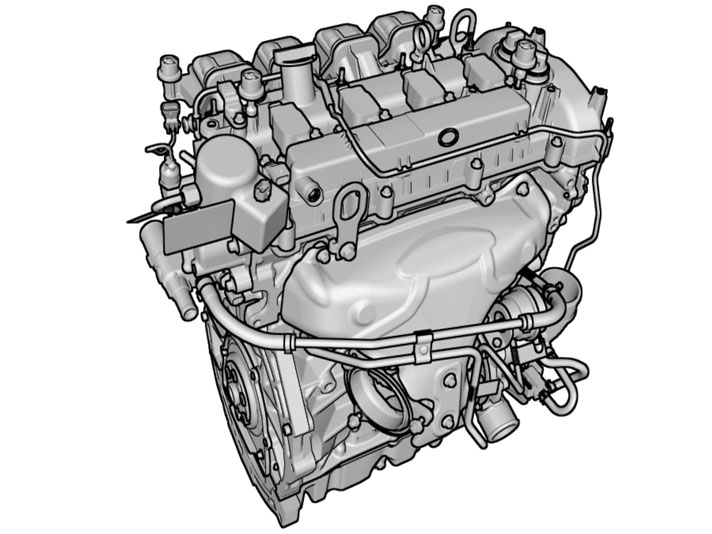
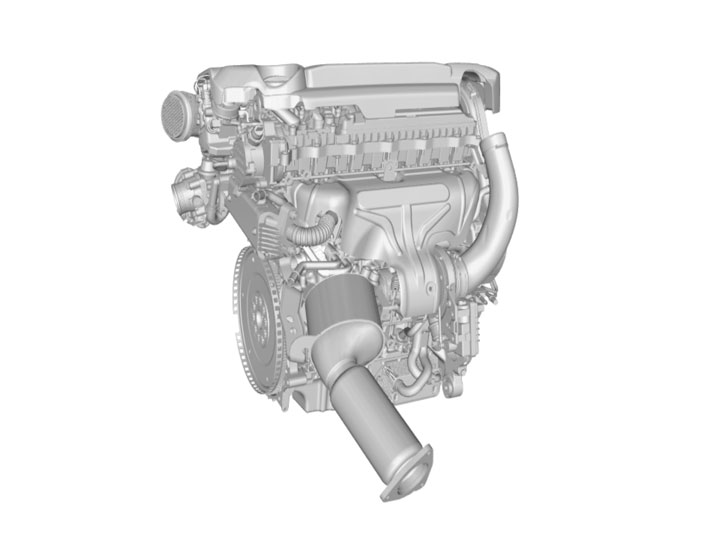
B4204T6 is a direct injection 4-cylinder petrol engine with turbo and has double overhead camshafts and 16 valves.
The fuel system has a pump in the tank and a high pressure pump driven mechanically by the engine. This produces a high fuel pressure that enables direct injection in the combustion chamber.
The camshaft drive is chain driven and has mechanical tappets. The camshafts are equipped with Twin VCT (Variable Cam Timing).
The turbocharger's exhaust turbine is integrated into the exhaust manifold which is made of sheet metal.
Cylinder sequence starts with cylinder 1 at the engine's camshaft drive. The engine's ignition system is equipped with knock control with two knock sensors and an ignition system with direct-mounted ignition coils.
Diagnosis for monitoring exhaust-related components is performed via the data link connector.
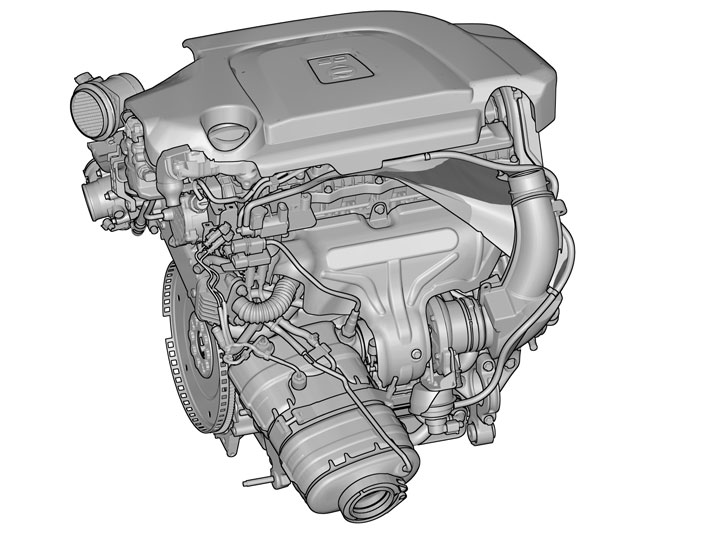
The engine has been developed by Volvo and is a transverse five cylinder direct-injected turbocharged diesel engine. It has double overhead camshafts driven by a timing belt and 20 valves.
The engine features a Bosch Common Rail injection system, where the diesel pump is driven directly by the inlet camshaft. Injection takes place via injection valves with piezo injectors.
The turbo system consists of a turbocharger.
The engine has coolant-cooled return of the exhausts (EGR, Exhaust Gas Recirculation).
The engine features a catalytic converter located directly after the turbocharger.
There is a particle filter after the catalytic converter.
For control and monitoring, the system features heated oxygen sensor as well as temperature sensors and differential pressure sensors.
Diagnostics are carried out via the data link connector (DLC).
D5204T2
D5204T2 has engine code 52.
For information about power, see Specifications, mechanical (Engine)
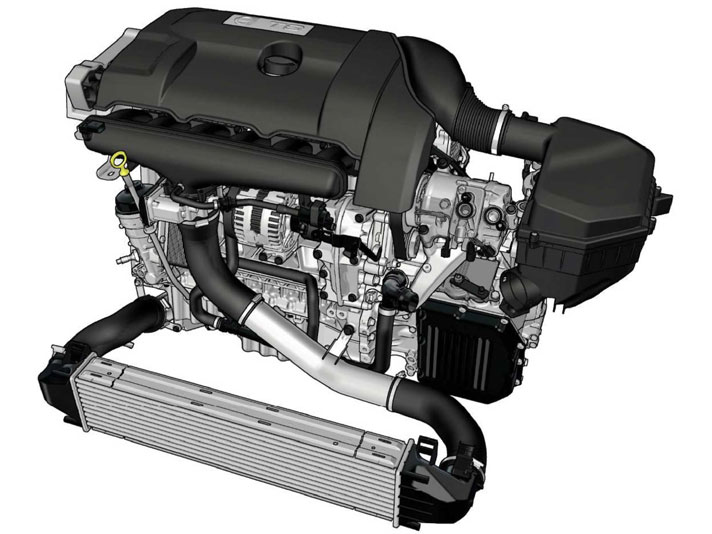
The engine has been developed by Volvo.
It is a 6 cylinder transverse in-line engine with a cylinder capacity of 3.2 L for naturally aspirated engines and 3.0 L for turbocharged engines.
After having been relatively unchanged since the introduction 0620, this engine family has been updated on several points. Most modifications have their basis in an effort to achieve lower fuel consumption and thus less environmental impact.
Engine power has increased, at the same time as fuel consumption has decreased.
- B6304T4: (ULEV2 Ultra Low Emission Vehicle): 300(US)/ 304 hp / 440 Nm
- B6324S4 (PZEV - Partial Zero Emission Vehicle): 230(US) 233 hp (torque unchanged 300 Nm)
- B6324S5 (ULEV - Ultra Low Emission Vehicle): 240(US) /243 hp (torque unchanged 320 Nm)
All of these engines meet the emission standards for Euro5.
The engines' idle speed is reduced to 590 rpm on all cars except XC90 which keeps 650 rpm.
The engine is extremely compact. When it was introduced it was the shortest 6-cylinder engine of 3.2 L on the market. Conventional straight 6-cylinder engines are too long to fit between the collision members in the engine compartment. The special design of this engine solves the problem.
The engine has an extremely short drive train, its length is only 625 mm from the front edge of the engine block to the rear edge of the carrier plate.
Great attention has been paid to creating a very rigid engine. Middle part, cylinder block and cylinder head have been structurally optimized to combine low weight with high rigidity.
Even the camshaft cover is structurally optimized.
The engine has double overhead camshafts and 24 valves.
Camshafts, AC-compressor, coolant pump and alternator are driven by an auxiliary unit drive, mounted on the back of the engine.
This placement of the auxiliary unit drive enables new possibilities for creating a good collision-protecting structure around the straight 6-cylinder drive unit. In the latest update of the engine family the servo pump has been replaced by an electrically driven pump (EHPAS), for more information, see Design and function.
The entire engine block and the cylinder head is made from aluminum.
The engine has a compact "pent-roof" designed combustion chamber and V-arranged valves. This gives optimal and fast filling and direct flushing via the inlet manifold followed by the combustion chamber (cross-flow) and the exhaust channel.
The squish surfaces together with the centrally positioned spark plug provide optimal combustion of the air/fuel mixture, low knock sensitivity and low, stable exhaust emissions.
The engine's firing order is 1 - 5 - 3 - 6 - 2 - 4. The firings occur every 120 degrees that the crankshaft rotates.
For information on the engine control module (ECM), sensors, and valves, see Design and Function, Engine Control Module (ECM).
The engine has been developed by Volvo and is a transverse five cylinder direct-injected turbocharged diesel engine. It has double overhead camshafts driven by a timing belt and 20 valves.
The engine features a Bosch Common Rail injection system, where the diesel pump is driven directly by the inlet camshaft. Injection takes place via injection valves with piezo injectors.
The turbo system consists of a turbocharger.
The engine has coolant-cooled return of the exhausts (EGR, Exhaust Gas Recirculation).
There is a particle filter after the catalytic converter. 2WD has CCDPF and 4WD has Underfloor DPF.
For control and monitoring, the system features heated oxygen sensor as well as temperature sensors and differential pressure sensors.
Diagnostics are carried out via the data link connector (DLC).
D5204T3
D5204T3 has engine code 88.
For information about power, see Specifications, mechanical (Engine)
The engine has been developed by Volvo and is a transverse five cylinder direct-injected turbocharged diesel engine. It has double overhead camshafts driven by a timing belt and 20 valves.
The engine features a Bosch Common Rail injection system, where the diesel pump is driven directly by the inlet camshaft. Injection takes place via injection valves with piezo injectors.
The turbo system consists of two turbochargers of different size.
The engine has coolant-cooled return of the exhausts (EGR, Exhaust Gas Recirculation).
The engine features a catalytic converter located directly after the turbocharger.
There is a particle filter after the catalytic converter.
For control and monitoring, the system features heated oxygen sensors as well as temperature and differential pressure sensors.
Diagnostics are carried out via the data link connector (DLC).
D5244T11
D5244T11 has engine code 83.
D5244T15
D5244T15 has engine code 82.
D5244T17
D5244T17 has engine code 87.
For information on engine power, see Specifications, mechanical (Engine)
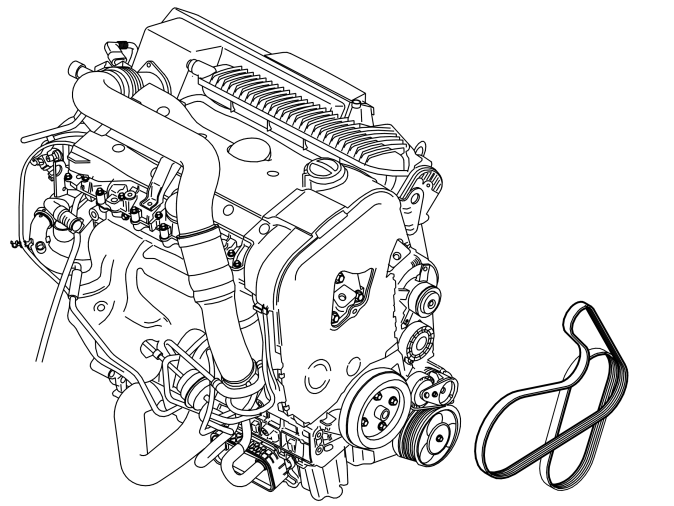
The engine is available in different versions. They are transverse, 5-cylinder 20 valve turbocharged engines with a cylinder volume of 1,984, 2,497 or 2,521 dm³. Depending on the variant different fuels are available; Petrol, Ethanol or biogas. The engine and transmission are pendulum mounted with a mounting on the engine which goes to the side member via a rubber bushing and an engine mounting on the transmission. There is a support point on the bearing mounting to take up the torque.
Parts & tools for this job For 2009 Volvo XC60
- PARTEngine gasket setSearch: Volvo XC60 2009 engine gasket set
- TOOLTorque wrenchSearch: 3/8 inch torque wrench
- TOOLFeeler gauge setSearch: feeler gauge set
Links open Amazon search results in a new tab. As an Amazon Associate I earn from qualifying purchases.