
General
- Make
- Aston Martin
- Model
- DB9 Factory Workshop Manual
- Year
- Issue 2, 2005
- Section
- Vehicle Recovery › General
General
The preferred method of vehicle recovery is by a flat bed, covered, transporter.
The towing eye is primarily for emergency use when towing for short distances, e.g. removing vehicle if it is causing an obstruction or winching vehicle onto a flatbed transporter.
If moving this vehicle in such a situation, install the towing eye to the bracket, which is located behind the registration number plate.
Caution
Take care to protect the paint work when installing the towing eye. Ensure the towing eye is tight.
Transporting
If vehicle is to be transported on a trailer or flat bed transporter the handbrake must be applied and the road wheels must be chocked.
Suspended Towing
Caution
Do not tow with ‘sling’ type equipment, damage to bodywork will result.
Take care when using 'spectacle frame' type towing equipment that the towing device is well clear of front or rear apron. Body damage may occur if vehicle passes over uneven road surfaces.
Ensure the recovery team follow the following towing instructions:
Front Suspended Tow
Automatic Transmission Only
- Switch the ignition ‘On’.
- Pull back twice on both paddles, simultaneously, to force the gearbox into ‘Neutral’.
Switch the ignition ‘Off’ within three seconds.
Manual and Automatic Transmissions
- Remove the ignition key from the ignition.
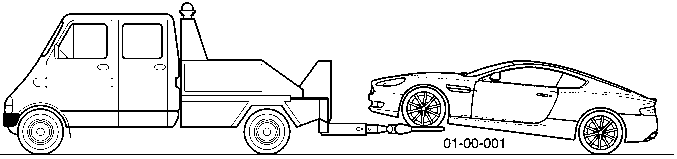
- Raise the vehicle using a 'spectacle frame' type lifting device with a cradle positioned under each front wheel as indicated below.
Rear Suspended Tow
- Set the steering in the ‘straight ahead’ position.
- Remove the ignition key from the ignition. Ensure the steering is locked in the straight ahead position.
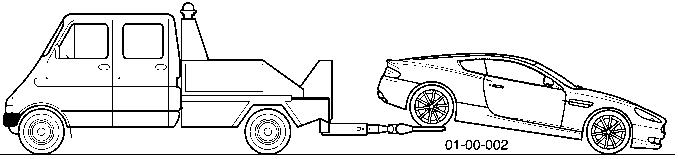
- Raise the vehicle using a 'spectacle frame' style lifting device where a cradle is positioned under each rear wheel as indicated below.
Towing an Automatic Vehicle
Caution
This vehicle installed with an automatic transmission can be towed on its driven wheels at not more than 70 km/h road speed and for a maximum distance of 500 km.
The selector lever must be in Neutral (N).
If the above speed and distance limits are exceeded, the automatic transmission will be severely damaged.
Towing Regulations
In certain countries the registration number plate of the towing vehicle and an ‘ON TOW’ sign or warning triangle must be displayed in a prominent position at the rear of vehicle being towed.
Towing by Another Vehicle
Ward the brake booster will become ineffective after a few applications of the brakes. Be prepared for relatively heavy steering and the need for greatly increased brake pedal pressure.
This vehicle may be towed short distances by another vehicle provided that a speed of 48 km/h (30 mph) is not exceeded. Ensure that the towed vehicle gear selection is in ‘Neutral’ (manual) or position ‘N’ (automatic), the ignition key turned to position ‘II’ (to release steering lock and to render the horn, indicators and brake lights operational).
Push-start
Vehicle’s installed with automatic transmissions cannot be started by push-starting.
Parts & tools for this job For 2005 Aston Martin DB9
- TOOLTorque wrenchSearch: 3/8 inch torque wrench
- TOOLSocket setSearch: socket set metric
- BOOKHaynes manualSearch: Haynes manual Aston Martin DB9
Links open Amazon search results in a new tab. As an Amazon Associate I earn from qualifying purchases.