
Brake System (06.00)
- Make
- Aston Martin
- Model
- DB9 Factory Workshop Manual
- Year
- Issue 2, 2005
- Section
- Power Brake System › Brake System (06.00)
Brake System (06.00)
Power Brake System (06.09)
Brake Booster
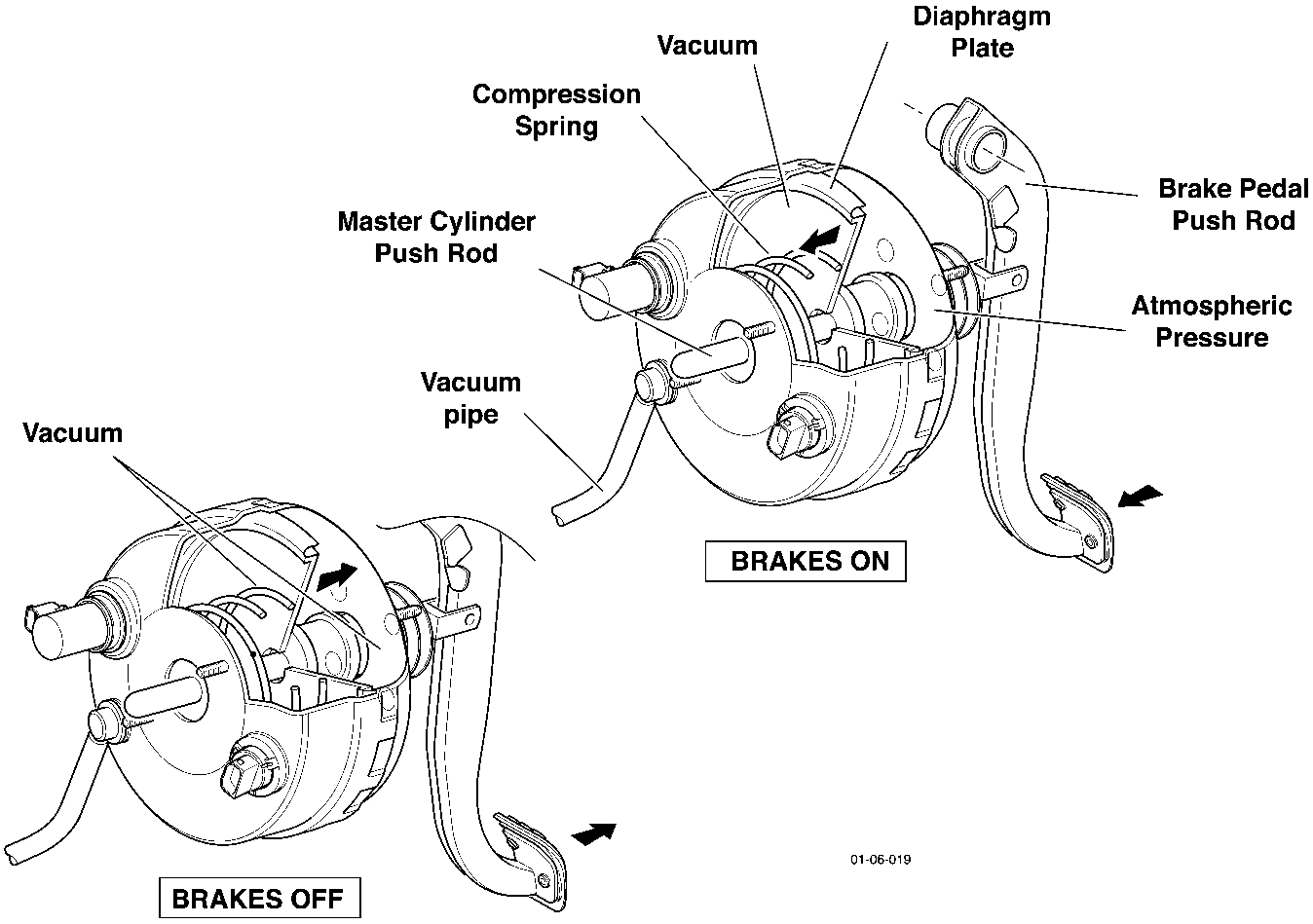
The brake booster comprises a chamber divided by a diaphragm plate and is secured to the brake pedal housing.
As the brake pedal is pressed, a poppet valve opens allowing atmospheric pressure into the drivers side of the diaphragm. Atmospheric pressure builds up on the drivers side of the diaphragm and pushes against the partial vacuum on the other side. This additional force boosts the applied brake pedal force up to 6.5 times.
When the brake pedal is released, the poppet valve closes. The pressure on the diaphragm reduces and the compression spring returns the diaphragm to the release position.
Panic Brake Assist
In an emergency braking situation, a driver presses down on the brake pedal much faster than in normal braking conditions, but often without sufficient force. The initial application of the brake pedal is a reflex reaction. After the initial application, many drivers do not brake hard enough because of concerns that they might cause the vehicle to skid. To aid the driver, the panic brake assist (PBA) intervenes in bringing the vehicle to a halt, sooner and in a controlled manner, in emergency braking situation. The PBA system monitors the speed of brake pedal activation, and at a calibrated pedal activation speed, the PBA provides maximum brake force and makes full use of the ABS.
PBA is controlled by the ABS / DSC module, which monitors a travel sensor attached to the internal vacuum diaphragm of the brake booster. The sensor determines the position of the diaphragm and the speed of the diaphragm movement. If the sensor's signal indicates an emergency braking situation, the
ABS / DSC module will open an electric solenoid on the brake booster. The solenoid directs atmospheric pressure into the rear of the brake booster, causing the booster diaphragm to move forward to fully apply the brakes. PBA takes full benefit of ABS to stop the vehicle in a controlled manner and in the shortest distance possible. When the brake pedal is released the ABS / DSC module instantly releases the brakes.
Parts & tools for this job For 2005 Aston Martin DB9
- PARTBrake padsSearch: Aston Martin DB9 2005 brake pads
- TOOLBrake bleeder kitSearch: one man brake bleeder kit
- FLUIDBrake fluidSearch: brake fluid
Links open Amazon search results in a new tab. As an Amazon Associate I earn from qualifying purchases.