
Steering Gear: Specifications
- Make
- Aston Martin
- Model
- DB9 Factory Workshop Manual
- Year
- Issue 2, 2005
- Section
- Steering Gear › Specifications
11 SteeringSpecifications
| Symptom | Possible Cause | Action |
|---|---|---|
| Excessive steering efforts required to turn corners and during parking manoeuvres | Low power steering pump fluid. | Fill as required. Check for system leaks. |
| Damaged accessory drive belt tensioner. | New accessory drive belt tensioner. | |
| Hose or oil cooler external leak. | New hose or oil cooler as required. | |
| Hose or cooler line restriction. | New hose as required. | |
| Fluid aeration. | Bleed system. | |
| Fluid leakage | Overfilled system. | Correct fluid level. |
| Component leak. | Locate suspect component and repair as required. | |
| Accessory drive belt squeal | Check accessory drive belt for correct tension or glazing. | New accessory drive belt. |
| ‘Chirp’ noise in steering pump | Loose or worn accessory drive belt. | New accessory drive belt. |
| Power steering pump noisy | Low fluid level. | Top up and check for system leaks. |
| Power steering pump. | Check for leaks. Repair as required. | |
| New power steering pump. | ||
| ‘Swish’ noise | Fluid flow into bypass valve of the power steering pump valve housing with fluid temperature below 54°C (130°F). | Normal noise. |
| ‘Whine’ noise | Aerated fluid. | Bleed system. |
Specifications
Torque Figures
| Description | Nm. | lb / ft. |
|---|---|---|
| Ball Joint (nut) | 70 | 52 |
| Track-Rod (lock nut) | 70 | 52 |
| Steering Rack to Subframe | 115 | 85 |
| Steering Rack Pipe Latch Plate | 9-12 | 7-9 |
| Intermediate Shaft Pinch Bolt | 21-29 | 15.5-21.5 |
Maintenance
The specifications and adjustments for front and rear road wheel alignment are located in Suspension (Refer to ‘Road Wheel Alignment (04.00)’, page 4-1-2).
Wheel Bearing Inspection
- Raise, support and make the vehicle safe.
- Ensure the road wheel rotates freely and that the brake pads are sufficiently retracted, allowing free movement of the road wheel.
Have a colleague observe upper and lower ball joints for movement during the following check. This will ensure that the cause of any free play is correctly identified.
- Firmly grasp the road wheel at top and bottom. Attempt to move the road wheel inward and outward while lifting the weight of the road wheel off the road wheel bearings.
- If there is any excess movement in the wheel bearing, replace the bearing assembly.
- Remove the safety stand and lower the vehicle.
Ball Joint Inspection
Prior to carrying out any inspection of ball joints, inspect the front wheel bearings.
- Raise, support and make the vehicle safe.
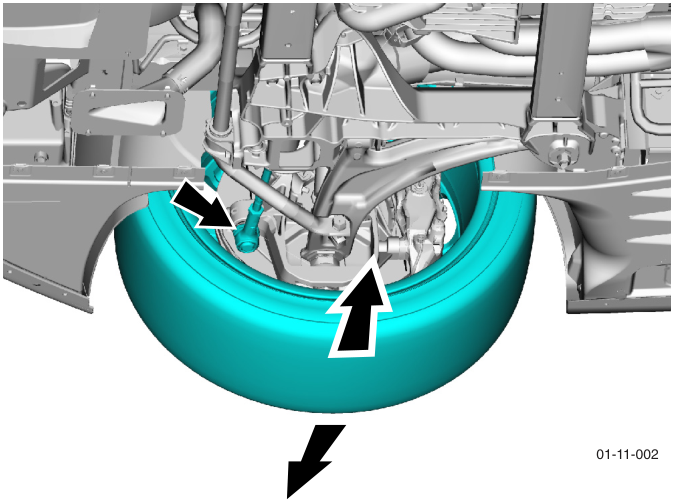
- Position a safety stand to support the suspension lower arm.
- While an assistant pulls and pushes the bottom of the road wheel, check for any relative movement between the ball joint and the suspension lower arm. Any lateral movement indicates a worn or damaged lower ball joint. Install new components if required.
Parts & tools for this job For 2005 Aston Martin DB9
- TOOLTie rod end toolSearch: tie rod end puller
- TOOLBall joint separatorSearch: ball joint separator
- FLUIDPower steering fluidSearch: Aston Martin power steering fluid
Links open Amazon search results in a new tab. As an Amazon Associate I earn from qualifying purchases.