
Engine - L Series (Lubrication): Description and operation
- Make
- Land Rover
- Model
- Freelander Workshop Manual
- Year
- 1998–2000
- Section
- Description and operation › Lubrication
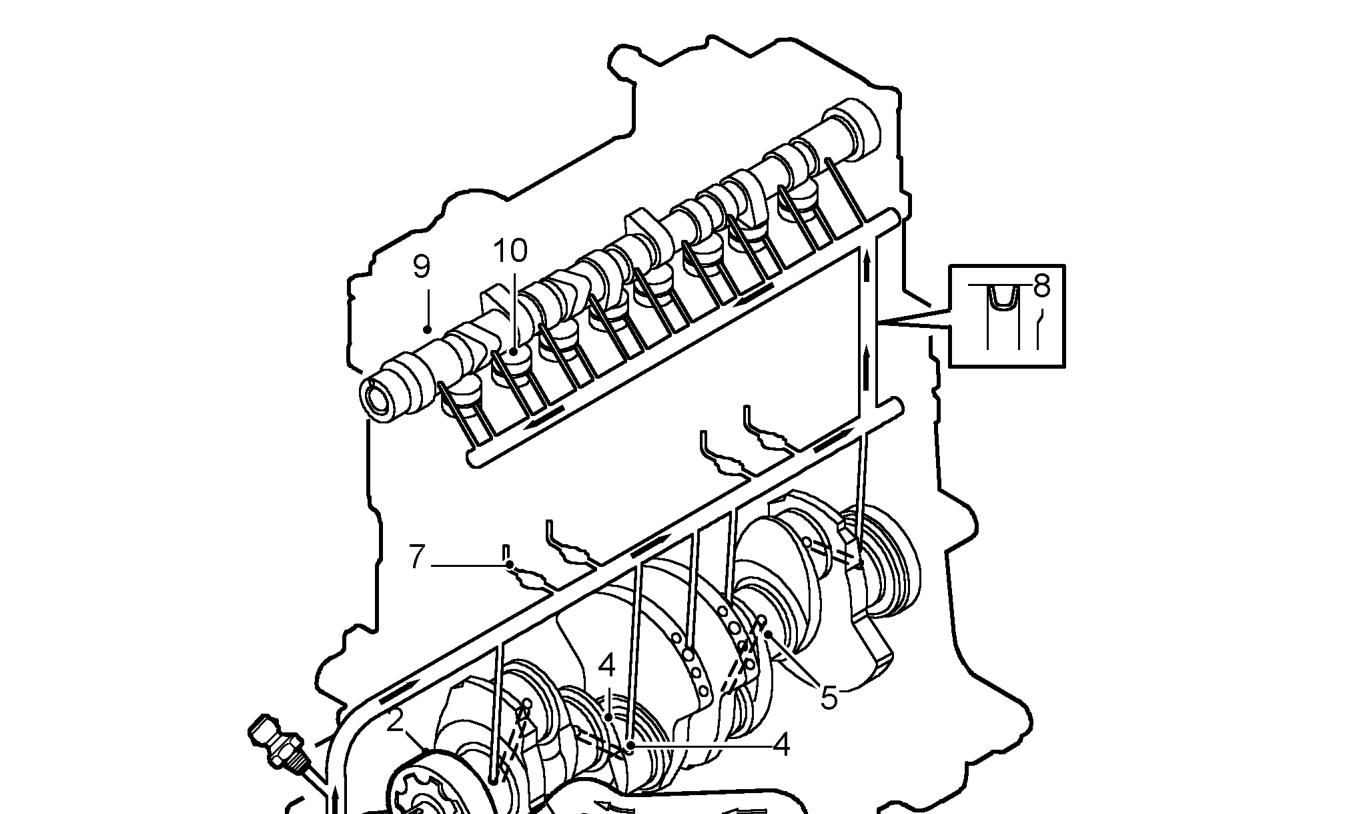
Lubrication
Oil is drawn through a gauze strainer (1) and through a passage in the cylinder block to the oil pump (2). Pressurised oil flows via the full flow filter (3) to the main oil gallery in the cylinder block. Drillings from the main oil gallery direct oil to the crankshaft main bearings (4) and cross drillings in the crankshaft direct oil to the big-end bearings (5). Additional drillings in the cylinder block supply oil at reduced pressure to the oil squirt jets (7) for piston cooling and gudgeon pin lubrication and via a restrictor (8) in the top of the cylinder block to the rear of the cylinder head. A full length drilling in the cylinder head directs oil to the camshaft journals (9) and tappets (10).
An oil pressure relief valve (11) is located in the oil pump body which also carries the oil filter adapter and the return union for the externally mounted oil cooler.
A thermostatic valve (12), comprising a valve, spring and diverter plug is located in the oil pump body. The oil flow union to the oil cooler is screwed into the end of the diverter plug. The valve is closed during engine warm-up thereby preventing oil flow to the oil cooler. As soon as the oil reaches a pre-determined temperature, the valve opens and allows oil to flow to the cooler.
Parts & tools for this job For 1998 Land Rover Freelander
- PARTOil filterSearch: Land Rover Freelander 1998 oil filter
- TOOLOil filter wrenchSearch: oil filter wrench
- FLUIDEngine oilSearch: Land Rover Freelander engine oil
Links open Amazon search results in a new tab. As an Amazon Associate I earn from qualifying purchases.