
Heated Oxygen Sensor (HO2S)
- Make
- Land Rover
- Model
- Freelander Workshop Manual
- Year
- 1998–2000
- Section
- Description and operation › Heated Oxygen Sensor (HO2S)
Heated Oxygen Sensor (HO2S)
The engine management system operates a closed loop emission system to ensure the most efficient level of exhaust gas conversion. The HO2S is fitted in the exhaust manifold and monitors the exhaust gases.
The HO2S supplies a small voltage proportional to exhaust oxygen content to the ECM. As the air/fuel mixture weakens, the exhaust oxygen content increases and the voltage to the ECM decreases. If the mixture becomes richer, the oxygen content decreases and the voltage increases.
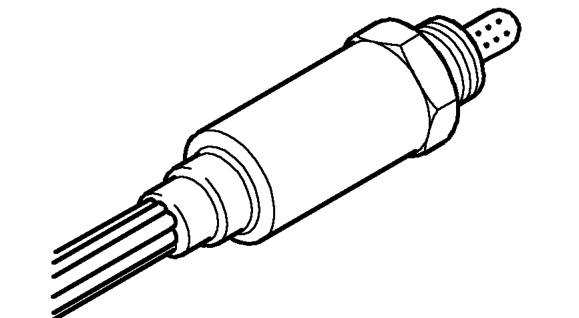
From this signal the ECM can determine the air/fuel mixture being delivered to the engine, and can adjust the duration the injectors are open to maintain the ratio necessary for efficient gas conversion by the catalyst.
The HO2S has an integral heating element to ensure an efficient operating temperature is quickly reached from cold. The electrical supply to the heater element is controlled by the ECM via the heated oxygen sensor relay in the relay module.
Acceleration Enrichment
When the throttle pedal is depressed, the ECM receives a rising voltage from the TP sensor and detects a rise in manifold pressure from the MAP sensor. The ECM provides additional fuel by increasing the normal injector pulse width and also provides a small number of extra additional pulses on rapid throttle openings.
If the HO2S fails, the ECM enters a default mode using a substitute value of 100% (open loop).
Over-Run Fuel Cut-Off
The ECM implements over-run fuel cut-off when the engine speed is above 2000 rev/min with engine at normal operating temperature and the TP sensor in the closed position, i.e. the vehicle is ’coasting’ with the throttle pedal released.
The ECM indexes the IAC valve open slightly to increase the air flow through the engine to maintain a constant manifold depression to keep emissions low. Fuel is progressively reinstated as the throttle is opened.
Over-Speed Fuel Cut-Off
To prevent damage at high engine speeds the ECM will implement fuel cut-off at engine speeds above 7000 rev/min by inhibiting the earth path for the injectors. As engine speed falls to 6990 rev/min, fuel is progressively reinstated.
Ignition Switch Off
When the ignition is switched off, the ECM will keep the main relay energised for approximately 5 minutes while it drives the IAC valve to its power down position and stores data to permanent memory, ready for the next engine start. During this period, the cooling fan(s) may be operated to reduce engine bay temperature and aid hot starting.
Parts & tools for this job For 1998 Land Rover Freelander
- PARTOxygen sensorSearch: Land Rover Freelander 1998 oxygen sensor
- TOOLOxygen sensor socketSearch: oxygen sensor socket
- TOOLOBD2 scannerSearch: OBD2 scanner
Links open Amazon search results in a new tab. As an Amazon Associate I earn from qualifying purchases.