
Measuring current
- Make
- Alfa Romeo
- Model
- GTV / Spider GTV and Spider (916) Factory Service Manual
- Year
- 1995–2000
- Section
- 55-1 Introduction › Measuring current
MEASURING CURRENT
It may sometimes be necessary to measure the current absorption: in this case the multimeter will not suffice. It is therefore necessary to use another instrument such as a snap on ammeter, operating as follows:
- insert the lead of which the current is to be measured in the pincers, suitably connected to the multimeter set for volt measurement (mV);
- NOTE: ensure that the flow of current (from positive towards earth) is the same as indicated on the pincers;
- take a reading in mV which corresponds to the value of the current in A.
HALOGEN BULBS:
Halogen lamps have the bulb made of quartz instead of glass: due to the high temperature reached when the bulb is working, the presence of grease on the bulb surface causes "devitrification" of the quartz, thereby lowering its luminosity. Therefore, halogen bulbs must be handled by the metal collar taking care not to touch the bulb with the hands: should this occur, carefully clean the bulb with ephane or an equivalent degreasing product.
FUSES:
A fuse is an electrical conductor the cross section of which is such that if the load passing through the cable exceeds a certain value called fuse amperage, it will blow and interrupt the circuit.
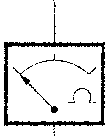
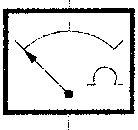
If it is not possible to see visibly whether the fuse filament is intact or not, it can be checked by connecting the prods of the multimeter set to measure ohms to its terminals: a 0 value (0 Ω) means that the fuse is still working, whereas a resistance of ∞ (infinitive) means that the filament has "blown".
CAUTION! Before changing a fuse the cause of the damage to it should be eliminated. If the fuse supplies more than one circuit, it might have blown due to a failure on a different circuit than the one suspected.
TESTING COMPONENTS:
BULBS:
NOTE: a bulb is characterized by two values: voltage and wattage rating. The resistance of the bulb is lower as its wattage increases. For example, a headlight bulb (12V-45W) will have a much lower resistance than an instrument panel warning light bulb (12V-3W).
To check whether a bulb is damaged or not, remove it and connect the prods of a multimeter set to measure ohms to the terminals of the bulb itself: a finite resistance rating (lower or higher as mentioned above) indicates that the bulb is working, whereas a resistance value of ∞ (infinitive) means that the filament is damaged.
Parts & tools for this job For 1995 Alfa Romeo GTV / Spider
- TOOLTorque wrenchSearch: 3/8 inch torque wrench
- TOOLSocket setSearch: socket set metric
- BOOKHaynes manualSearch: Haynes manual Alfa Romeo GTV / Spider
Links open Amazon search results in a new tab. As an Amazon Associate I earn from qualifying purchases.