
Servo Motors
- Make
- Aston Martin
- Model
- DB7 Factory Workshop Manual Volume 2: Electrics, Body and Air Conditioning
- Year
- 1994–1998
- Section
- Electronic control module and in-car controls › Servo Motors
The upper feedback potentiometer determines the position of the upper blend flap in the air conditioning unit and feeds this information to the ECM enabling it to command the upper flap servo motor to move the flap to a new position and maintain the desired temperature of the air at the dashboard, centre, screen and side demist vents.
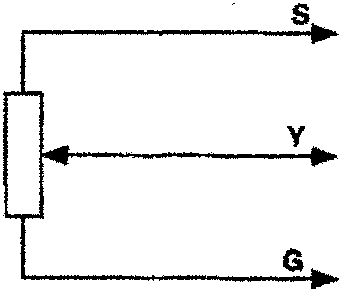
- +5 volts from ECM Pin 43
- Feedback signal to ECM Pin 30
- Earth-Ground
The potentiometer is supplied with +5V from pin 43 of the ECM and returns its feedback signal via pin 30. The feedback signal is 100mV (COLD AIR) to 1.9V (HOT AIR).
Servo Motors
Lower Servo Motor
The lower blend flap assembly has two inlets and a single outlet which are wholly or partially blocked by the flap to control the temperature of air entering the lower half of the vehicle.
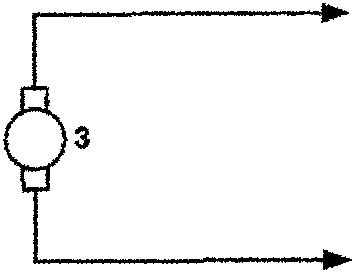
Figure 1.
- Energising voltage Lower Servo ECM Pin 37 (Upper ECM 40)
- Energising voltage Lower Servo ECM Pin 41 (Upper ECM 42)
A servo motor (Fig. 1) drives the lower blend flap to the desired position via a 1500:1 reduction gearbox. The motor is bidirectional and energised from pins 37 and 41 of the ECM. The energising voltages have the following values: LOW ÷ 0.0V to 2.0V; HIGH ± 7.0V to 9.5V.
Upper Servo Motor
The upper servo motor (Fig. 1) drives the upper blend flap to the desired position through a 1500:1 reduction gearbox. Like the lower servo motor it is bi-directional and energised by the ECM (pins 40 and 42). The energising voltages are:
- LOW + 0.0V to 2.0V
- HIGH + 7.0V to 9.5V.
Parts & tools for this job For 1994 Aston Martin DB7
- TOOLOBD2 scannerSearch: OBD2 scanner
- TOOLDigital multimeterSearch: automotive digital multimeter
- TOOLBack-probe test leadsSearch: back probe test leads
Links open Amazon search results in a new tab. As an Amazon Associate I earn from qualifying purchases.