
Graphic subgroup contents (page 2 of 2)
- Make
- Fiat
- Model
- Seicento Factory Service Manual
- Year
- 1998–2010
- Section
- Description and operation: Electric power steering
it has the undesirable effect of subtracting power from the engine at all speeds and in all driving conditions.
The NSK EPAS system was created as an answer to these problems. This system consists of only two components: a steering column with a built-in electric motor and an ECU (Electronic Control Unit). The use of only two components means fast fitting times, weight reduction of 30% with respect to HPS systems and, above all, an energy consumption proportional to the demand.
The latter aspect means that power is not wasted to constantly power a hydraulic pump even when the power assisted steering is not required, ensuring, as a consequence, lower fuel consumption and higher efficiency. Furthermore, the EPAS is controlled by a programmable ECU which cuts development times and checks during installation in vehicles, ensuring the possibility of checking stored parameters and rapid maintenance interventions by displaying the stored faults.
Other important aspects concern the reduction of noise, which ensures a high riding comfort, and pollution related to the use of hydraulic oil.
The ECU (with data suitably mapped according to the features of the vehicle) considers the applied steering torque, vehicle speed and estimated engine speed signals and controls the current provided to the electrical motor to offer the required power assisted torque.
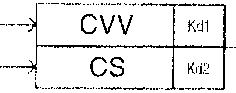
| Ref. | Description |
|---|---|
| CCCI | TORQUE CURVE / INPUT TORQUE |
| CZ | DEAD AREA CURVE / VEHICLE SPEED |
| V1 | VEHICLE SPEED |
| C1 | INPUT TORQUE |
| IM | ENGINE CURRENT |
| CC | CURRENT CONTROL |
| AC | CURRENT AMPLIFICATION |
| CV | VOLTAGE CONTROL |
| VM | COMPUTED ENGINE SPEED |
| CI | INERTIA COMPENSATION |
| Ref. | Description |
|---|---|
| C2 | KF CONVERGENCE |
| VC | MIN. SPEED/ MIN. TORQUE |
| RA | ACTIVE RETURN |
| CS | STEERED SPEED CURVE |
| CVV | VEHICLE SPEED CURVE |
| CCVV | GENERATED TORQUE CURVE / VEHICLE SPEED |
The system presents a self-test feature to detect connection problems, incorrect connections, short-circuits are incorrect signals from the speed and torque sensors. Furthermore, two torque sensors are employed to ensure parameter reliability. The values of the sensors are constantly monitored and compared by the ECU.
Parts & tools for this job For 1998 Fiat Seicento
- TOOLTie rod end toolSearch: tie rod end puller
- TOOLBall joint separatorSearch: ball joint separator
- FLUIDPower steering fluidSearch: Fiat power steering fluid
Links open Amazon search results in a new tab. As an Amazon Associate I earn from qualifying purchases.